
A plate of souvlaki lands in the middle of a taverna table, and small hands reach in before the adults have finished ordering. Bread gets torn, a bowl of feta and tomatoes goes around, and somewhere beyond the tables a boat bobs at its mooring.
That is the rhythm children fall into in Greece, a country of long meals, stony paths and a lot of water. Families can build a trip here around beaches, boats, mountain trails and the table.
Is Greece good for kids?
Greece gives children plenty to do, because so much of the country is organized around the sea, the outdoors and shared meals, and none of those need a ticket or a plan. Children who like to swim, climb over rocks, ride in boats and eat from a table full of small dishes have a lot to look forward to. What keeps a trip enjoyable is picking a few places instead of trying to cover the whole map.
The country spreads across the mainland and many islands, and each region has a different character. A family can spend a week on one island, move between a mountain base and a beach, or string together a few ports by boat. Choosing a single region and settling in tends to suit parents who would rather watch their children play in the water than watch the clock.
The beach as the daily plan
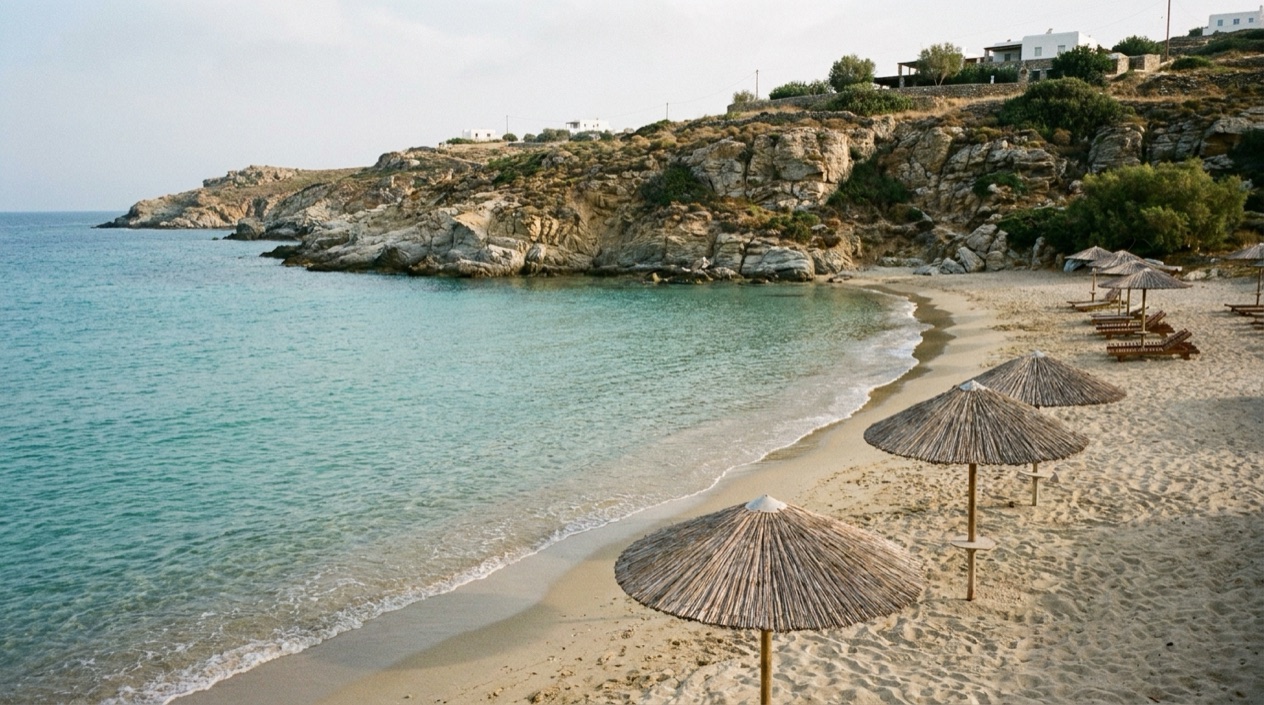
For many families the day is built around a beach. The mainland has beaches of its own, and the most famous ones are found in Chalkidiki, Epirus and the Peloponnese. That matters if you would rather not take a ferry at all, since you can drive to the water and base yourselves on land.
A beach day in Greece usually runs on simple pleasures: a snack of fresh fruit, a game of paddle ball at the water’s edge, an ice cream after a swim, and a late lunch in the shade of a taverna. Children collect pebbles and shells, dig, float and tire themselves out. Check how each beach looks and feels when you arrive, since coasts differ from one end of the country to the other.
Food that children can share
Greek menus are built for sharing, which works well with children. Souvlaki, skewers of grilled meat, comes with pita and fries. Gyros, meat shaved from a spit and wrapped with tomato and sauce, is often the order for a quick lunch. There are also plates of feta, simple salads, grilled fish and moussaka, the baked layers of eggplant, potato and meat under a creamy top.
A table of meze, small dishes that arrive a few at a time, lets a child try a bite of everything and leave the rest. Sweets such as honey-soaked pastries and yogurt with honey end many meals. Taverna dinners tend to stretch out, so the youngest travelers often wander between tables, which is part of the scene.
Mountains, gorges and wild country
Greece is not only coastline. The most popular hiking areas are Mount Olympus, the gorges in Crete, the national parks in Epirus and the less-known Rhodope Mountains. Older children who like to walk have a real choice of landscapes, from high peaks to deep rock-walled canyons and forested parkland.
Each of these areas offers a different kind of outing, so it helps to read about a specific trail before promising anything to a child. Families who prefer to stay near the sea can simply treat the mountains as a change of scene between beach days. A national park walk in Epirus, for example, feels a world away from an island shore.
Stories, stones and match day
Children who love stories find plenty in the ancient sites and the tales attached to them, and a visit to a ruin works best when a parent tells the story before walking in. The country also has living traditions. Football is followed closely, and Olympiakos plays at Karaiskakis Stadium in Piraeus, while AEK Athens and Panathinaikos are Athens clubs and PAOK is the club of Thessaloniki.
A football-mad teenager may enjoy seeing the team shirts around town, even without a ticket. Churches and monasteries make quiet stops in a day of beaches and tavernas, though how long a child will want to stay inside depends on the child.
Which places suit families?
Families have good options on the mainland coast, on the Ionian Islands by boat, and in the mountain areas for older children who like to hike. The right choice depends on whether your group wants a fixed base, a floating one or a bit of both. Naming the regions helps you narrow the search before you start comparing islands and hotels.
Mainland beaches: Chalkidiki, Epirus and the Peloponnese
Chalkidiki, Epirus and the Peloponnese hold the most famous mainland beaches in Greece. Staying on the mainland means no ferry to catch with strollers and bags, and a rental car or a taxi can bring you to the shore.
Each region has its own personality. Chalkidiki is known for its long fingers of land reaching into the sea. Epirus pairs its coast with mountain country, so a family can pick a beach one day and a national park the next. The Peloponnese adds ancient sites to a beach holiday, which helps if you want children to see ruins without leaving the shore for long.
The Ionian Islands by boat
The Ionian Islands are ideal for novice sailors thanks to mild winds and short distances between islands. For a family that has never chartered a boat, that is reassuring information. Travelers can hire a skipper or sail themselves if they have the experience, and spend days moving from one cove or harbor to the next, with children swimming off the boat.
Sailing here means that lunch is whatever you cook aboard or whatever the next harbor taverna brings to the table. Children watch dolphins from the deck when they are lucky, steer under supervision and learn the names of the ropes. Even a family that does not sail can enjoy the Ionian idea: islands close enough together to feel like a chain of stepping stones.
Other sailing waters: Cyclades, Saronic, Dodecanese and Sporades
Beyond the Ionian, the most popular sailing areas in Greece include the Cyclades, the Saronic Gulf Islands, the Dodecanese and the Sporades. These are better matched to crews with some sailing background, especially in high summer when the wind can pick up. A family can also join day trips on boats there without chartering anything.
The North Aegean Islands are less known for sailing, but the distances between islands are greater, which means fewer boats are typically present, making it easier to find anchorages. For parents who want a quieter mooring for the night, that detail counts. It also means longer passages between stops, which is something to weigh when children are aboard.
Mountains and gorges for older children
Mount Olympus, the gorges in Crete, the national parks in Epirus and the Rhodope Mountains are the most popular hiking areas. Older children who enjoy walking get a change of pace from the beach in any of them. Epirus works especially well as a pairing with the coast, since beaches and national parks sit in the same region.
A family hike deserves some research before the day. Trails vary, and a gorge is not the same outing as a forest path. Take the details of any specific route from the park or the local office, and plan the rest of the day around what your children enjoy: a swim afterward, a taverna lunch, or just a rest.
Beaches for naturists, and what to expect
Some Greek islands are known for naturist beaches. The most popular for this include Crete, Zakynthos, Rhodes, Gavdos and Antiparos. That does not make the whole island a naturist destination, only that parents there may come across a beach where some bathers wear nothing.
Families who would rather avoid such a beach can simply ask about a beach before heading out, and families who do not mind can treat it as one more thing to explain to curious children. It is useful to know when you pick an island, especially on Crete or Rhodes where there is a lot of coast to choose from.
What should you know when you travel with children?
Plan around the sea and the wind, choose a base instead of a long list of stops, and pick outings that match what each child enjoys. Greece rewards a trip with room in it, where a day can change shape when a beach turns out to be the better idea than the monastery. A few details about the seasons and the wind help you shape that plan.
Wind on the water
In the Aegean, July and August can bring strong Meltemi winds, reaching up to 8 Beaufort. Those winds are more suitable for experienced skippers, so a family with children aboard has reason to look at other times. Spring and autumn are the best times for sailing in the Aegean.
If your family can only travel in the summer months, the Ionian Islands are the sailing area described as ideal for novices, with mild winds and short distances. That is worth knowing if you are deciding between an Aegean island chain and an Ionian one. On land, the same wind simply gives a summer day a different feel, so it is a point to keep in mind when choosing a beach.
Choosing between a base and a route
Greece invites movement, with ports, islands and mountains all within reach, but children usually prefer fewer packing days. A single base on the mainland coast, in Chalkidiki, Epirus or the Peloponnese, spares everyone the hassle of changing rooms. A boat trip around a group of islands is the other option, with the boat as the base.
A combined plan can work as well. Spend time on the coast, then add a day in the mountains of Epirus, where national parks sit near the sea. Another option is the Peloponnese, which gives a beach stay with ancient places close by. Keep each stage short on description for children and long on free time.
Sacred places and pilgrim roads
Religious tourism centers on Mount Athos and on the places the Apostle Paul visited on his travels, especially Philippi. In northern Greece, the Via Egnatia is part of the pilgrimage route to Jerusalem. Families with an interest in history or faith can build a day or a stop around these names.
For children, a stop at a place like Philippi works best with a story in hand, told on the way in. It helps to treat such a visit as one stop among beaches and meals, so that no one is asked to sit through more history than they can enjoy.
Keeping the days flexible
Greek life moves at a pace that suits families who leave room in the day. Lunch can run long, evenings start late, and a plan to see one site and swim afterward often becomes a plan to swim and see the site if there is time. Having a backup, such as a taverna with shade or a second beach, keeps everyone content.
Children usually remember small things: the cat under the table, the boat horn, the sweet that arrived at the end of the meal. Leave space for them. A trip built around one region, one stretch of sea and one or two outings gives those moments time to happen.
Good to know before you go
Greece uses the euro, so keep some in your pocket for small purchases at beach stands and bakeries. Sun, water and walking tire children quickly, so sun protection and refillable water bottles are sensible companions on any day out. If your plans include the Aegean in July or August, remember that strong Meltemi winds can make boat days harder, and the Ionian Islands are the milder choice for sailing.
Sources
- Wikivoyage, Greece, section Do (https://en.wikivoyage.org/wiki/Greece#Do), checked October 12, 2026
To plan your stay
- Best Time to Visit Greece: September and Late May to Early June
- Arachova: Parnassus Mountain Town, Formaela Cheese, Ski Season and Saint George's Day
- American Airlines Flights to Greece: U.S. Cities, Athens Arrivals and Onward Island Flights
- Greece on a Budget: Cash Machines, Cards, Beaches and Ferries