
On a Greek terrace, the thin cloud over a table of coffee cups and small glasses of ouzo is a sight many travelers notice before they have unpacked. The question follows quickly: where can a visitor light up, and where does it stop being a matter of taste and become a matter of law? The answer changes with the place you stand in, and a few things, marijuana first among them, are plainly off the table.
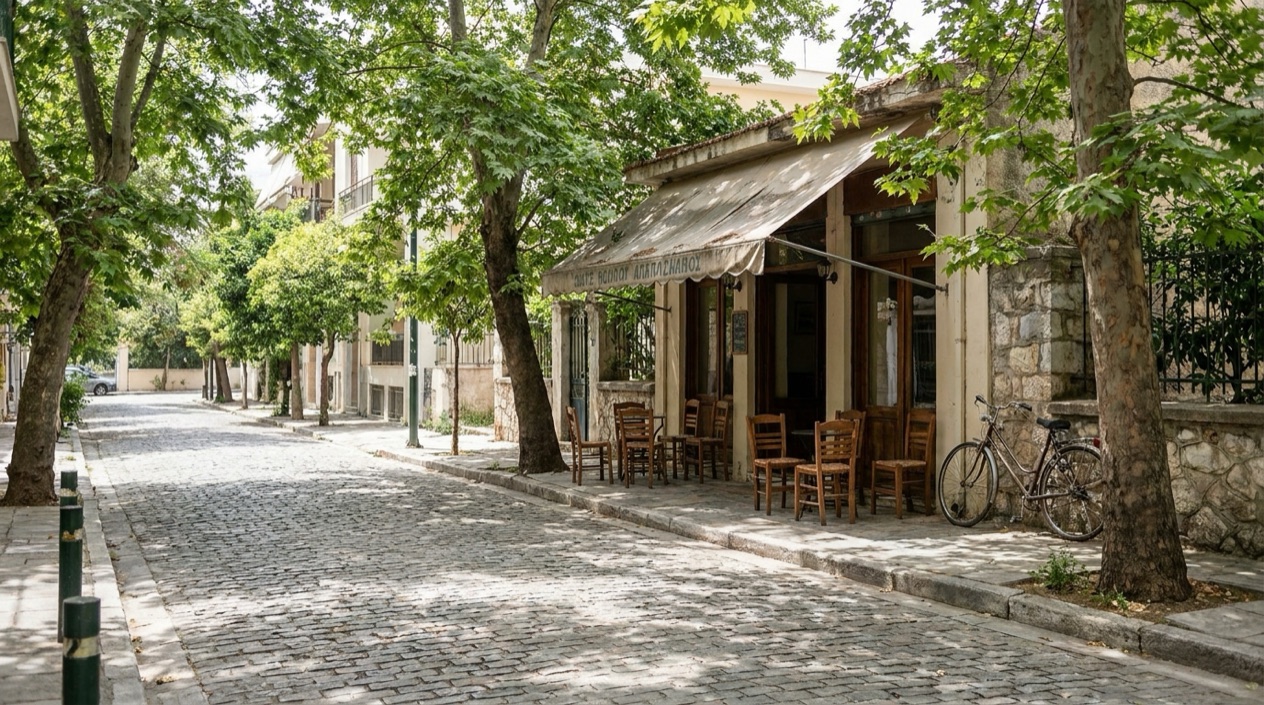
Where can you smoke in Greece?
The one point that holds everywhere is about what is in the cigarette. Marijuana is illegal in Greece, which means a joint on a beach, a terrace or a harbor wall is not a casual gesture.
For each one, the written rules that exist concern other things, such as photographs, objects, taxes and identification, and those are worth knowing because they shape how you move through the same places.
Archaeological and historical sites
Greek sites invite long, slow wandering among stones, and the habit of a pause with a cigarette comes easily in a landscape like that. The firm rule here is about taking things away. Do not remove anything, no matter how small, from archaeological or historical sites, and that includes the pebble or the fragment of rock that looks like a harmless souvenir.
Customs authorities strictly regulate the export of Greek antiquities, rocks from archaeology sites included. So the only thing you carry out of a site is photographs, and take only photographs. A cigarette stub, a wrapper or a stone in a pocket should never be left behind or taken along from such places.
Museums and their galleries
Museums in Greece come with their own house rules, and the ones that appear in print concern the camera. Many prohibit photography without a permit, some prohibit only flash or tripods, and many ask visitors not to photograph objects with people standing beside them. The rule at a given museum is the one that museum applies.
Think of a museum visit as the opposite of a terrace afternoon: you walk, you look, you keep your hands to yourself. What you do beside it is your own affair, within the posted rules of the place, and the same goes for the gap between two galleries when you want to step out and think about what you have seen.
Airports, the Athens metro and public transport
Athens International Airport and the Athens metro are fully accessible, with ramps and elevators, and they are places where a great many people move at once. Greek authorities can be very sensitive about photographs of airports or any aircraft, even civilian ones, so the camera stays away from the runway view.
The metro is also the place in Athens where visitors are most likely to run into theft. A platform at rush hour is a place for attention, not for fishing in a pocket for a lighter or a pack. Keep the cigarette question for the street above, and keep your mind on the people around you below ground.
Marijuana and what it means for a smoker
Marijuana is illegal in Greece, and that single sentence covers every island and every city. A traveler arriving from a state where it is sold in shops should not carry the habit across the Atlantic, whatever the scene looks like on a beach bar terrace at night.
Pepper spray is another item some visitors pack out of habit. Mace or pepper-spray canisters are illegal in Greece, will be confiscated, and police may arrest or detain you. The same bag that holds a pack of cigarettes should not hold a canister.
What are the rules in restaurants?
In restaurants, tavernas and cafés, the rules that travelers meet most often are not about the cigarette at all but about the table, the bill and the company. A Greek meal is long, built around shared plates of meze, grilled fish or souvlaki, a carafe of house wine or a small glass of ouzo, and the pace of it is part of the pleasure.
A kafenio, the traditional coffeehouse found in village squares and on island harbors, is where the coffee and the conversation can go on for an hour over one cup. The Greek coffee arrives in a small cup, thick and strong, and it is the drink that so many cigarettes have traditionally accompanied. What you do beside it is your own affair, within the posted rules of the place.
The bar and the bill in central Athens
The most commonly reported major scam against travelers is the Greek version of the clip joint routine, reported primarily from central Athens. A single male traveler is invited to a bar by a friendly stranger, and the evening ends with an astronomical bill enforced by thugs.
A cigarette offered in the street, a chat, a suggestion of one more drink in a place you have never seen: that is how it begins. Choose your own taverna or bar, look at what you are ordering, and treat a sudden invitation from a stranger as a reason to walk on.
Paying the bill and handling cash
At the end of a meal, a few habits of money matter. Do not change your money on the street, and if someone asks you to change a €20 or €50 note, refuse, because you might get a counterfeit note. The same caution applies at a terrace table when a stranger approaches with a story.
What the meal itself offers is a pleasure worth lingering over: grilled octopus on a harbor, a tomato salad with feta and olive oil, moussaka just out of the oven, a plate of fried zucchini. Those are the things to sit down for, and a cigarette on the side is a choice made within the rules of the place you picked.
Faliraki and the late-night strip
Faliraki in Rhodes is a notorious place for theft, public indecency, sexual assault and alcohol-fueled violence, though it has calmed down since a new tough mayor was elected. Late-night bars there pour drinks and cigarettes in equal measure, and the reputation of the strip is one a visitor should know before choosing it.
If a seaside evening on Rhodes is the plan, a taverna table in a different part of the island is a setting where the main event is the food, not the nightlife. The same logic applies on any island: the bar strip and the family taverna are two different evenings.
What about the street?
On the street, the question that matters most is not the cigarette but the crossing, because the greatest danger to travelers in Greece is probably the simple act of crossing the street. Traffic can be bad even in smaller towns and horrendous in Athens, and accident rates are high.
That changes how to think about walking and smoking at once. A pedestrian with a cigarette in one hand and a phone in the other, stepping off a curb in Athens, is the picture to avoid. Wait for the traffic to clear, cross where others cross and keep your eyes up.
Identification and the police
You must carry your passport or some form of photo identification at all times, and police may detain you for questioning if you do not have proper identification. A stop in the street, whether over a cigarette, a bottle on a bench or a question about where you are going, is the moment that rule matters.
The police emergency number in Greece is 100, and the EU-wide emergency number is 112. Both are worth saving in a phone before a walk through an unfamiliar city, along with the address of where you are staying.
Cameras, soldiers and airfields
A harbor town can put a naval vessel, a barracks or an airfield in the same frame as a pretty quay. Photographing military installations is prohibited and may lead to arrest, and authorities take violations quite seriously. The same goes for other strategic locations.
A leaning wall with a view over the water is a tempting place to stop for a cigarette and a photograph. Look at what is in the background before lifting the camera, and let a plain harbor, a church or a row of fishing boats be the subject instead.
Souvenirs on the way home
The street is also where souvenirs are bought. All objects made before 1830 are considered antiquities and are protected by the Ministry, and exporting or buying any piece of archaeological value is illegal and can lead to arrest at the airport for trafficking.
Do not purchase protected antiquities, and carry receipts for any purchase that may appear to be an antiquity. A small stone figure from a stall is the kind of thing that raises the question, so a table of olive oil, honey, herbs and ceramics from a workshop is the safer shopping list.
Good to know before you go
Greek terraces reward patience, and the habits that matter most are small ones: carry photo identification, change money only at proper places and cross streets with attention. In the Aegean from January to March the weather can be extremely rough and ferries are often kept in port for days at a time, while ferries in August fill up around the National Holiday on 15 August, so plans made ahead hold better.
Travelers arriving by their own boat meet a different set of rules. Boats arriving in Greek waters must pay the TEPAI boating tax on the day of arrival, and it is due for each calendar month a boat stays in Greece. Liability insurance must state that coverage follows Greek laws, and boats with a flag from outside the EU must check in at a port of entry, visit customs, buy a transit log and have it stamped by port police at every harbor.
Sources
- U.S. Department of State, Greece travel information, local laws and special circumstances (https://travel.state.gov/content/travel/en/international-travel/International-Travel-Country-Information-Pages/Greece.html), checked October 12, 2026
- Wikivoyage, Greece (https://en.wikivoyage.org/wiki/Greece), checked October 12, 2026
To plan your stay
- Best Time to Visit Greece: September and Late May to Early June
- Arachova: Parnassus Mountain Town, Formaela Cheese, Ski Season and Saint George's Day
- American Airlines Flights to Greece: U.S. Cities, Athens Arrivals and Onward Island Flights
- Greece on a Budget: Cash Machines, Cards, Beaches and Ferries