
On a mountain path with the summit lost in cloud, or on a boat drifting past a nesting beach off Zakynthos, the same question tends to surface: is this a national park, and what does that change for a visitor? In Greece the answer is a system of zones. Some parks are mountains, some are gorges and forests, two are stretches of sea, and each one treats visitors a little differently.
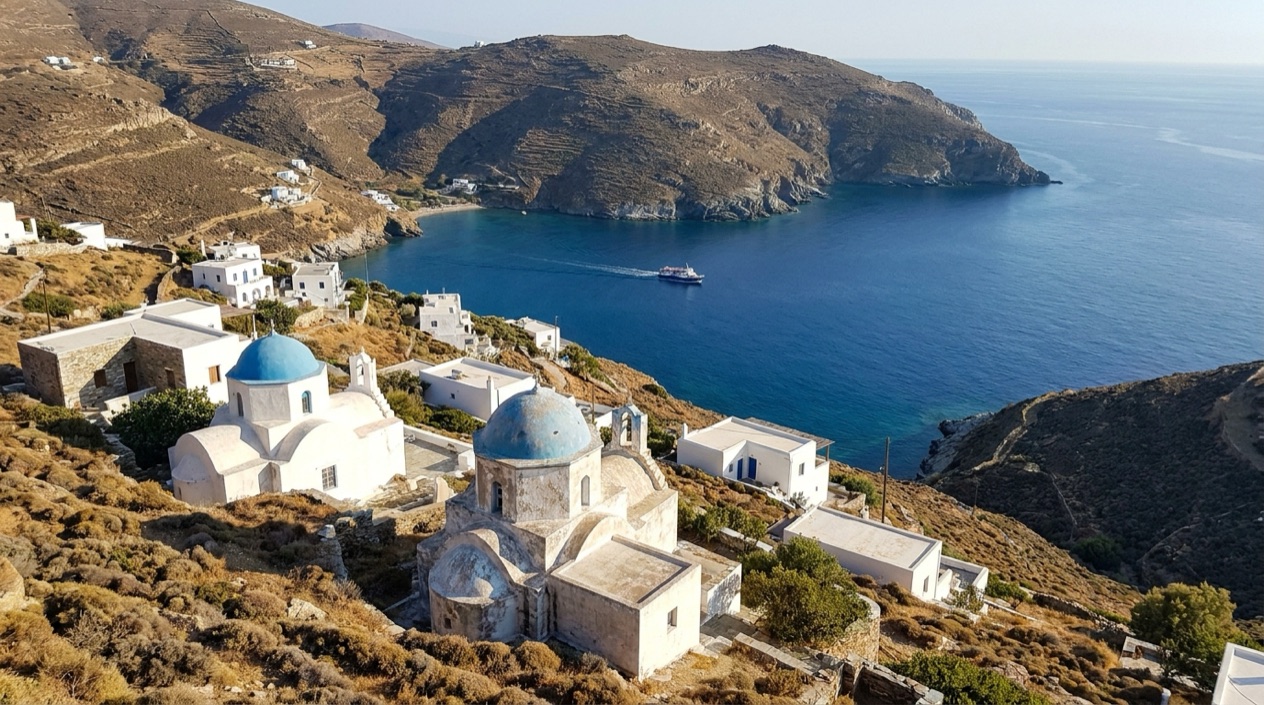
Which national parks does Greece have?
Greece has a set of national parks that includes high mountains, woodland parks, a cape and two marine parks, and the oldest of them date to 1938. That year Mount Olympus became the first national park in the country, and Mount Parnassus followed later in the same year. Others came in the decades after: Samaria in 1962, Vikos-Aoos in 1973 and Sounio in 1974.
Two parks protect the sea rather than the land. The National Marine Park of Alonnisos, in the Northern Sporades, and the National Marine Park of Zakynthos are both marine parks, which means they follow different rules about size from the land parks. Several of the land parks carry the name National Woodland Park, which tells you the forest is the heart of the protection.
How a Greek national park is laid out
Under Greek law a park is divided into a core and a surrounding area, and the two are treated very differently. The core is the protected heart. In it, only scientific research, mild recreational activities and acquiring information about the environment are permitted. That is why a walk in a core zone feels like a visit to a place that is being kept as it is, not a place built for visitors.
The surrounding area is the buffer. Here the law allows things the core does not: roads, outposts, camping and hiking infrastructure, pastures and some other developments. The surrounding area must be at least as large as the core. So when you see a trailhead, a hut or a campsite near a park, it usually belongs to this outer ring, and the strict rules begin further in.
Land parks and marine parks side by side
The core of a land park cannot fall below a minimum size set by law, and marine parks are the exception to that rule. It is a sensible exception, since a protected sea is measured differently from a mountain. Alonnisos and Zakynthos both have core and peripheral zones, and the Alonnisos park is among the largest protected marine areas you will read about in Greece.
Sounio is the smallest-core park in this group and is a woodland park, while Vikos-Aoos has a peripheral zone much larger than its core. Seeing the zones as a pair, a strict center and a wider ring, helps you read any park map or information board you come across.
| Park | Type |
|---|---|
| Olympus National Park | Mountain national park |
| Parnassus National Park | Mountain national park |
| Samaria National Woodland Park | Woodland park |
| Vikos-Aoos National Woodland Park | Woodland park |
| Sounio National Woodland Park | Woodland park |
| National Marine Park of Alonnisos, Northern Sporades | Marine park |
| National Marine Park of Zakynthos | Marine park |
Which are best known?
Olympus is the name that carries the most weight, because it was the first national park in Greece and because the mountain is the home of the gods in Greek myth. The park around it was established in 1938, and its core zone is a large block of protected mountain. Reading the name on a map before you reach it already changes how you look at the skyline.
Olympus and Parnassus
Olympus is a mountain of forests, ravines and high rock, and the myth hangs over every conversation about it. Parnassus, the second national park, is tied in the same way to the ancient world through its link with the Muses and Apollo. Both parks were created in the same year, and together they mark the beginning of national park protection in the country.
For a traveler the pleasure of these two parks is the setting: mountain scenery, forest and the stories attached to each peak. Because the core zone allows only mild recreation, expect walking and looking rather than any organized activity inside the strict heart of the park. What lies in the surrounding ring is a separate matter and varies from place to place.
Samaria and Vikos-Aoos
Samaria National Woodland Park, established in 1962, is the park most travelers connect with a gorge walk on Crete. Its core zone is large, a good reminder that the park is more than the path through it. The word woodland in its name points to the pines and cypress that line the landscape.
Vikos-Aoos National Woodland Park, established in 1973, is named for a gorge and a river valley in the mountains of Epirus. It has a big core and a much bigger peripheral zone, so villages and trailheads sit within the wider ring around the strictly protected center. If you picture a park as a single fenced area, this one will correct that idea quickly.
Sounio and the marine parks
Sounio National Woodland Park, established in 1974, has a small core and a peripheral zone several times larger. It is a park of coast and pine woodland around the cape, where the sea is always in view.
At Alonnisos, in the Northern Sporades, the park is the sea itself, and the island’s marine life is the reason for it. Zakynthos protects its waters too, with a core and a peripheral zone, and the loggerhead turtles that nest on the island’s beaches are the animal people associate with the park. You may see turtles or other wildlife from a boat, though sightings are a chance and never a promise.
How do you visit them?
You visit a Greek national park by moving through its zones with the rules of each in mind: the core is for gentle recreation and observation, and the surrounding ring is where the trails, huts and roads usually are. Reading the zone you are in matters more than any single rule, because what is allowed changes at the boundary.
On the land parks
Inside a core zone the law permits scientific research, mild recreational activities and the gathering of environmental information. In practice this means walking, looking and learning. The surrounding area is where camping and hiking infrastructure, roads and outposts may exist, so a hut, a campground or a paved approach belongs to the outer ring and not to the heart of the park.
At Olympus, Samaria, Vikos-Aoos and Sounio, the park boundary often runs through the very landscape you came to see. A gorge, a mountain face or a stretch of coast can lie partly in the core and partly in the ring. Information boards at trailheads show where the core begins, and those boards are the best guide to what you can do on the spot.
On the marine parks
At Alonnisos and Zakynthos the park is the water, and the core zone is the part of the sea given the strictest protection. The peripheral zone surrounds it as a buffer, just as on land. Boats and swimmers meet this structure directly, because the zones follow the sea and the coast rather than a path.
If you plan to see turtles off Zakynthos or marine life around Alonnisos, treat the zones as the frame for the visit and the wildlife as a possibility. The parks exist to protect the animals, so what you see comes from the animals going about their lives. Sea temperature figures and conditions come from the place you are visiting that day.
Reading a park before you go
- Find out which zone your route crosses: the core and the surrounding ring have different rules.
- Expect walking, looking and learning inside a core zone, not facilities.
- Treat trails, huts, campsites and roads as features of the outer ring.
- On the marine parks, think of the sea as the park and sightings as a chance.
Good to know before you go
The rules of a park depend on the zone, so the surest habit is to read the local information board at the entrance and follow what it says. Euro is the currency in Greece, and no fee or tax for entering these parks is set out here, so amounts are best learned on the spot. Wherever you walk, the core of a park is a place to observe and leave as you found it.
Sources
- Wikipedia, List of national parks of Greece (https://en.wikipedia.org/wiki/List_of_national_parks_of_Greece), checked October 12, 2026
To plan your stay
- Best Time to Visit Greece: September and Late May to Early June
- Arachova: Parnassus Mountain Town, Formaela Cheese, Ski Season and Saint George's Day
- American Airlines Flights to Greece: U.S. Cities, Athens Arrivals and Onward Island Flights
- Greece on a Budget: Cash Machines, Cards, Beaches and Ferries