
On a Saturday in Glyfada, the café tables spill onto the sidewalks, frappé glasses sweat in the sun, and shoppers drift between boutiques with bags swinging. Down by the water, masts clink in the marina and the tram rumbles along its tracks. This is the coastal district of southern Athens, a place for shopping, long coffees and fish by the sea.
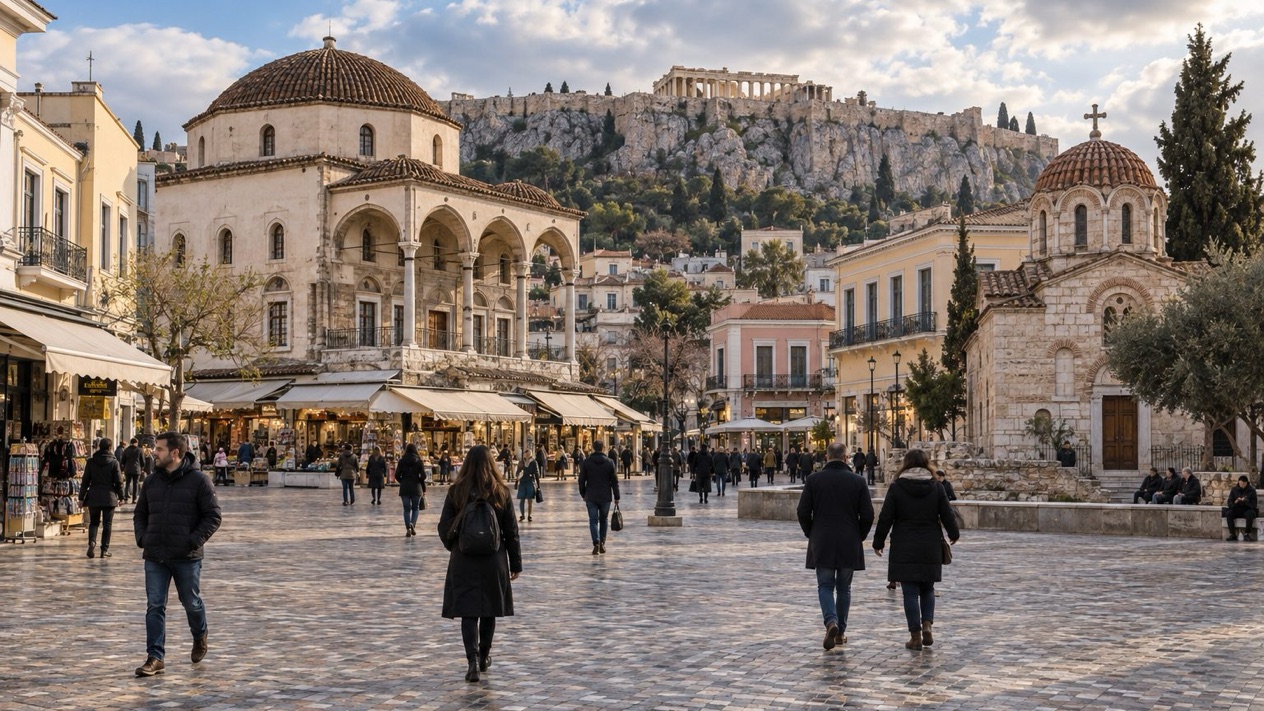
What is Glyfada like?
Glyfada is the seaside suburb of Athens, a town in its own right with a shopping center, a marina, a golf course and a long habit of café life. It has a hot-summer Mediterranean climate, with mild winters and hot summers, so the terraces stay in use for a good part of the year and the rhythm of the place is built around sitting outside.
Visitors who come here are usually after something different from the museums and ruins of central Athens. They want a place to stroll, browse shops, sit by the water and eat well.
The district also suits people who like a base with its own life, where the evening plan is a seafood dinner rather than a monument. Glyfada has a reputation as a polished, well-groomed part of the city, with a crowd that dresses up for a coffee.
The district also carries a sporting streak. It is the seat of ANO Glyfada, a club with many honors in Greek water polo, and the Glyfada Indoor Hall, once a major indoor venue for local Athens teams, stands at the Municipality. Add the golf club and the marina, and you get a town that likes its leisure organized and its weekends outdoors.
Things to do in Glyfada
Glyfada Marina
The marina is the district’s waterfront stage. Its marine space and coastal land together cover 2 miles, which gives it room for rows of moored boats, a promenade and a string of cafés and restaurants facing the masts. You come here to look at the yachts, sit with a drink and watch the water.
It suits anyone who likes a harbor scene without leaving the city. Come with an appetite, because the restaurants along the edge are the obvious place for a seafood meal, and a coffee at the water’s edge makes a pleasant pause between shopping stretches.
The shopping streets of the center
The town center is where Glyfada earns its name among Athenians. Boutiques, shoe shops, fashion chains and small independent stores line the central streets, with cafés placed so that no shopper goes long without a chair. Browsing here is a pastime in itself, and visitors never buy anything and still spend the afternoon.
This is a different kind of Athens shopping from the Plaka, which is a top attraction with picturesque streets, historic landmarks and lively shops, but gets crowded. Glyfada offers a modern, seaside version, closer to a resort town’s main street. Pair a stroll with a coffee stop and you have the day’s rhythm.
Ano Glyfada
Ano Glyfada, the upper part of the district, sits away from the shoreline and has a more residential feel. The planned metro extension would give it a station of its own, a sign of how much the area is expected to grow. For a visitor it is a place to see how locals live, with neighborhood cafés and tavernas in place of the waterfront scene.
It makes a quieter counterweight to the center and the marina. If you are staying in Glyfada for several days, a wander through these upper streets gives you a different view of the suburb and a table at an everyday taverna.
Glyfada Golf Club
Northwest of Glyfada lies the golf course of Athens, the Glyfada Golf Club, located south of the former Ellinikon Airport. It is the district’s green space, a stretch of fairways in a part of the coast otherwise given to apartment blocks and shops.
Golfers will want to know it is here, and others can treat it as a landmark that explains the open space on the map. The neighboring Ellinikon area, where the old airport stood, is part of the changing southern coast of Athens.
Within reach of Glyfada are the central Athens sights, including the Plaka and the Acropolis Museum in Koukaki, where a pedestrian walkway links ancient monuments and the neighborhood has become fashionable. The tram and the metro connect the coast with them.
Eating and drinking in Glyfada
Eating in Glyfada starts with coffee. Cafés line the center and the marina, and the order of the day is a frappé, a foamy iced instant coffee, or a freddo espresso, taken slowly at an outdoor table. People here treat a coffee as an appointment, and you will see the tables full of groups settled in for a long conversation.
For a meal, the seafood restaurants near the water are the natural pick. Look for grilled fish, fried calamari, shrimp saganaki baked with tomato and feta, and plates of meze, the small dishes shared across the table. A Greek salad with a block of feta on top, and a carafe of white wine or a glass of ouzo with water, finishes the picture.
Away from the shoreline, tavernas serve the classics of the Greek table: moussaka, souvlaki, gyros wrapped in pita, grilled lamb chops and roasted vegetables. Ano Glyfada is a good area to look for these neighborhood places. A taverna is a casual restaurant, usually a family affair, where dishes arrive in the middle of the table and everyone picks from them.
Bakeries handle breakfast and snacks, with cheese pies, spinach pies and sesame-crusted koulouri bread rings sold for a quick bite. For dessert, look for yogurt with honey and walnuts, or a pastry such as baklava, and pair it with a Greek coffee served in a small cup, grounds settling at the bottom.
In the evening the marina and center switch from coffee to cocktails, and bars and lounges fill the same terraces. The mood is relaxed and well dressed rather than rowdy, in keeping with the rest of the district.
Staying in Glyfada
It sits well for those who plan beach time, shopping and restaurant dinners, with trips into central Athens when they want the ancient sites. Visitors focused on the Acropolis alone may prefer Koukaki, where the Acropolis Museum and the pedestrian walkway to the monuments make it fashionable, or the Plaka, a top attraction with historic landmarks.
The lodging here ranges across the usual seaside suburb mix: hotels near the center and the water, apartments in residential streets, and stays in Ano Glyfada away from the shoreline. Nights near the center and the marina carry café and bar life on the terraces, while the upper residential streets are more domestic in feel. Choose your corner by the evening you want.
Compared with the Plaka, which gets crowded, Glyfada is a different style of stay. You trade the stone alleys beneath the Acropolis for a modern suburb of shops and cafés, and you travel into the old center rather than sleeping inside it. Travelers like to split a trip, a few nights in the center for the monuments and a few on the coast.
Because the metro extension is only planned, the tram and the avenues are the links that matter when you choose where to sleep. A hotel close to the tram line puts you on the route to the center without depending on a car.
Getting to Glyfada
Glyfada is linked to central Athens by two major avenues, Poseidonos Avenue and Vouliagmenis Avenue, and by a tram line operated by STASY S.A. The tram is the rail link along the coast, and the tramway returned to Syntagma on 19 November 2020, which put the line back at one of the main squares of the center.
The metro does not yet run into Glyfada. An extension of Line 2 of the Athens Metro from Elliniko station to the south, with two stations in Ano Glyfada and Glyfada, is being planned. Until it opens, riders on the metro reach the district by connecting with the tram or a bus.
If you use the metro to get to the coast, the Athens Metro operates from 5:30 a.m. to 00:30 a.m., and on Friday and Saturday nights lines 2 and 3 stay open later. That matters for evenings out, because it shapes how late you can ride back toward the city from a connection point.
On buses in Athens, passengers cannot use the front door to get on or off, so board and exit through the other doors. Poseidonos Avenue and Vouliagmenis Avenue are the roads that carry the traffic between Glyfada and the center, and they are the routes any bus or car follows.
Good to know before you go
Glyfada has a hot-summer Mediterranean climate, so summer days are hot and winters mild, and sun protection belongs in the bag for the warm months. The district is a place of cafés and shops where card and cash habits are the usual ones of Athens, and the center is the part to know first: the main streets, the marina and the tram stops.
Keep the metro hours in mind when planning a night out, and remember that the planned Line 2 extension is not yet a way in. The tram and the two avenues are what connect the coast with the rest of Athens today.
Sources
- Wikipedia, Glyfada (https://en.wikipedia.org/wiki/Glyfada), checked October 12, 2026
- OASA, Athens urban transport (https://www.oasa.gr/en/), checked October 12, 2026
- Athens Transport, public transport guide (https://www.athenstransport.com/english/), checked October 12, 2026
- This is Athens, the official Athens tourism site (https://www.thisisathens.org/), checked October 12, 2026
To plan your stay
- Best Time to Visit Greece: September and Late May to Early June
- Arachova: Parnassus Mountain Town, Formaela Cheese, Ski Season and Saint George's Day
- American Airlines Flights to Greece: U.S. Cities, Athens Arrivals and Onward Island Flights
- Greece on a Budget: Cash Machines, Cards, Beaches and Ferries