
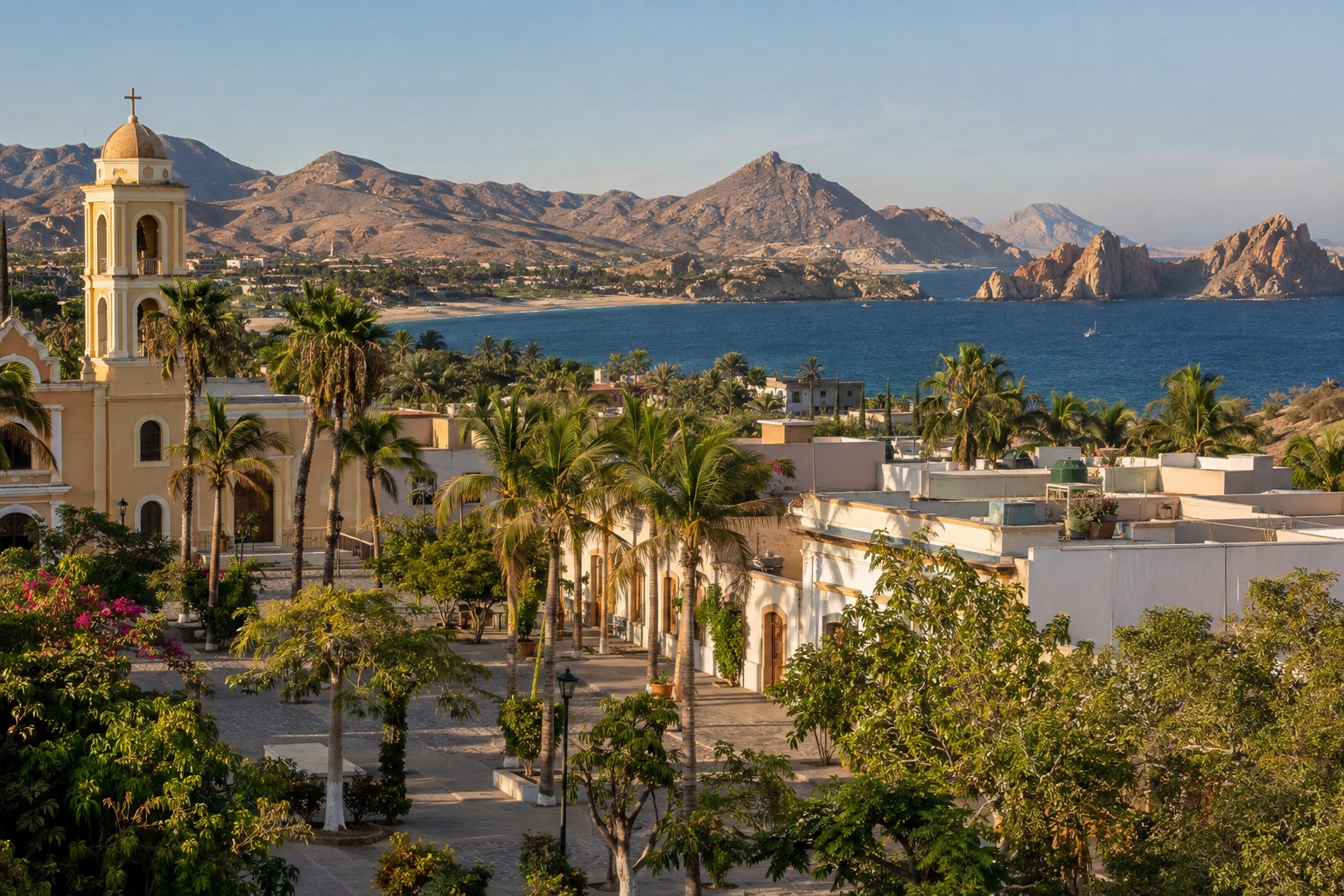
Bells ring from the mission church as the light turns amber over Plaza Mijares, and waiters along the side streets set out tables under strings of bulbs. San Jose del Cabo is the quieter, older half of Los Cabos, a Baja town of galleries, courtyards and restaurants with a wetland on one side and the Sea of Cortez on the other. It suits couples, food lovers and anyone who wants a village pace with a beach nearby.
Where is San Jose del Cabo and what is it like?
San Jose del Cabo sits at the southern tip of the Baja California peninsula, in Baja California Sur, at the eastern end of the Los Cabos corridor, with Cabo San Lucas farther along the coast. It is a walkable colonial-style town with a resort strip, a marina village and a surf coast spread around it.
The historic center is tranquil and village-like, built around Plaza Mijares, with restored buildings that now hold galleries, small hotels and local restaurants. Evenings are for slow dinners rather than nightclubs.
It is a good match for travelers who like to stroll, browse art and eat well. Those who want a big party scene or an all-inclusive pool day without leaving the grounds will find the energy elsewhere in Los Cabos, though the hotel zone here serves that second wish.
What is there to do in San Jose del Cabo?
The historic downtown and Art Walk
The core of a stay is the old center. You wander from Plaza Mijares through the gallery district, stop in courtyards for a long lunch, and let the afternoon slip by. Colonial facades and shaded benches make it easy to go without a plan.
On Thursday evenings in the high season, the galleries stay open late for the weekly Art Walk, and the streets fill with people drifting between openings. It is the best single evening in town, and it suits couples and culture lovers most. Arrive hungry, since restaurants are part of the ritual.
The Estero and its birds
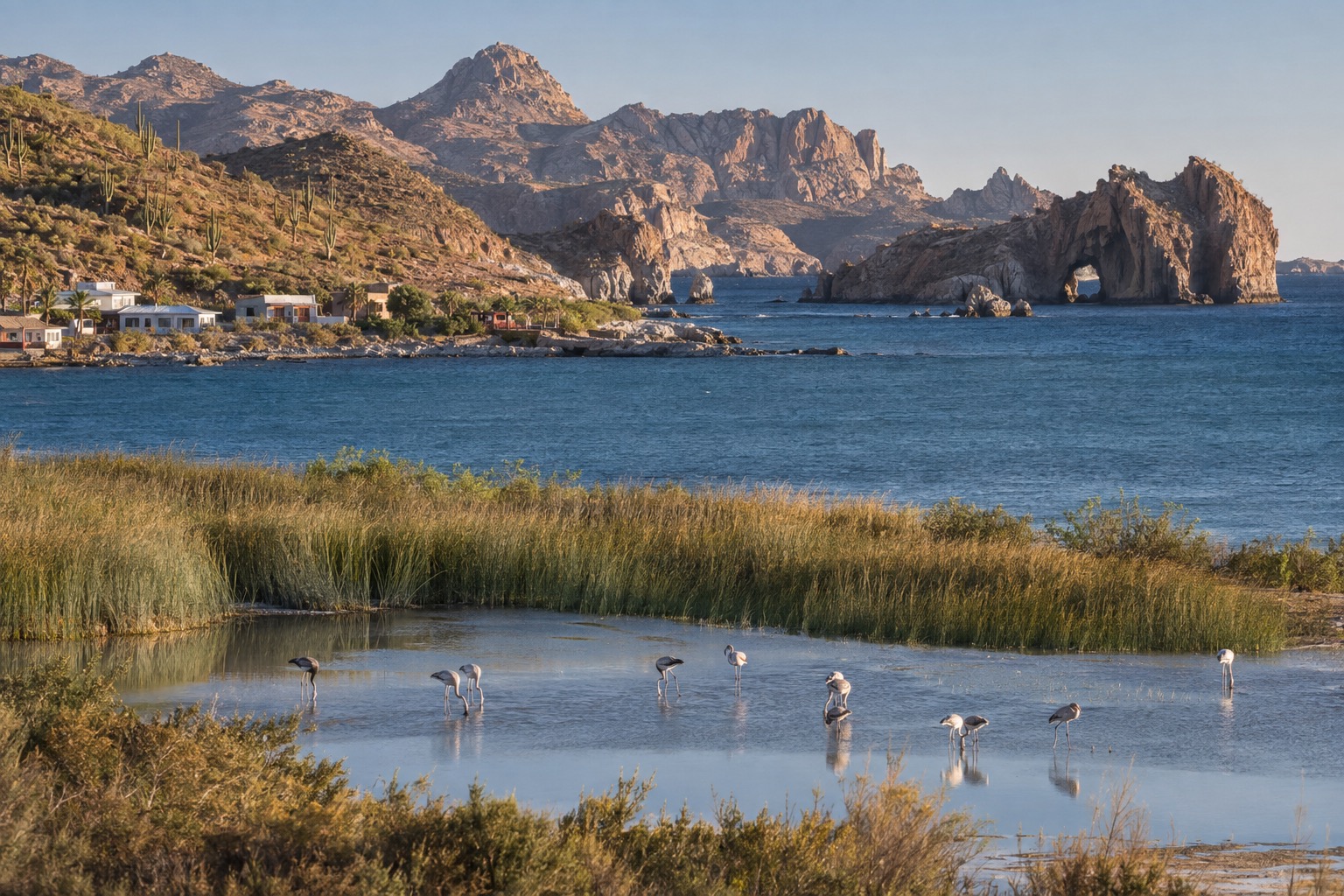
A reed-lined wetland sits right at the edge of town, a protected natural area with a long list of resident and migratory birds. Herons and egrets stalk the shallows, and the contrast with the nearby desert hills is striking.
Birders will enjoy it most, but anyone who likes a quiet walk will too. Early morning is the calmest time, with softer light and more movement in the water.
Cabo Pulmo, the reef day trip
Cabo Pulmo National Park is the day trip snorkelers and divers talk about. Its coral reef is the only living one in the Gulf of California, and with fishing banned, the water is busy with schools of fish. You reach it from San Jose del Cabo by a road trip up the East Cape, so plan on a full day.
It suits confident swimmers and anyone who likes wild coastline over resort comforts. Go in the morning for the best light on the water, and bring sun protection, since shade is scarce on the beach.
| Site | Open | Admission |
|---|---|---|
| Cabo Pulmo National Park | Daily, 8:00 a.m. to 6:00 p.m. | 125 Mexican pesos |
Beaches and surf
The beaches here are for watching and wading more than for easy swimming. The hotel-zone beach is wide and sandy but often has strong surf, and Costa Azul is known for its waves and attracts surfers. Many beaches have dangerous rip currents, so swim only where lifeguards are on duty, and check the flags and surf conditions first.
What sets San Jose apart from its neighbor Cabo San Lucas is the calm. There is less spectacle and more texture: art, birds, a real town square and a marina village where anglers head out at dawn.
How many days do you need in San Jose del Cabo?
A long weekend covers the essentials, and a week lets you settle into the rhythm of the place.
In three or four days you can walk the old center, catch an Art Walk if it is a Thursday in season, spend a morning at the Estero and take an afternoon at the beach. Dinners fill the evenings without any effort.
With more time, add the full-day trip to Cabo Pulmo, a surf session or a lesson at Costa Azul, and a boat or fishing morning from the marina at La Playita. A day over in Cabo San Lucas rounds out the region for those curious about its livelier side.
Where to stay in San Jose del Cabo
The historic center has small boutique hotels, guesthouses and rentals in restored colonial buildings, with no large resorts. It suits couples and culture lovers who want restaurants and galleries at the door, and the beach is a short drive or a walk of roughly a quarter hour or more. Book ahead for the Thursday Art Walk between November and June.
The Zona Hotelera is a strip of large all-inclusive resorts and beachfront hotels, best for families who want pools and dining on site. La Playita is a quiet marina-side village with luxury resorts, boutique hotels and rentals, good for couples and anglers. Costa Azul is the surfers’ neighborhood, with condos, small budget hotels and rentals for longer stays.
How do you get to San Jose del Cabo and get around?
Most visitors land at Los Cabos International Airport, shared with Cabo San Lucas, and it takes roughly 15 to 20 minutes by car to reach the historic center. The hotel zone is about 20 to 25 minutes from the terminal, La Playita around 25, and Costa Azul 25 to 30.
Inside the old center, you walk. Between areas, the hotel zone is under 10 minutes from downtown by car or taxi, and La Playita is about 10 to 15. Walking along the main road at La Playita is impractical, so use a taxi or rental car there. Public transport to Costa Azul is limited, so a car or taxi is the way to go.
When is the best time to visit San Jose del Cabo?
The cooler, livelier months from November to June bring the Art Walk, when galleries keep their doors open on Thursday evenings, and rooms near the plaza fill early.
The eastern Pacific hurricane season runs from mid-May through November, so a late summer or fall trip falls inside it. If you travel then, keep an eye on forecasts. Surf and sea conditions change through the year, so beach plans are best made day by day.
Good to know before you go
Pesos are the local currency, and the usual habits of any busy resort region apply: keep an eye on belongings and use licensed taxis. Baja California Sur charges a lodging tax on stays, shown in the table.
| Fee | Amount | Who pays |
|---|---|---|
| Lodging tax (Baja California Sur) | 4% | Hotel and rental guests |
| Cabo Pulmo National Park entry | 125 Mexican pesos | Park visitors |
Sources
- H. XV Ayuntamiento de Los Cabos / IMPLAN Los Cabos, "REE Estero de San Jose del Cabo", implanloscabos.mx, checked September 29, 2026
- Aeropuertos GAP, press release "Los Cabos Airport Sees Record Growth, Expands Capacity", aeropuertosgap.com.mx, checked (official group relays) September 29, 2026
- CONANP, Cabo Pulmo National Park, descubreanp.conanp.gob.mx, read on (indexed excerpt; the site refuses any direct connection from this network) September 29, 2026
- Ley de Hacienda del Estado de Baja California Sur, art. 13 (mirror Secretaria de la Contraloria y Transparencia Gubernamental de BCS, contraloria.bcs.gob.mx); 2026 rate confirmed by El Contribuyente, ISH 2026 table, elcontribuyente.mx, read on September 29, 2026
- U.S. Department of State, Mexico Travel Advisory (reissued May 29, 2026), section "Risks in specific areas" / State of Baja California Sur, travel.state.gov, read live via browser on 29 September 2026
- NOAA National Hurricane Center, official Eastern Pacific season (nhc.noaa.gov), checked October 5, 2026
- Visit Los Cabos
- H. Ayuntamiento de Los Cabos