
JAMAICA · SEPTEMBER · 18.05° N
At 2,256 m (7,402 feet), Blue Mountain Peak spends September in a climate a Kingston beach crowd would not recognize. Afternoons average 62.0°F, and measurable rain falls on nearly one day in two. The Blue and John Crow Mountains became Jamaica’s first UNESCO World Heritage site in 2015, and the protected land rises from 850 m to that summit, so the air cools the whole way up.
Most trips into the range start in Kingston: our Kingston guide covers the city end and our flights guide covers getting to Jamaica from the US. Two nights in the mountains give you a summit morning, a day on the Maroon heritage trails and a spare morning for the weather.
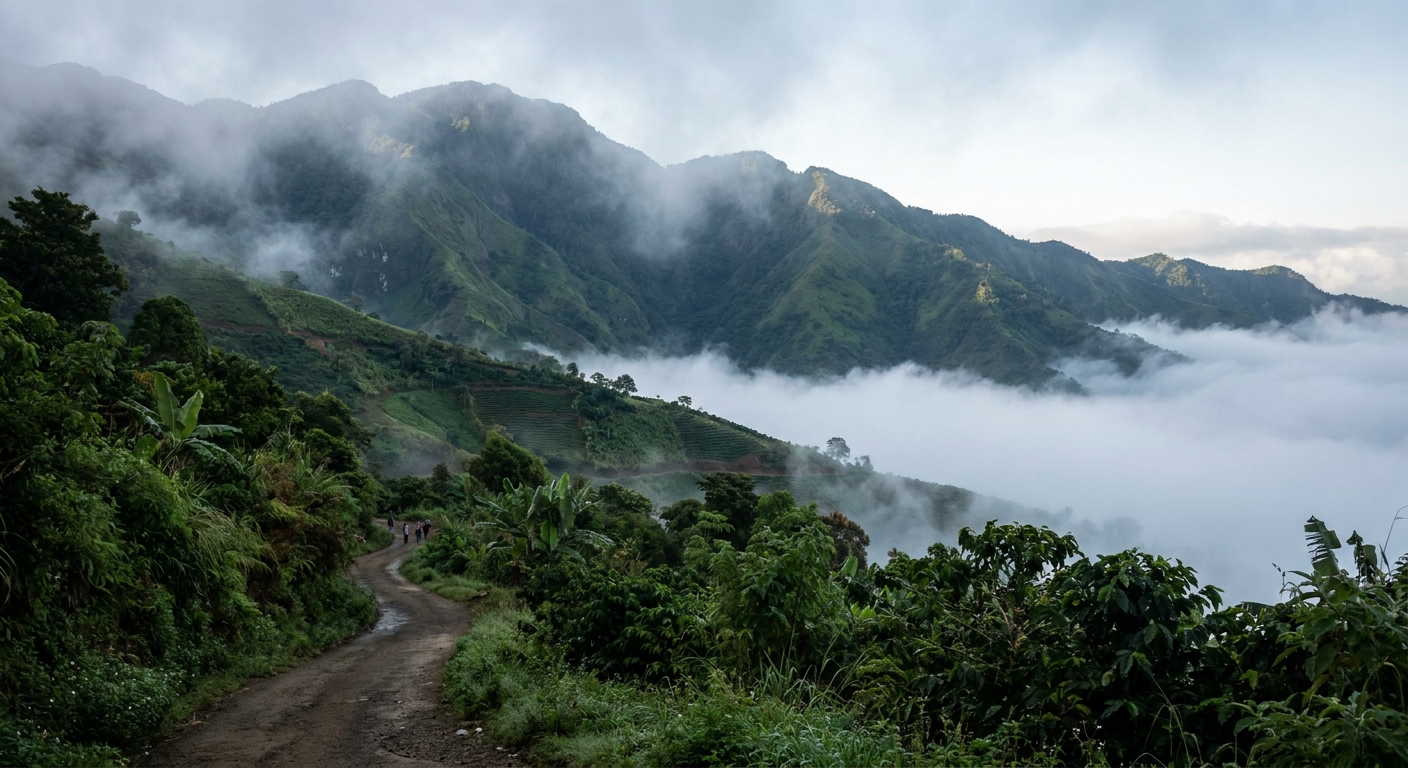
THE MONTH AT A GLANCE · BLUE MOUNTAINS · SEPTEMBER
September on the peak averages 62.0°F by day and 53.9°F by night, with rain on about half its days: go with layers, a rain shell and two possible summit mornings.
ERA5 REANALYSIS · SUMMIT CELL AT 2,256 M · 2 NIGHTS · HURRICANE SEASON
Go for: Blue Mountain Peak at 2,256 m, the Elfin Forest above 2,000 m, threatened endemic birds and the Nanny Town Heritage Route, in air that tops out near 62°F.
Think twice before: building the trip around one fixed summit day: measurable rain falls on 14.7 days in an average September.
Climate: Open-Meteo / ERA5 reanalysis, summit cell · Light: sunrise-sunset.org · Park: UNESCO World Heritage Centre · full sources at the end
On this page
- Blue Mountains weather in September62.0°F highs, 53.9°F lows, 14.7 rain days
- How cold the peak gets at nightAn 8.1°F day-night swing and what to wear
- Crowds, booking and prices in SeptemberHurricane season, lodging tax and guide costs
- Things to do in the Blue Mountains in SeptemberBlue Mountain Peak, the Elfin Forest, the Nanny Town route
- A two-day Blue Mountains itinerarySummit at 5:53 a.m. sunrise, Maroon heritage on day two
- August or October instead?Rain days at 11.3, 14.7 and 17.0
- Is September a good time to go?Who should go, and which month to pick instead
Every figure here comes from one grid cell, centered at 18.0465° N, 76.5788° W, over Blue Mountain Peak at 2,256 m. A lodge lower on the slopes will run warmer, and a Kingston forecast warmer again, so pack from the normals below, not from a city weather app.
The Blue Mountains weather in September: average highs, lows and rain days
| September normal (1991 to 2020) | Summit cell |
|---|---|
| Average high | 62.0°F |
| Average low | 53.9°F |
| Precipitation | 6.06 in |
| Days with 0.10 in or more | 14.7 |
| Days with 1 in or more | 0.5 |
| Daylight on September 15 | 12 h 16 min |
| Sunrise · sunset, September 15 | 5:53 a.m. · 6:09 p.m. |
Our source is Open-Meteo’s ERA5 reanalysis for 1991 to 2020, a model computation for that grid cell rather than a thermometer at a weather station. It gives September an average high of 62.0°F, an average low of 53.9°F and 6.06 inches of precipitation. Station normals and reanalysis can disagree by several degrees, and we found no station series on the summit to check these against.
In an average September, 14.7 days log at least 0.10 inch, so rain turns up about one day in two. Only 0.5 day reaches an inch or more, meaning a true downpour of that size arrives in roughly one September out of two. Spread over the wet days, the month averages about 0.4 inch each (6.06 inches over 14.7 days). Carry the rain shell every day and keep your summit morning movable.
The average day climbs just 8.1°F, from 53.9°F at night to 62.0°F in the afternoon. For that swing, one daypack holds everything: a fleece, a long-sleeve base layer, a waterproof shell, a warm hat and a spare pair of dry socks. Our Jamaica packing list covers the beach half of the suitcase.
On September 15 the sun rises at 5:53 a.m. and sets at 6:09 p.m. Jamaica time (10:53 and 23:09 UTC, with Jamaica on UTC minus 5 all year), for 12 hours 16 minutes of daylight. Plan every descent backward from 6:09 p.m., and bring a headlamp for a start before dawn.
How warm is the Blue Mountains in September?
On the peak, the average September afternoon reaches 62.0°F (16.7°C) and the average night falls to 53.9°F (12.2°C), a gap of 8.1°F. You cannot swim up here, and we found no sea-temperature reading to pair with these mountain figures: beach questions belong to our Port Antonio guide and our Kingston guide.
Near a 5:53 a.m. start, expect air close to the 53.9°F average low: fleece and hat on. By early afternoon, near the 62.0°F average high, a long-sleeve layer is enough on a dry stretch. Put the shell back on as soon as cloud closes in, since wet clothing at 62°F chills fast.
Our sources count no frost nights, and we could not verify how cold the single coldest September nights get. The average low of 53.9°F sits 21.9°F above freezing, and October’s normal low is only 0.7°F colder at 53.2°F. Bring a warm layer to sleep in if your mountain cabin has no heating.
How busy is the Blue Mountains in September? Crowds and prices
We found no occupancy series and no monthly room rates for mountain lodges, so we rank no month cheap or expensive. The calendar fact we can give: September falls inside the Atlantic hurricane season, set out date by date in our hurricane-season guide. Island-wide budget ranges live in our Jamaica trip-cost guide.
We could not verify a typical booking lead time for Blue Mountains guesthouses, so we give no week count. Book refundable where the lodge allows it, and confirm the mountain road is open before you fly: our after-Hurricane-Melissa update tracks recovery, and our airport-transfers guide handles the ride from the airport.
We could not verify a lodging-tax rate for Blue Mountains guesthouses, so we give no percentage. Ask whether the quoted room rate includes tax before you send a deposit.
If you spend extra anywhere in September, spend it on a guide. With rain on 14.7 days and no official trail time we could verify, a guide who knows the summit path can shift the climb to whichever of your two mornings is clearer. We found no stable official guide rate, so get the price, the start time and the rain plan in writing.
Things to do in the Blue Mountains in September
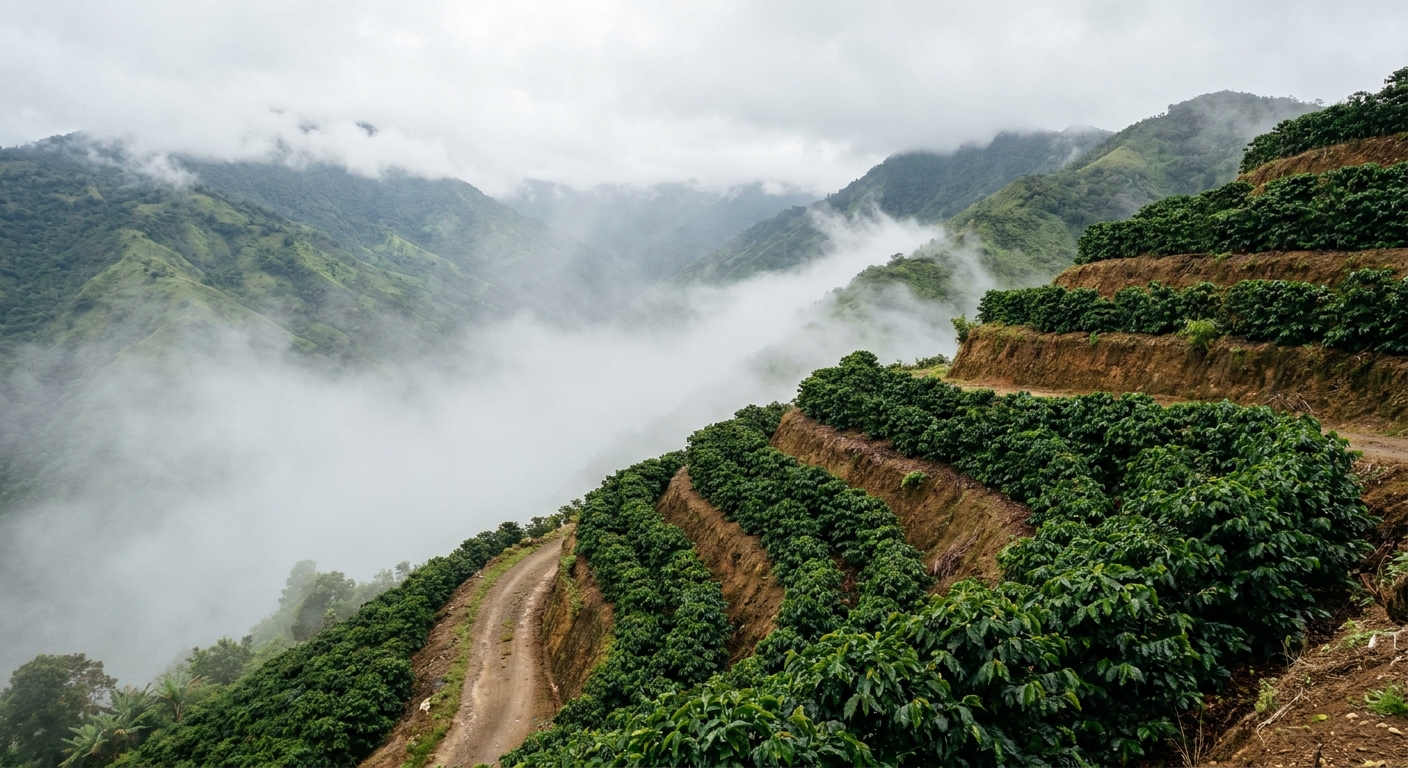
September still gives a summit attempt a fair chance before the wetter October. It logs 2.3 fewer rain days and 0.67 inch less precipitation than October, with more than 12 hours of daylight on the 15th to fit a dawn climb and a slow descent.
Blue Mountain Peak, at 2,256 m, crowns a UNESCO property of 26,251.6 hectares (about 64,870 acres) of tropical montane rainforest. Above 1,800 m (5,906 feet) the trees grow stunted, and above 2,000 m (6,562 feet) they become Elfin Forest, gnarled and hung with mosses, ferns and tiny orchids. UNESCO records 1,357 flowering plant species here, about 294 of them Jamaican endemics. Threatened birds include the Jamaican Blackbird and the Yellow-billed and Black-billed Parrots. The Nanny Town Heritage Route follows the secret trails and look-outs of the Windward Maroons.
The forest itself holds steady through the calendar: the nine ecological communities of the upper montane forest, the 61 liverwort and moss species, the 11 endemic lichens. What shifts is the weather around them. September brings 3.4 more rain days than August, and the average high slips 0.8°F, so expect more cloud in the Elfin Forest than a late-summer visit would bring.
We could not verify an entrance fee, a trail time or a guide rate from any stable official page, so we cannot tell you that any part of the park is free. Budget as if both a fee and a guide apply, and ask your lodge the evening before. Our Jamaica things-to-do guide covers the rest of the island.
The Blue Mountains in September: a two-day itinerary
Day one. Sleep in the mountains the night before and be walking by first light, headlamp on before the 5:53 a.m. sunrise, in air near the 53.9°F average low. We could not verify an official trail time to Blue Mountain Peak, so ask your guide for the round trip and count it back from the 6:09 p.m. sunset with an hour of margin. Aim for the summit by late morning, eat on the way down as the air warms toward 62.0°F, and keep the afternoon for dry clothes and an early night.
Day two. After a good summit day, turn to Maroon history: the Nanny Town Heritage Route traces the settlements and hiding places of the Windward Maroons, and Moore Town’s Maroon heritage has been on UNESCO’s Intangible Heritage list since 2008. If day one rained out, swap and climb now. If both mornings turn wet, head for the coast, with Port Antonio on one side of the range and Kingston on the other, and our getting-around guide for the roads.
The Blue Mountains in September vs August and October
| Summit cell, 1991 to 2020 | August | September | October |
|---|---|---|---|
| Average high | 62.8°F | 62.0°F | 60.6°F |
| Average low | 54.3°F | 53.9°F | 53.2°F |
| Precipitation | 4.75 in | 6.06 in | 6.73 in |
| Days with 0.10 in or more | 11.3 | 14.7 | 17.0 |
| Sea temperature | No reading found | No reading found | No reading found |
All three months come from the same ERA5 cell and the same 1991 to 2020 period. August averages 62.8°F by day and 54.3°F by night, with 4.75 inches over 11.3 rain days. September eases to 62.0°F and 53.9°F while rain climbs to 6.06 inches over 14.7 days. In October, highs fall to 60.6°F and lows to 53.2°F, with 6.73 inches over 17.0 days. We found no sea reading for any of the three.
Shift four weeks earlier into August and you get 3.4 fewer rain days, 1.31 inches less rain and a high 0.8°F warmer. Shift four weeks later into October and you take on 2.3 more rain days, 0.67 inch more rain and a high 1.4°F cooler. All three sit in hurricane season, so book refundable whichever you choose, and read our August guide or our October guide for the full month.
Is September a good time to visit the Blue Mountains?
Yes, if you want the summit, the Elfin Forest and the endemic birds, and you can pack for 53.9°F nights, carry a shell and keep two mornings flexible. No, if the trip hangs on one fixed summit day or on a swim: rain lands on 14.7 days, and the nearest beach is down on the coast.
If the answer is no, pick August among these three months: 11.3 rain days and 4.75 inches of rain, the driest of the trio, with the warmest average high at 62.8°F. For every month of the year across the island, see our Jamaica best-time guide.
Against its neighbors, September keeps within 0.8°F of August’s average high while logging 2.3 fewer rain days than October.
The last word
Choose your two mornings before you choose your room: with rain on about half of September’s days, a second shot at the summit is worth more than any upgrade. And when the cloud does lift at 2,256 m, look out over what you climbed through. The Blue and John Crow ranges together cover about 20% of Jamaica’s land, protected under the Natural Resources (National Park) Act of 1993.
Sources & data for this guide
- August, September and October normals (high, low, precipitation, rain days) · Open-Meteo / ECMWF ERA5, 1991 to 2020, grid cell 18.0465° N, 76.5788° W over Blue Mountain Peak (2,256 m) · model reanalysis, not a station reading · checked Sep 24, 2026
- Sunrise, sunset and daylight on September 15 · sunrise-sunset.org, UTC times converted to Jamaica time (UTC minus 5) · checked Sep 24, 2026
- Inscription, area, elevations, forest zones, species counts, birds, Maroon heritage and protecting laws · UNESCO World Heritage Centre, property 1356 · checked Sep 24, 2026
- Feet, acres and °C are our conversions from the metric and °F figures above.
- What we could not verify: trail times, an entrance fee, guide rates, a sea temperature, frost-night counts, occupancy data, a lodging-tax rate and booking lead times. We found no stable official page publishing them, so we give no figure for any of them. Ask your lodge and guide when you book.
To plan your stay
- Things to Do in the Blue Mountains: Coffee Farms, the Peak Hike, Bike Descents and Short Trails
- Blue Mountains Wildlife: The Birds, the Hutia and What Lives Only Here
- Best Time to Visit the Blue Mountains: Rainfall, Cool Nights and the Quiet Months
- The Blue Mountains in August: Weather, Rain Days and July vs September