
Rethymno is the Cretan town many visitors discover on a second trip, after starting out in Chania. It has a Venetian harbor, a fortress on a headland, an old town made for wandering, and a long golden beach a short walk away. It suits couples, families and anyone who likes a place with some rough edges and a laid-back pace. The best months to go are May and June, and September and October.
Where should you stay in Rethymno?
Most of the decision comes down to one question: do you want to walk out of your door into stone alleys, or onto sand?
The Old Town
Here you get cobbled lanes shaded by vines and bougainvillea, and doorways and arches in honey-colored stone that open onto hidden courtyards. Boutique hotels cluster on the streets around the Rimondi Fountain and up toward the fortress. Avli Lounge Apartments and Palazzino Di Corina are two good choices. Avli is also the town's best-known restaurant, and its hotel guests eat breakfast every morning in the same courtyard where dinner is served, which is hard to beat.
The old town is largely pedestrianized and car access is limited, so ask your hotel where to park before you arrive. Pack lighter than you'd like, too, because cobbles and wheeled suitcases are not friends.
The beachfront east of town
Head east past the fortress and the town turns modern, with a vast sandy beach lined with hotels and restaurants. A beachfront suite about a 15-minute walk from the old town gives you both worlds: a swim before breakfast, a stroll into history for dinner. Volakas Beachfront Suites and the Grecotel Creta Palace are both on this side of town. Families like it because the sand slopes gently into the sea.
Bali and the resort coast
Bali sits about 19 miles (30 km) east of Rethymno. It's a small resort town built around several coves, with a low-key fishing port and tavernas along the quay. As a day trip it's forgettable. As a base it makes sense: it's noticeably cheaper than Rethymno or Chania, and Rethymno is about 30 minutes away on the highway. Choose it if budget matters and you'll have a rental car. Panormos and Platanias are other resort towns with plenty of hotels and villas.
The south coast
Plakias and Agia Galini are calmer than the northern resorts, with beaches that range from organized to secluded.
What are the best things to do in Rethymno?
Start in the old town, and start early. Give it a full morning, or a full day if you let it; three hours feels rushed. Going early in the morning means beating the tour groups, and the light on the water is reason enough to be at the harbor then.
The Venetian harbor is small and layered, with fishing boats at the quay and waterfront tavernas that make very good coffee. Walk out along the breakwater to the honey-colored lighthouse, built by the Egyptians in the 1830s, and look closely at the top for its carved symbols. The view back, with a minaret rising over the rooftops and the fortress on its hill, shows at a glance why people have fought over this coast for so long.
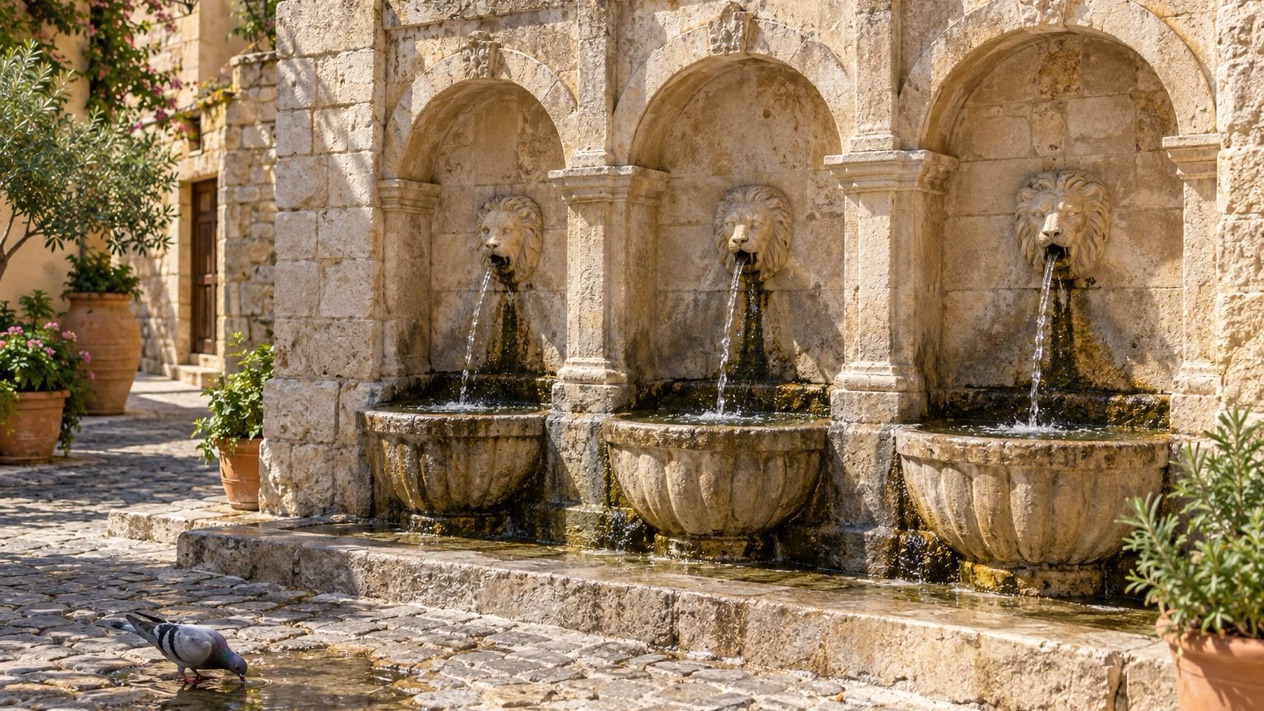
From the harbor, the Rimondi Fountain is a few minutes inland, in Petychaki Square. Built in 1626, it sends water from three lion heads into three basins, flanked by Corinthian columns. It still runs, and you can fill a water bottle for free. Nearby, the Neratze Mosque is easy to spot, with a minaret that rises about 89 feet (27 m). The building began as a Venetian church, became a mosque under the Ottomans, and now hosts concerts and a music conservatory. Its interior opens on some days and not others, depending on the program. If the door is open, go in and look up at the vaulted ceiling.
Porta Guora, the Great Gate, is a remnant of the 16th-century walls and a lovely place to begin exploring the old town. Step through it at the south end of town and you're in narrow streets with Byzantine churches, Venetian mansions and rustic old doors. From here, put the map away. The streets climbing toward the fortress are a pleasure to wander, with working craft shops selling ceramics, lace and leather. Souliou Street is the place for souvenirs: olive oil soaps, pottery, Cretan herbs and honey.
The Archaeological Museum is small but holds a large collection, and its Venetian-era building is a sight in itself. Look for the fossils of dwarf hippos and dwarf elephants from Crete's distant past. Full admission is €2 and reduced is €1 (2026). It keeps longer hours from April through October and shorter hours in winter, so check before you go. It's closed on Mondays and on a handful of public holidays, including Easter Sunday and Christmas. Admission is free on a few set days each year, including the last weekend of September, and on National Holidays.
Save the Fortezza for last. Built in 1573 on Paleokastro hill, it's enormous, partly ruined and partly restored, which is exactly its charm. Walk the ramparts for views over the town, the sea and the mountains. Inside, the former Venetian cathedral became the Mosque of Sultan Ibrahim Khan, and its dome is the standout. Count on two hours, expect a modest admission fee, and check current hours before you go. Bring water with you, since you may find little to buy once you're inside. The fortress is a fine place to watch the sunset, and a bar by the sea wall below it is ready when you want the drink to go with it.
What are the best beaches in Rethymno?
Rethymno Beach
East of the fortress, this long stretch of soft golden sand is the easy choice for families. Sunbeds and parasols are for hire, lifeguards keep watch, and public showers and changing rooms are nearby, along with hotels, restaurants and bars. It gets busy in high season. For a lazy day, beach clubs along this coast add outdoor pools, hot tubs and bars. At sunrise you may have the sand almost to yourself.
The stone beach by the fortress
Roughly across from the bus station, up toward the fortress, there's a stone beach. It's less polished, but the water is clear enough to see fish and seaweed between the rocks.
Preveli Beach
This is the one worth the effort. The Kourtaliotis River runs out of a gorge, across the beach and into the sea, with palms on both banks of the river mouth. You can swim in cool fresh water or in the salty sea. The beach is pebbly and has no facilities, so bring food, water and reef-friendly sunscreen. It's about a 40-minute drive south of Rethymno.
Go early. The beach fills up by late morning, boat tourists arrive around lunchtime, and by afternoon the sun has left the sand. The path down from the car park takes about 15 minutes over rough ground. To skip the climb, catch one of the fishing boats that drop off passengers, or take a boat from Plakias, a 15-minute drive west. Plakias has its own long sandy beach with plenty of facilities, and quieter coves nearby.
Georgioupolis
Georgioupolis has a long sandy beach, waterfront tavernas and a relaxed pace. It isn't a destination on its own, but it pairs perfectly with its riverside chapel and Lake Kournas (see Day 4 below).
What should you eat in Rethymno?
Eat at the harbor once, for the view. The waterfront is lined with fish restaurants and tavernas whose owners will coax you in as you walk by. The fresh fish is the draw, and prices run higher than in the alleys. For lunch, wander away from the water. The streets running up toward the fortress hide honest tavernas, and a handwritten menu is a better sign than a laminated one with photos.
Order dakos, the Cretan rusk topped with tomato and soft mizithra cheese, simple and very good. Add grilled vegetables and whatever the daily special is. Freshly baked spanakopita, a pastry filled with spinach and feta, and sweet baklava scent the alleys of the old town, and the shop windows make them hard to resist. Cretan wine and tsikoudia, the local spirit, are worth a taste. Wineries and olive farms around town run tastings and tours, and some include lunch in a village.
For dinner, Avli is the one to book. Picture a stone courtyard with herbs in clay pots climbing the walls, candlelight, and a chef who stops by your table to suggest what to order. It is not a walk-in restaurant, so reserve ahead.
How many days do you need in Rethymno?
Three days is enough to cover the town and a good sampling of the region. Add a fourth if you like lakes and lazy afternoons. The logic is simple: old town first, while your energy is high, then inland and south by car. Rent one for Days 2 to 4.
Day 1: The old town
Start early at the harbor and walk the breakwater to the lighthouse, then head inland to the Rimondi Fountain, the Neratze Mosque and Porta Guora. Wander the side streets until you're hungry, and lunch at a taverna with a handwritten menu. After lunch, visit the Archaeological Museum and finish on the Fortezza ramparts, checking its closing time first. Dinner at Avli.
Day 2: Margarites and Arkadi
Margarites is a ceramics village about 25 minutes from Rethymno on the road toward Arkadi. Potters work in small workshops along the main lane, and you can watch them at the wheel and buy direct from the maker. Go in the morning, when the workshops open. Smaller pieces travel better than the big statement pots.
Then continue to the Monastery of Arkadi, 14 miles (23 km) southeast of Rethymno and about 30 minutes by car. In 1866, Cretans sheltering here blew up the gunpowder store rather than surrender to the Ottoman Turks. Knowing that story turns a pretty building into a deeply moving place, and the white Venetian baroque gate is the image you've likely seen in photos. The monastery is still active, so cover shoulders and knees.
Day 3: Preveli and the south coast
Leave early for Preveli. Walk down to the beach while it's still quiet and swim in both the river and the sea. Afterward, drive up to the 17th-century monastery perched above the sea, with its small church and museum. During World War II, its monks sheltered thousands of Allied soldiers stranded after the Battle of Crete. If you have energy left, continue to Plakias for a late lunch and a swim.
Day 4: Georgioupolis and Lake Kournas
This is a slow morning. Georgioupolis is about 20 minutes west. Follow the path beside the river mouth under the eucalyptus trees, then cross a small wooden footbridge to Agios Nikolaos, a little white chapel with a blue dome that sits all on its own where river and sea come together. From there, drive a few minutes inland to Lake Kournas, often described as Crete's only natural freshwater lake. It's turquoise-green and still, with paddleboats and kayaks for rent and freshwater turtles that often show up near the shore in the morning. Spring and early summer show the lake at its bluest. Be back in Rethymno by midday and spend the afternoon on the town beach.
If you'd rather take a longer walk, Mili Gorge sits about 4 miles (7 km) outside town, and the hike through it winds past olive groves, citrus trees and the ruins of old watermills.
How do you get to Rethymno and around?
Rethymno has no airport. Most travelers fly into Chania or Heraklion; the town sits roughly midway between them on the north coast. The drive from Chania Airport takes about 1 hour and 20 minutes. From Athens, the flight to Chania takes 55 minutes, and from Thessaloniki 1 hour and 15 minutes. Buses connect Chania Airport with Rethymno, and you can buy tickets from the driver.
By sea, ferries link Rethymno with Heraklion and a number of Cyclades islands, including Santorini. A newer route connects Piraeus and Rethymno in 5 hours and 45 minutes, with a stop in Milos.
KTEL buses run frequently between Rethymno and both Chania and Heraklion. You can book online, and buying in advance is the way to get your preferred departure time. Current timetables are on the KTEL website. Buses work well along the north coast, but the day trips in this guide really need a rental car, and in summer you should book one ahead. Once in town, leave the car on the edges of the old town: there's paid parking near the harbor and car parks by the Venetian walls.
What should Americans know before going to Rethymno?
The U.S. State Department describes Greece as generally safe. U.S. citizens can enter without a visa for stays of up to 90 days, and your passport should have at least three months of validity beyond your planned departure date. If you plan to drive, Greek law requires a valid U.S. driver's license, and insurance companies may require an international driver’s permit. Strikes and demonstrations can disrupt transportation, and forest fires break out in the dry summer months, occasionally closing roads. Many care providers in Greece accept only cash, so keep some on hand. Petty crime is common in popular tourist spots, and thieves target rental cars for passports, valuables and luggage, so carry your passport and anything precious with you rather than leaving them in the car.
Sources
- thetravelbunny.com (https://thetravelbunny.com/rethymno-crete-guide/), checked October 18, 2026
- rethymno.guide (https://www.rethymno.guide/), checked October 18, 2026
- explorewithersilia.com (https://explorewithersilia.com/things-to-do-rethymnon/), checked October 18, 2026
- itravelforthestars.com (https://itravelforthestars.com/rethymno-travel-guide/), checked October 18, 2026
- greeka.com (https://www.greeka.com/crete/rethymno/), checked October 18, 2026
- U.S. Department of State (https://travel.state.gov/content/travel/en/international-travel/International-Travel-Country-Information-Pages/Greece.html), checked October 15, 2026
- e-ktel.com (https://www.e-ktel.com/en/), checked October 15, 2026
- anek.gr (https://www.anek.gr/en-gb/destinations/chania), checked October 15, 2026
- Hellenic Ministry of Culture, Odysseus (http://odysseus.culture.gr/h/1/eh155.jsp?obj_id=3310), checked October 15, 2026
- Visit Greece (GNTO) (https://www.visitgreece.gr/en/islands/crete/rethymno), checked October 15, 2026
- U.S. Department of State (https://travel.state.gov/content/tsg_aem/us/en/home/international-travel/travel-advisories/destination.grc.html), checked October 15, 2026
- seajets.com (https://www.seajets.com/media-center/news/2025/06/27/new-route-from-piraeus-to-rethymno-in-5-hours-and-45-minutes), checked October 15, 2026