
A basket of bread lands on the table before you have even chosen a dish, and beside it a small dish of oil, green-gold and smelling of cut grass and pepper. You tear a piece, dip it, and the meal has begun. Across Greece, olive oil is the thread running through the food, from the salad to the stewed vegetables to the fish at the seaside, and it shapes what a traveler eats at every table.
What is Greek olive oil?
Greek olive oil is the oil pressed from the fruit of the olive tree, the everyday fat of Greek cooking and the backbone of the country’s table. Olive oil is made by pressing whole olives, and it is used in cooking far beyond Greece.
What sets Greece apart is how much of it people pour. Greece has the highest per capita consumption of olive oil in the world, which you notice quickly: it goes into pies, beans, greens, grilled fish and nearly every salad.
The oil has a very long history on the land. Evidence suggests that olives were being grown in Crete as long ago as 2500 BC.
On the island of Naxos, in the Aegean Sea, traces of olive oil have been found in jugs over 4,000 years old, inside a tomb. Ancient Greek cuisine was built on a triad of wheat, olive oil and wine, and that triad still describes a simple Greek meal of bread, oil and a glass of something local.
At the table
Greek salad is the clearest place to taste the oil. It is traditionally dressed only with olive oil, with no vinaigrette and no lettuce, and the juices of tomato, cucumber, onion and feta mix with the oil at the bottom of the plate. Vinaigrette and lettuce turn up only in the most tourist-oriented restaurants, so a plain bowl with a pool of oil is a good sign.
It is customary to be served water and bread soon after sitting down, and the bread is there for the oil, whether it sits on the table or comes from the plates of your meal. Greeks dine around 14:00 to 15:00 for lunch and 21:00 to 23:00 for dinner, though tourist establishments may open as early as 12:00. Late meals give you time to taste slowly, and to finish with the small free dessert that arrives when you ask for the bill.
Even the old dishes lean on the oil. The Spartan army mainly ate melas zomos, a black soup made by boiling pigs’ legs, blood, olive oil, bay leaf, chopped onion, salt, water and vinegar.
Byzantine cooks added caviar, nutmeg and basil to the pantry, helped by Constantinople’s position as a hub of the spice trade, and fish remained part of the diet for coastal dwellers. The first Greek cookbook was printed on the island of Syros in 1828.
Reading the label and the taste
Extra virgin olive oil is required to have no more than 0.8% free acidity, which is the line between the top grade and everything below it. When you taste it, look for a fresh, fruity smell, a little bitterness on the tongue and a peppery tickle at the back of the throat. Those are the traits that tell you the oil is lively, and they are the reason a spoonful on its own is a good way to start.
Extra virgin oil also holds up in the pan, with a smoke point of 190 to 215 °C (374 to 419 °F), which is why Greek cooks fry with it. Olive oil supplies 884 kilocalories per 100 grams and is a rich source of vitamin E, providing 96% of the Daily Value in that amount.
In the United States, the FDA allows producers to claim that eating about 2 tablespoons (23 g) of olive oil daily may reduce the risk of coronary heart disease. A bottle packed in your suitcase is a simple souvenir of all this.
Which regions are best known?
Crete and Naxos are the two places where the story of Greek olive oil reaches back furthest, and both are islands you can build a taste-focused trip around. The oldest evidence of olive growing sits on Crete, and the oldest traces of the oil itself sit in a tomb on Naxos. Neither is a museum piece, since olive oil remains part of daily meals on both islands.
Crete
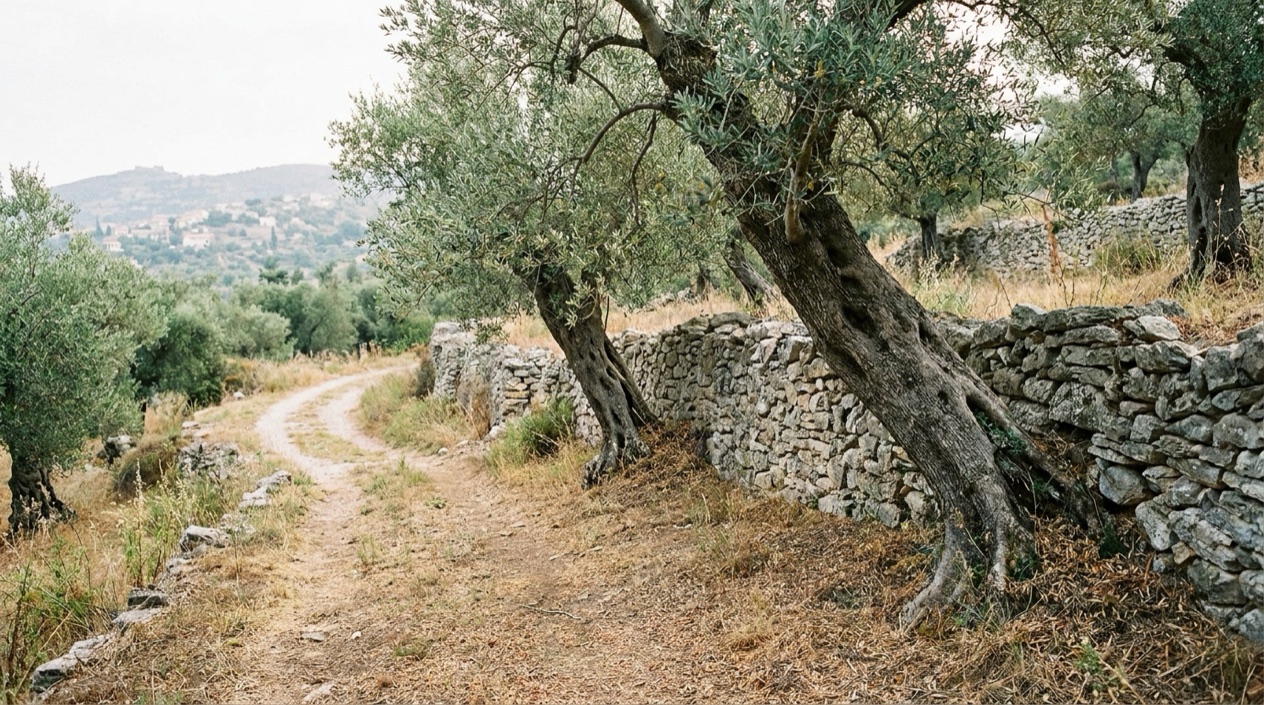
Crete is where evidence suggests olives were being grown as long ago as 2500 BC, which makes every olive grove on the island part of a very long line. Walking among the old trees, with their twisted trunks and silver-green leaves, gives you a feeling for how deeply the crop is rooted in the landscape. The island’s cooking uses the oil freely, in vegetable dishes, greens, beans and the fish you eat by the sea.
At the table, look for simple plates where the oil is the main flavor: a dish of boiled wild greens, a tomato and cucumber salad, bread rubbed with tomato and drizzled with oil. Fresh fish is sold by the kilogram and can be very expensive, so ask the cost of your portion before you order. By law, frozen seafood must be marked as such on the menu.
Naxos
On Naxos, in the Aegean Sea, jugs holding remains of olive oil were found in a tomb and are over 4,000 years old. That discovery ties the island to the oldest chapter of the oil’s story, and it gives a reason to look at olive trees here with a little more attention. The oil is a daily ingredient on the island’s tables, poured over salads and used in home cooking.
A meal on Naxos is a good place to compare oils from different bottles, since a taverna will often put a small carafe next to the bread. Taste it plain first, then on the salad, then on whatever grilled dish arrives. The difference between a fresh, peppery oil and a flat one becomes clear within a few bites.
Choosing where to taste
A few signs help you find a table that takes its food seriously. Bad signs include desserts listed on the menu, large food posters outside, waiters yelling for clients, or plates taken away while you are still seated.
A salad that arrives with only oil, as the tradition goes, is a better one. Greek yoghurt with honey or a plate of baklava, made of tissue-thin pastry layers with honey, cinnamon and chopped walnuts, rounds out a meal without hiding the oil.
Restaurants catering strictly to vegans and vegetarians are practically non-existent outside Athens and Thessaloniki, but the Greek table, built on bread, oil, greens, beans and vegetables, offers many plates without meat in any town. Lemons, which came to Greek cooking in the second century as a medicine before they were added to the diet, often sit alongside the oil on a plate of fish or greens.
Where can you visit a mill?
A mill visit belongs to olive country, and the islands where the oil’s story begins, Crete and Naxos, are the natural places to think about it. The point of going is to see how a fruit becomes the oil on your table, and to taste the result close to the trees. Hours, fees and tour arrangements vary from one mill to another, so this is a visit to plan around the place you are staying.
At a mill, olives are pressed whole, which is how olive oil is obtained. You see the fruit arrive in crates, the paste that comes from crushing, and the oil running out, green and cloudy at first. The smell is the strongest memory: grassy, sharp and a little bitter, nothing like the bland bottle in a distant supermarket.
What a tasting looks like
A tasting is usually a plain affair, with bread, a little oil in a small glass or dish, and perhaps olives or a few salad ingredients. You warm the glass in your hand, smell the oil, take a small sip and let it coat your tongue. A good extra virgin oil is fruity, a bit bitter and leaves a peppery tickle in the throat.
This is also the moment to compare. Taste one oil beside another and notice how color, smell and bite change. Try the oil on a tomato, on a slice of feta, on boiled greens. Then decide which bottle to carry home, remembering that a mill that sells its own oil lets you choose with the taste still in your mouth.
Pairing the visit with a meal
The natural follow-up is lunch, and Greeks dine around 14:00 to 15:00, so a visit to a mill fits comfortably before a late meal. At the table, notice how the oil is used: poured over a bean stew, stirred through greens, dribbled on grilled fish. Water and bread arrive soon after you sit, and the bread becomes a tool for finishing whatever oil is left on the plate.
Fast food gives a quieter contrast. At Goody’s, a popular fast food chain, a hamburger with Coke costs €3-5, and it makes a useful comparison with a taverna meal built on oil, vegetables and bread. Both belong to eating in Greece, but only one lets you taste the oil the way it was meant to be tasted.
Good to know before you go
A taverna meal with plenty of oil is a pleasure, but it helps to know how restaurants charge. Some add a cover fee officially, and if it tends toward the upper end of the range, you may prefer to eat elsewhere. Oil is also a rich food, since olive oil supplies 884 kilocalories per 100 grams, so a plate drenched in it fills you quickly.
| Fee | Amount | Who pays |
|---|---|---|
| Restaurant cover fee | €0.30 to €2 | Each diner, per person |
Sources
- Wikipedia, Olive oil (https://en.wikipedia.org/wiki/Olive_oil), checked October 12, 2026
- Wikipedia, Greek cuisine, section History (https://en.wikipedia.org/wiki/Greek_cuisine#History), checked October 12, 2026
- Wikivoyage, Greece, section Eat (https://en.wikivoyage.org/wiki/Greece#Eat), checked October 12, 2026
To plan your stay
- Best Time to Visit Greece: September and Late May to Early June
- Arachova: Parnassus Mountain Town, Formaela Cheese, Ski Season and Saint George's Day
- American Airlines Flights to Greece: U.S. Cities, Athens Arrivals and Onward Island Flights
- Greece on a Budget: Cash Machines, Cards, Beaches and Ferries