
A waiter sets down a small cup of thick Greek coffee, and beside it comes a glass of cold water that nobody asked for. That glass is usually where a visitor starts wondering about the tap. The short answer is reassuring: the water is almost everywhere safe to drink, and the real differences are about taste, especially on some of the small islands.
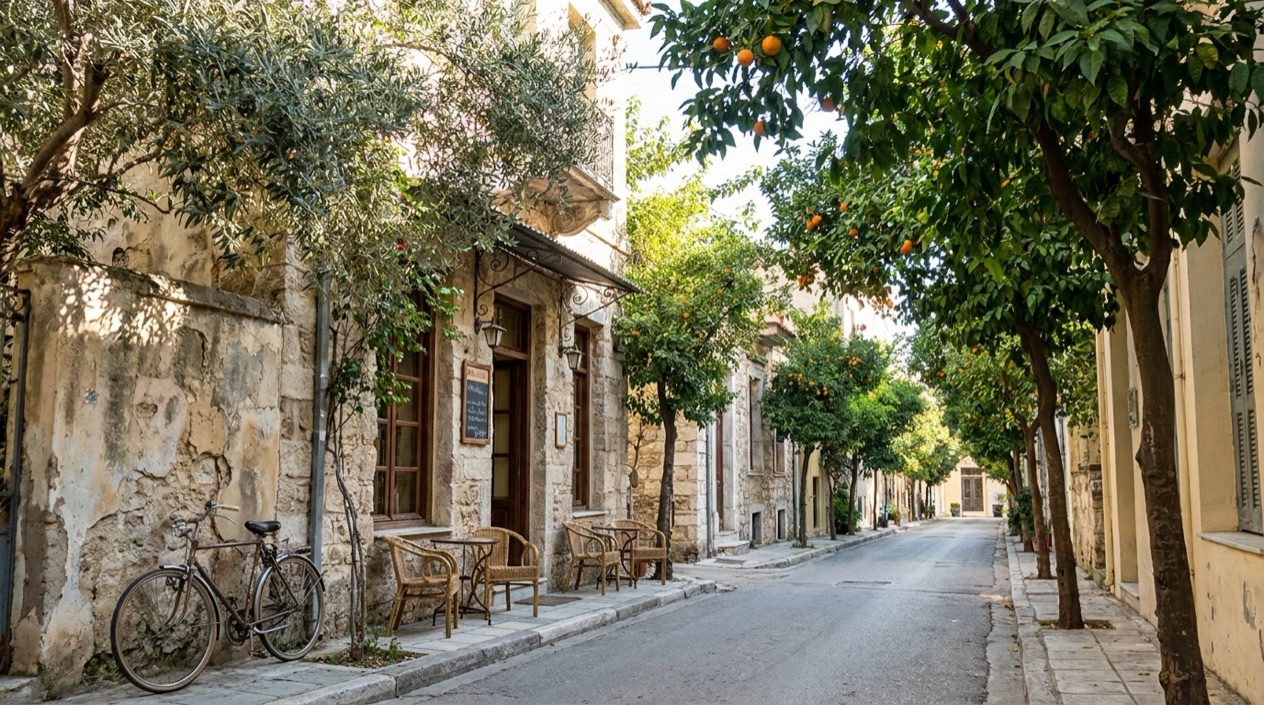
Is tap water safe to drink in Greece?
Yes, the water in Greece is almost everywhere safe to drink, and that is the plain reading for most trips. Greece asks for no required inoculations from travelers, and the same general statement that covers vaccinations also covers the water. The word to hold on to is “almost”: it leaves room for the exceptions that matter more for taste and habit than for worry, and those are covered in the next sections.
In practice this means a traveler in a hotel room, a rented apartment or a village guesthouse does not start from suspicion. You can fill a glass at the sink, brush your teeth and make a morning coffee the way you would at home. Where the water tastes odd, bottled water is the fallback many visitors choose, and it is sold in the shops and kiosks of towns and ports.
What the table brings without being asked
Water in Greece is part of hospitality. A glass of water is traditionally served with any drink you order, one glass for each drink, and most of all with coffee. Sit down at a kafenio (the old-style neighborhood coffeehouse) and order a Greek coffee, a thick, strong black coffee in a small cup, and the glass arrives alongside it. If you do not say how you want it, it comes moderately sweet.
In touristy areas the habit can slip, and you might have to ask. A simple request for a glass of water is all it takes, and nobody finds it strange. The same goes for the longer drinks of the evening.
Ouzo, the anise spirit, arrives with water on the side, and raki, also called tsikoudia, is a spirit of 35 to 40 percent alcohol served cold in the summer months. A glass of water next to either one is the natural companion.
Water, coffee and the hot months
Summer in Greece is a season of iced coffee. Frappé, a shaken iced instant coffee, is popular in the hot months and can be ordered with or without milk, sweetened or not. Espresso freddo, simply espresso with ice, and cappuccino freddo, which adds chilled milk foam, are the most popular coffees throughout Greece. Each of them comes with its glass of water, which in a hot afternoon you will actually drink.
One small warning for the thirsty: in mass-sector tavernas and cafes, iced tea typically means instant, so ask twice if you prefer brewed iced tea. If what you want is simply something cold and plain, the water that comes with your order does the job.
Heat is the bigger reason to drink
The question that matters more than the tap on a summer trip is how much you drink. Athens has been subject to periodic summer heat waves where the temperature can reach above 100°F, posing a risk of respiratory problems and heat stroke for some people. A bottle in the bag and a glass at every table are a sensible response to that, wherever the water comes from.
Air quality belongs in the same picture. Air pollution can be a significant problem in many destinations overseas, including Greece, which is one more reason travelers with breathing problems pay attention to hot days in the city. Prescription medication, for anyone who takes it, travels in its original packaging with the doctor’s prescription.
Which islands differ?
Some small Greek islands differ, because on them the tap water is imported and heavily chlorinated, so it does not taste very good, and many visitors prefer bottled water. That is the exception behind the word “almost” in the answer above. It is a matter of flavor, and the bottle on the shelf is the usual response.
The fact belongs to some small islands, not to every island and not to the mainland. It would be wrong to carry it over to a large island or to a city, and equally wrong to name a particular island as having imported water without knowing. What a traveler can do is arrive on a small island expecting that the tap may taste of chlorine, and buy water for drinking while using the tap for washing and brushing.
Small islands and the taste of the tap
Imported water means that the island does not produce enough of its own, and the water arrives from elsewhere to be stored and distributed. The heavy chlorination is part of that arrangement, and it is what you taste. The effect on a cup of coffee or a glass of tea is noticeable, which is why visitors on such islands drink from bottles and keep the tap for other uses.
This is a good thing to know before you choose where to stay for a week. A guesthouse on a small island may have a kettle and a sink, and the first morning’s coffee will tell you quickly what the water is like. Buying a few bottles at the first shop is a small step that solves the matter.
The Cyclades: little shade, more thirst
Many islands, especially in the Cyclades, have very little shade to ameliorate the summer heat. If you go hiking around such islands, including going by foot to distant beaches, it is especially important in hot weather to wear a hat and sunscreen, to take water, and to avoid being caught walking during the hottest part of the day.
On these islands the question of water is as much about what you carry as what you drink at the hotel. Where the walk to a beach leads over open ground, the bottle you bring is the only water you have, so it is worth filling it generously before you leave the village. The same logic applies to a day with a long bus ride and a stop at a distant cove.
Island bars and what is in the glass
Water is not the only thing worth looking at in a glass on an island. Imported, non-Greek alcoholic beverages are likely to be very expensive if genuine, and if cheap, they may be a locally distilled alcohol with flavorings called bomba, which is sometimes passed off as whisky or gin in island bars catering to young people. Greek drinks are the safer and more interesting order.
On the islands, tourists and Greek islanders generally drink ouzo with ice, while mainlanders do not. Mytilene on Lesbos is particularly famous for its ouzo, with popular brands including Mini, Number 12, Sans Rival, Arvanitis, Barba Yianni and Aphrodite.
In Crete, raki is traditionally considered an after-dinner drink and is often served with fruit as dessert. Retsina, the resinated wine, has a strong, distinctive taste that comes from pine resin, once used as a sealant for wine flasks and bottles.
Where can you refill a bottle?
The most dependable place to refill a bottle in Greece is your own room, since the water is almost everywhere safe to drink, with the exception of the small islands where it is imported and heavily chlorinated. Beyond the sink, the table does a good share of the work, because a glass of water comes with every drink you order.
A traveler who sits down for a coffee, an ouzo or a cold frappé gets a glass without asking in most places, and in touristy areas can simply ask for one. Over a day of sightseeing, these glasses add up. Stopping for a coffee in the middle of the morning also becomes a way to drink, not only a pause.
Start the day at the sink, finish it at the table
On the mainland and on larger islands, filling a bottle before you go out is the natural habit, because the water is safe almost everywhere. On a small island where the tap is chlorinated, the bottle you carry is better bought than filled, and the shop at the port or in the village is where you start.
At the end of the day the habit turns to the table. A taverna evening opens with a glass of water, and a drink brings another. Coffee, in particular, is never served alone. If you order a second drink, a second glass should follow, as one glass for each drink is the tradition.
Carrying water on hot walks
A long walk is the one situation where the question of refilling matters most. On the Cyclades, where shade is scarce, a hat, sunscreen and water go with you, and the hottest part of the day is the time to avoid being on foot. That includes the walks to distant beaches that look short on a map and feel long in the sun.
Since you cannot count on finding a place to buy water along an open path, carry what you need for the whole outing, and drink before you are thirsty. In the heat waves that Athens sometimes sees, the same attention applies on city walks, where a pause in a cafe, with its glass of water and an iced coffee, is a sound way to cool down.
Good to know before you go
Health care is where the practical side of a trip needs a word. Public health care is free and universal for all EU nationals upon presentation of an EHIC card, while for non-EU nationals only emergency care is provided for free.
Most health care providers in Greece only accept cash payments, and U.S. travelers may be required to pay upfront and seek reimbursement from their insurance company. U.S. Medicare is not accepted overseas, including in Greece.
A few other habits belong on the list. Mosquitoes transmitting West Nile virus appear routinely, even in urban areas like Attica, so long sleeves or repellent make sense where they are about. Jellyfish periodically infest some beaches and their stings can be severe, the red ones being particularly dangerous. Sea urchins cling to flat underwater surfaces in shallow water, where they are easy to see, and their spines are painful if stepped on.
Sources
- U.S. Department of State, Greece travel information, health (https://travel.state.gov/content/travel/en/international-travel/International-Travel-Country-Information-Pages/Greece.html), checked October 12, 2026
- Wikivoyage, Greece, section Drink (https://en.wikivoyage.org/wiki/Greece#Drink), checked October 12, 2026
- Wikivoyage, Greece, section Stay healthy (https://en.wikivoyage.org/wiki/Greece#Stay_healthy), checked October 12, 2026
To plan your stay
- Best Time to Visit Greece: September and Late May to Early June
- Arachova: Parnassus Mountain Town, Formaela Cheese, Ski Season and Saint George's Day
- American Airlines Flights to Greece: U.S. Cities, Athens Arrivals and Onward Island Flights
- Greece on a Budget: Cash Machines, Cards, Beaches and Ferries