
On a summer evening in a Greek harbor town, the stone quays still hold the day’s warmth, and travelers sit over plates of grilled octopus wondering why half of their suitcase never left the bag. Summer here is a dry season, built around sun, shade, water and long hours outdoors. Pack for heat and light, bring one extra layer for the places that sit higher, and leave the rain gear and the heavy items behind.
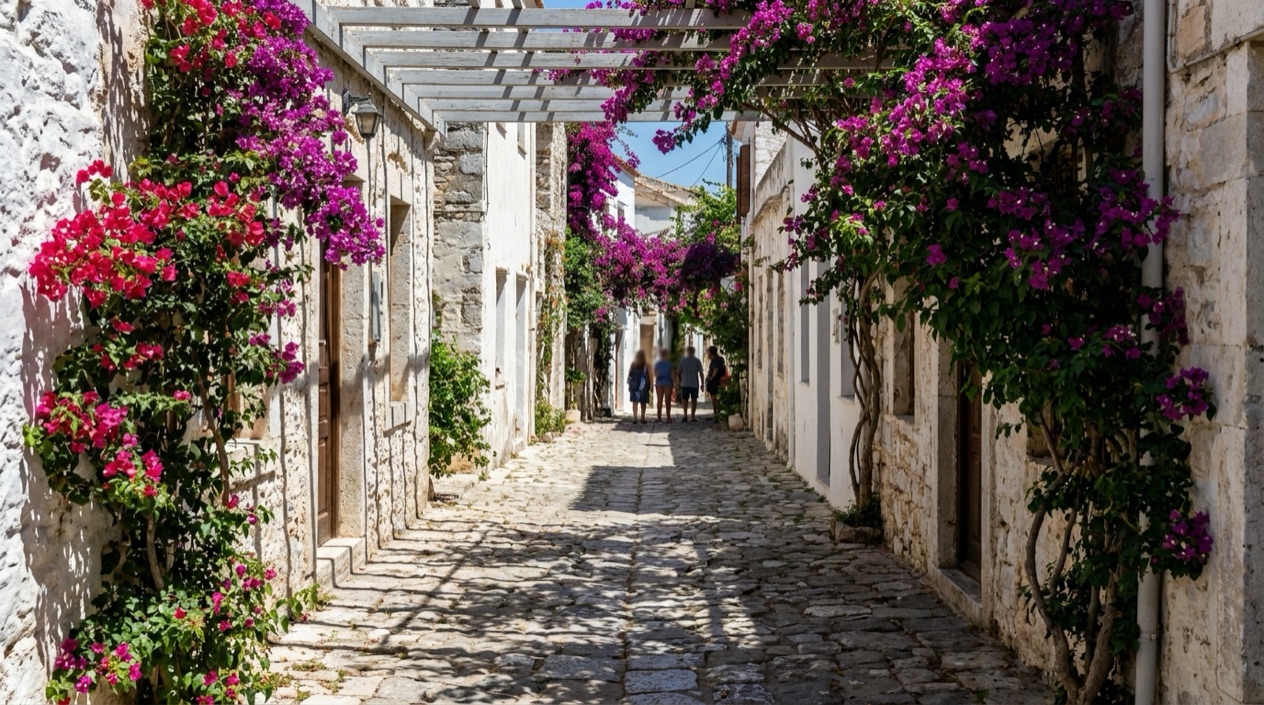
What should you pack for Greece in summer?
Pack light, breathable clothing, strong sun protection and sturdy shoes for stone, because Greek summers belong to the Mediterranean pattern of long, dry, sunny months. In that kind of climate, summers can go four to six months without significant rain, so the whole bag can be planned around heat and sunshine rather than showers. The rest of the list is built on that one idea.
Think of the trip as a series of outdoor days: ruins and hillside paths, harbor promenades, beaches, village squares and long tables under a vine-covered awning. Each of those asks for the same few things, clothes that dry fast and let air through, something on your head, something on your skin and something sturdy on your feet.
Clothing for hot, dry days
Cotton, linen and other airy fabrics do the most work in a summer suitcase. Loose shirts, short-sleeved tops, shorts, skirts and light trousers can be mixed and matched across a week, and a few pieces will carry you through an island-hopping route without a laundry stop. Light colors are a sensible habit under a strong sun.
Add a swimsuit or two so one can dry while you wear the other, plus a light cover-up that works for the walk from the beach to a taverna, the traditional Greek eatery where meals are shared across the table. A wide-brimmed hat or a cap earns its place on every archaeological site, where shade can be scarce between the stones.
Sun protection
With rain scarce through the season, the sun is the thing you plan for. Sunscreen, sunglasses and a hat belong in the day bag, not the suitcase. A lip balm with sun filter and a light long-sleeved shirt for the hours you cannot avoid being out in the open are useful additions.
A refillable water bottle is a habit worth bringing along for hillside paths and ruins, where you walk with little cover overhead. It also saves you from carrying a pile of plastic back to the hotel at the end of each day.
Shoes for stone and sand
Greek old towns, castle paths and ancient sites are laid with stone, often worn smooth by centuries of feet. Comfortable walking shoes or supportive sandals with a grip are the pair you will wear most. Flip-flops suit the beach and the hotel pool, but not a day of climbing through ruins.
A second pair, such as water shoes, is a personal choice for rocky shorelines, and they take little room in a bag. Break in any new shoes at home first, since a trip made of walking punishes fresh leather quickly.
A layer for higher ground
Summer temperatures in a Mediterranean climate can run from cool to very hot depending on distance from a large body of water, elevation and latitude.
It weighs next to nothing and rides at the bottom of a daypack. If your trip stays at the water’s edge, it may never leave the bag, and that is perfectly fine.
How hot is it?
Summer in Greece is hot and dry, in the way of a hot-summer Mediterranean climate, where the warmest month is distinctly warm and rain is scarce. That is the general character of the season, and the exact feel changes from one place to the next. A harbor on the sea, a plain far from the coast and a village up in the hills do not share the same day.
The reason is that summer temperatures in this kind of climate depend on three things: how far you are from a large body of water, how high the ground sits and how far north or south you are. A sea breeze can take the edge off a seaside afternoon, while a place set back from the water has less of that help. Higher ground can feel noticeably different from the lowland below it.
Dry weather and what it means
A Mediterranean summer can go four to six months without significant precipitation, with rain falling mainly in winter and spring. For a traveler this means that sunny days are the rule and that your plans, whether a ferry day, a ruin visit or a beach afternoon, are rarely built around a forecast of rain.
Rainfall in these climates is also irregular and can differ considerably from one year to the next, which can deepen droughts. A dry landscape in summer, with golden slopes and dusty scrub, is part of the look of the season. The hardy shrublands called maquis, a tangle of tough, aromatic bushes, cover much of the Mediterranean hillside and give summer walks their herbal scent.
Wind, dry land and wildfire
In Mediterranean climates, strong winds from inland can sometimes push summer temperatures higher and quickly raise the risk of wildfires. It is a reminder that a hot, dry season on dry ground asks for attention to local conditions, and that a sunny forecast is not the whole story of a day.
In practice, that means listening to what locals and hotel staff say about conditions where you are staying, and following any local instruction if one is given. It is a reason to carry water and sun protection into the countryside, and it is part of why the heat deserves respect.
Planning your days around the heat
With heat this steady, travelers shape the trip around shade and water: a swim, a long table under a canopy, a museum with a roof, then a walk once the sun has lost its grip. The Greek lunch, a drawn-out affair of salads, grilled fish and shared dishes, fits this rhythm naturally.
Pack accordingly. Extra swimwear, a hat that you will really wear and a bottle that you refill matter more than a second pair of jeans. Clothes you can rinse in a sink and hang on a balcony will be dry quickly in this climate.
What can you leave at home?
You can leave the heavy clothing, the umbrella and most of the “just in case” items at home, since a dry summer climate asks for little beyond light layers and sun protection. A Mediterranean summer goes months without significant rain, so a bulky rain jacket is rarely the item that saves a day.
Cold-weather clothes
Winter temperatures in Mediterranean climates only occasionally fall below freezing, and snow is seldom seen except in some places, so winter clothing is for another season altogether. Heavy sweaters, thick coats, scarves and gloves take up room and are not part of a summer suitcase.
One thin layer is plenty. If you are heading to higher ground, that layer is the only concession you need to make to cooler air, and it is enough for most plans.
Rain gear and extra shoes
A full rain kit is a heavy bet against a season that is dry by nature. Leave the umbrella and the waterproof boots, and keep the space for sandals, swimwear and a spare hat. Because rainfall in these climates is irregular and varies from year to year, a very light foldable layer is the most you would consider, and only if it takes no room.
The same goes for a long shoe lineup. Two pairs, one for walking and one for the water or the evening, will cover nearly every plan. A third pair is rarely worn and always carried.
Too many outfits
Hot weather and quick-drying fabrics mean you can wear pieces more than once and rinse them as you go. A week of clothes is enough for a longer trip when everything mixes together. Formal outfits, heavy denim and anything that needs ironing take up space and rarely earn it.
Heavy jewelry, large towels and bulky beach gear are also easy to skip. Travelers find a light, quick-drying towel is all they need, and anything else can be picked up on the spot if a plan calls for it.
Good to know before you go
Summer here is a dry, sunny season on dry ground, so the habits that matter are simple ones: carry water, protect your skin and pay attention to local conditions when the wind picks up, since strong winds can raise the risk of wildfires in Mediterranean climates. Pack your bag in layers of light fabric, keep a thin extra layer for higher places, and let the rest stay home.
Sources
- Wikipedia, Mediterranean climate (https://en.wikipedia.org/wiki/Mediterranean_climate), checked October 12, 2026