
The question usually comes up at the kitchen table, with a half-filled suitcase and a forecast that cannot decide what season it is. In Greece the fall days still smell of sun-warmed pine and thyme, the taverna tables stay out on the pavement, and the first rain starts to roll in over the hills. The short answer is a suitcase built on light layers, one real rain layer and shoes that handle stone.
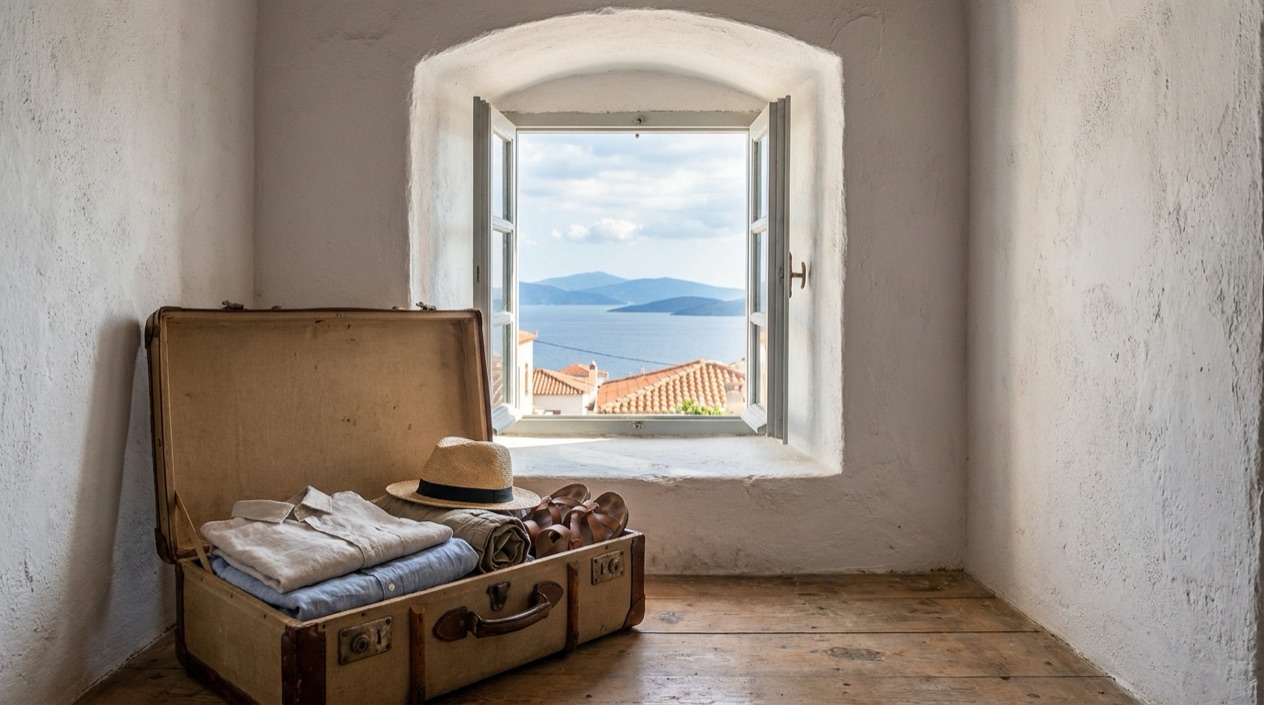
What should you pack for Greece in fall?
Pack for a season in transition: clothes that work in warm sun, a layer for cooler hours and something that sheds water, all of it in a bag you can carry up a flight of steps. That approach comes straight from the climate.
Greece sits in the Mediterranean climate zone, where summers can run four to six months without significant rain and the wet weather arrives mainly in winter and spring. Fall is the bridge between those two moods, so the suitcase has to cover both.
Rainfall in this kind of climate is also irregular and can change a great deal from one year to the next. One October can feel like an extension of summer, another can bring a stretch of gray, wet days. You cannot plan on either, so you pack for the possibility of both and keep the choices small and flexible.
Clothes that layer
Build around a handful of pieces that mix and match: a few short-sleeved shirts or light tops, one or two long-sleeved shirts in cotton, linen or a similar breathable fabric, and a sweater or fleece that can go over any of them. Light trousers and a pair of shorts or a skirt round it out. Because summer temperatures in Mediterranean climates depend on how close you are to the water, how high you are and how far you are from the equator, a layering system lets one wardrobe work from a beach town to a mountain village.
A light scarf or wrap is a useful extra for a ferry deck, a bus with the air conditioning on or an evening on a terrace. Add enough underwear and socks for a week and plan on a laundry stop rather than packing for the whole trip. Villages and islands often have a small laundry or a room with a washing machine, and the lighter bag pays you back on every staircase.
A rain layer, not an umbrella arsenal
Since rain in this climate falls mainly in winter and spring and is irregular from year to year, fall is the moment when a waterproof layer starts to earn its place. A light rain jacket with a hood folds into a daypack and works for a walk through the old streets of Athens, a hillside path or a quay while you wait for a boat. A compact umbrella is a fine backup in a city, though a hooded jacket is better on a windy waterfront.
Think about what gets wet and what you cannot afford to lose. A small zip bag or dry pouch protects a phone, a passport copy and a camera if a shower catches you out. Shoes that dry quickly are more useful than leather ones that take a day on a radiator, and a spare pair of socks in the daypack costs nothing.
Shoes for stone, steps and shrubland
Greece is a country of marble steps, cobbled lanes, dirt tracks and uneven paths between ruins, so the shoes matter more than almost anything else on the list. Bring one pair of broken-in walking shoes or trail sneakers with a grippy sole, because polished stone can be slippery, especially if rain has passed through. These are the shoes you wear on ancient sites, in village alleys and on the footpaths that cut across the hills.
Many of those hills are covered with maquis, the sclerophyll shrubland of the Mediterranean Basin made of tough, low, aromatic bushes. Walking there means brushing past scratchy plants and loose rock, so closed shoes and light long trousers make a trail more comfortable. A pair of sandals is a good second pair for the beach, the hotel and warm afternoons in town, but they should not be the only footwear you bring.
Sun and the small things
A Mediterranean fall still has strong sun on open ground, so pack sunglasses, a hat with a brim and sunscreen. Ruins, hilltop castles and village squares offer little shade, and the light bounces off pale stone and water. A refillable water bottle fits easily into a daypack and keeps you comfortable on long walks.
Beyond that, bring the ordinary travel kit: a phone charger, a plug adapter for European outlets, any medication in its original packaging and a small first-aid pouch with blister plasters for new shoes. A swimsuit is worth including if you plan to spend time by the sea, and a quick-dry towel takes almost no room. A light daypack or crossbody bag carries it all.
What is the weather like?
Greece has a Mediterranean climate, which means a long dry summer that hands over to a wetter winter, and fall is the stretch where that handover begins. The most useful thing to know is that the country does not have a single fall. Summer temperatures in this kind of climate range from cool to very hot depending on distance from a large body of water, elevation and latitude, and the same logic explains why an island beach, a mainland valley and a mountain town can feel quite different on the same day.
A dry summer giving way to wetter months
The defining pattern of the Mediterranean climate is a summer that can pass four to six months without significant precipitation, with rain falling mainly in winter and spring. Fall sits at the end of the dry stretch and before the rainy months have fully set in. In practice that means you can plan for plenty of open-air time, with a rain layer in the bag for the days when the pattern breaks.
The rain itself is irregular and can vary considerably from year to year, which accentuates droughts in dry years and produces surprises in wet ones. For a traveler this is a reason to stay flexible. Keep a couple of indoor options in your plans, such as a museum, a covered market or a long lunch in a taverna, and let the sky decide which day is which.
Warm coasts, higher ground and the hills
Large bodies of water shape temperatures, and in Greece the sea is never far away. Coastal and island places feel the influence of the water, while higher inland ground, mountain villages and monastery country follow their own rules because elevation changes the air. When you cross from a harbor town to a village up the slope, expect a different feel and carry the sweater you left in the room.
The Mediterranean zone is typically found along western coasts between roughly 30 and 45 degrees of latitude, and Greece fits inside that band. The Ionian Sea view from the island of Lefkada is even used as a picture of the Mediterranean biome, with dry-loving green hills dropping down to blue water. It is a good image to hold in mind when you pack: sun-washed landscape, scrubby slopes and a sea that shapes the weather.
Winter is not far behind
Winter temperatures in Mediterranean climates only occasionally fall below freezing, and snow is generally seldom seen except in some locations. That is useful context for a late-fall trip, because it tells you the season is mild by comparison with many American destinations. You are packing for a cool, sometimes wet shoulder season, not for a deep freeze.
The same climate family also carries a summer risk. Strong winds can sometimes push temperatures up and quickly increase the risk of wildfires in Mediterranean climate areas. That belongs to summer, but the landscape you see in early fall, with its dry shrubland, is a reminder of why it matters. If you are hiking in scrub country, keep to marked paths and pay attention to any local notices.
What can you leave at home?
You can leave behind anything built for a real cold snap, anything that only looks good in one setting, and most of the duplicates that fill a suitcase out of nerves. The climate supports a light bag, because winter temperatures in Mediterranean climates only occasionally fall below freezing and snow is generally seldom seen. A fall trip does not call for a parka, thermal underwear or heavy boots.
Heavy winter gear
A thick coat, a wool hat and insulated gloves are the first things to cross off. The mild Mediterranean winter pattern means that even the colder months rarely demand this kind of gear, and fall is gentler still. A sweater and a rain jacket worn together do the work of a bulky coat and take up far less space.
If your itinerary includes high mountain country, you may want one extra warm layer, since elevation changes the air. A fleece is usually the right answer, because it can double as a pillow on a bus or a blanket on a ferry. Resist the urge to pack for the coldest imaginable evening.
Too many shoes and too many outfits
Shoes are the heaviest thing most people overpack. Two pairs are enough for most trips: walking shoes for stone and trails and a pair of sandals or light slip-ons for everything else. Skip heels and anything with a smooth sole, because marble steps, cobbled lanes and uneven ruins reward grip and punish fashion.
The same logic applies to clothes. Choose a small palette so that every top goes with every bottom, and plan to wash a few things along the way. A week of outfits becomes four or five pieces, and the room in the bag goes to the things you will actually bring home: olive oil, a bottle of local wine, a jar of honey or a handwoven bag.
Gadgets and extras you will not use
A heavy umbrella, a bulky hair dryer and a stack of printed guidebooks are common casualties of a lighter bag. Most travelers get along with a compact umbrella or just a hooded jacket, a single phone for maps and photos and a small notebook for scribbles. A beach-sized towel can usually give way to a thin quick-dry one that fits in a daypack.
Leave behind jewelry you would hate to lose and clothes that need careful ironing. Rain is irregular in a Mediterranean fall and the weather can swing, so fabrics that dry quickly and look fine a little wrinkled are the best companions. Pack with an eye on the staircases, the boat gangways and the cobbled lanes you will meet along the way.
Good to know before you go
A fall suitcase for Greece is mostly about being ready for a changing sky and for ground that asks something of your shoes. The dry summer pattern means the hills can still look parched in early fall, and the winds that sometimes raise the risk of wildfires in Mediterranean climates are a reason to follow local notices if you walk through scrub. Beyond that, keep a rain layer within reach, a hat and sunscreen in the daypack, and a flexible plan that lets a wet day turn into a museum visit or a long lunch.
Sources
- Wikipedia, Mediterranean climate (https://en.wikipedia.org/wiki/Mediterranean_climate), checked October 12, 2026