
On a ferry deck somewhere between Piraeus and the islands, you hear the same conversation over and over: where are you sleeping tonight, and who is coming with you? Hostels are part of the answer in Greece, with shared dorms, a communal kitchen and a terrace full of people comparing routes. They sit alongside small family rooms, studios and hotels, and each suits a different kind of trip.
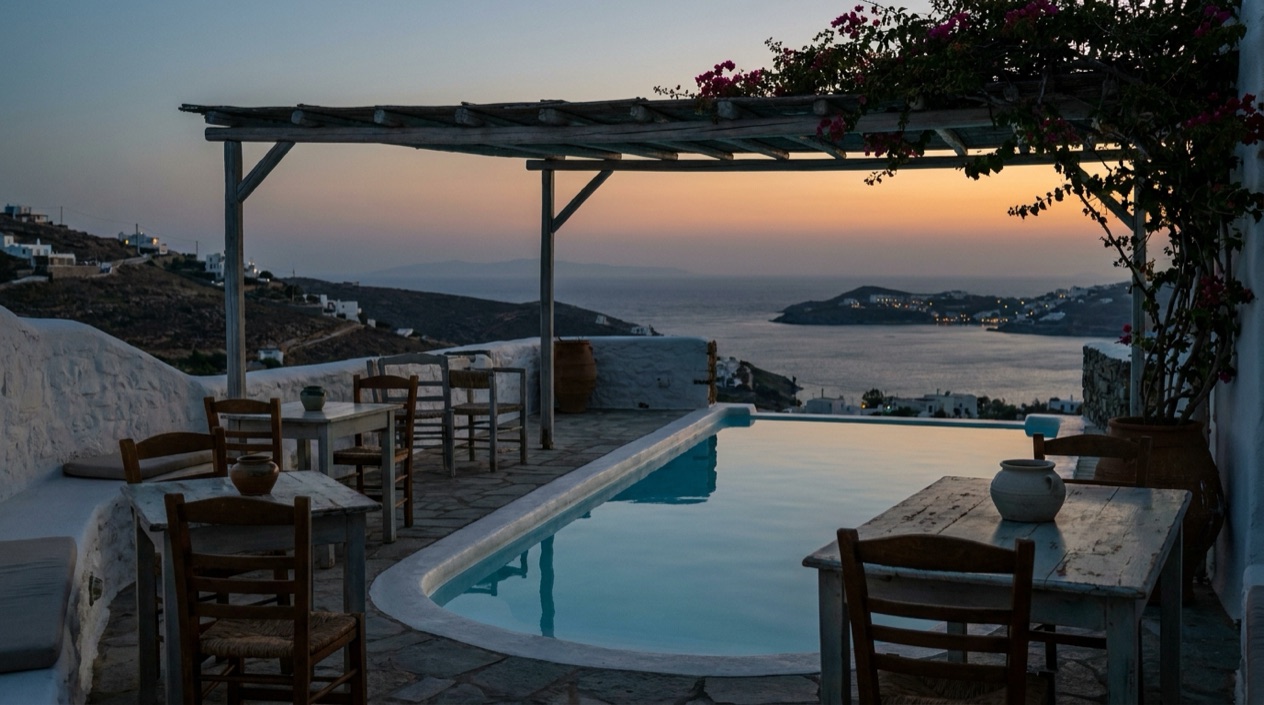
Are there hostels in Greece?
Yes, Greece has hostels, and they follow the same pattern as hostels anywhere: a bed in a shared room, a shared bathroom or a private one, and a common space where guests end up talking. Rooms can be private or shared, mixed or single-sex, with bathrooms either shared or private. So you can book a bed in a dorm of strangers or a double room for yourself and still sleep under a hostel roof.
The appeal is the one hostels have always had. Costs are lower, and you meet people from different places, find travel partners and swap stories about the island you just left. The trade-off is privacy. Sleeping areas and bathrooms are shared, so a hostel feels different from a hotel, and the same sharing is what makes it easy to start a conversation at breakfast.
Who stays in a hostel
Hostels are popular with backpackers and young travelers, and the typical guest is between 16 and 34, though that can vary from country to country. Most hostels do not impose age limits, so older travelers, couples and small groups are not turned away on age alone. A traveler in their forties with a rucksack and a ferry ticket fits in as well as a student on a first trip.
The mix of guests changes the feel of the place. A hostel built around a rooftop bar and pub crawls is a different world from a quiet one with a garden and a few dorms. Reading how a hostel describes itself tells you which one you are getting.
What a hostel offers beyond the bed
Many hostels organize something for guests: movie nights, communal dinners, local tours, cooking classes or pub crawls. Others deliberately go for a quieter atmosphere. In Greece, a communal dinner might revolve around a pot of something simple and a table of mismatched chairs, and a local tour might be a walk through the old town of an island.
Nearly all hostels have a shared kitchen and a storage area with refrigerators, and most use a label system so you know whose yogurt is whose. Some also keep a labeled free shelf, where departing guests leave pasta, olive oil, coffee or half a bag of rice. On a trip where you eat at a taverna (a family restaurant) most nights, a kitchen is still handy for breakfast with fruit and bread from the neighborhood bakery.
A network with a long history
The idea goes back to June 1, 1912, when Richard Schirrmann opened the first hostel in Altena Castle in Germany. The original rooms are now a museum. Hostelling International, founded in October 1932, today brings together more than 90 hostel associations across over 80 countries, so a membership-based hostel in Greece belongs to a very long tradition of shared, low-cost lodging.
Other budget rooms in Greece
A hostel is not the only low-cost bed. Walk-in accommodation can usually be found without too much trouble on all but the most crowded islands, and prices for rooms offered at the port can be negotiated.
In mid-season, a room or even a studio in the range of €20-25 is not uncommon. Those rooms usually come with a private bathroom and often a balcony, which makes them a real alternative for two people traveling together.
Greek hotels, including the simpler ones, usually keep to good standards of cleanliness. Rooms and bathrooms tend to be small, especially on islands and in Athens and other big cities, and showers are often a hand-held sprayer. Some of the most basic places lack shower curtains. Closets are often inadequate, sometimes just a wardrobe, and most places have a balcony or a veranda, though it can be tiny.
Which cities and islands have the most?
Hostels tend to gather in cities and in the main towns of islands that receive travelers, because that is where the people who want a cheap bed and company arrive. Athens, the island ports and the chora (the old hilltop or harbor town) of the larger islands are the kinds of places where a dorm bed is worth looking for. Smaller villages, remote beaches and quiet islands more often offer family rooms and studios than hostels.
Athens and the big cities
In Athens, a hostel… You trade a hotel’s quiet for a common room, a kitchen and other travelers who have just come back from the Acropolis or are heading out for souvlaki and a late evening on a square. For a solo traveler on a first night in Greece, that company can be a welcome start.
Greek city hotels, with their small rooms and compact bathrooms, are a real point of comparison. A private room in a hostel may be roomier or simpler than the hotel next door, so it is worth looking at photographs and room descriptions rather than assuming one beats the other. More luxurious accommodation usually sits in cities and on the more popular islands, which is also where a wide range of beds, from dorm to suite, is found side by side.
Island towns and ports
On the islands, hostels and budget rooms cluster in the harbor town or the chora, a short step from the bus stop and the waterfront tavernas. These are the places where ferries unload their passengers, where a morning coffee at a kafenio (a traditional coffeehouse) turns into a plan for the day, and where you can compare beds the way travelers have long done, by walking up and looking.
Rooms are usually found on walk-in terms on all but the most crowded islands. On those, rooms can be difficult to find at the peak of the season, and even in the shoulder season on weekends and major holidays.
Villas and bigger-budget stays
At the other end of the scale, a villa rented near or on the beach brings more space and a great view, for those with a bigger budget. Groups of friends sometimes split a villa instead of booking a row of dorm beds, and the comparison is worth making if you are four or six people. A hostel remains the choice when meeting people is part of the point, and a villa when the point is to be alone together.
What should you know before you book?
Before booking, decide what kind of room you want: a bed in a shared dorm, a bed in a single-sex dorm, or a private room, and whether the bathroom is shared or not. These choices decide the price and the experience far more than the name of the hostel does. A hostel listing normally says which it is, so read the room descriptions closely.
Privacy, rooms and bathrooms
There is less privacy in a hostel than in a hotel, because of shared sleeping areas and bathrooms. A mixed dorm and a single-sex dorm feel quite different, and travelers pick based on that alone. If you want your own door and your own shower, look for a private room with a private bathroom, which some hostels offer and which can sit close to the cost of a small hotel room.
In Greece the building itself matters. Some rooms in old traditional buildings with thick stone walls may not need air conditioning, while most Greek rooms do have it. If cooling matters to you, ask before booking. The same question works for a hostel dorm, since air conditioning is a detail that is easy to settle by message and hard to fix on arrival.
Reaching the hostel and reserving a bed
Most Greek hotels, even the smaller ones, have websites and will take bookings by email. Small guesthouses may answer slowly or in short messages, so a clear request with dates, number of guests and room type works better than a long note. Write the arrival day plainly, since ferry and bus days shape when you can show up.
On the islands, the busiest weekends and holidays are when rooms vanish. Walk-in accommodation is generally found without trouble, but on the most crowded islands it can be hard to come by at the peak of the season, and even on shoulder-season weekends and major holidays. Anyone with a fixed night on one of those islands is better off with a confirmed reservation.
Kitchen, food and house habits
A shared kitchen is close to standard. Put your name and a date on anything you store in the refrigerator, as the label system expects, and look at the free shelf before you shop. Cooking a pot of pasta with tomatoes and feta from a corner market is a small hostel ritual, and it frees your budget for a proper taverna dinner with grilled fish, a Greek salad and a carafe of house wine.
Checking quality
Cleanliness in Greek lodging is usually good, even in the simpler places, so the main differences between hostels are atmosphere and layout. Rooms with small bathrooms, hand-held showers, a tiny balcony and a modest wardrobe are common across Greece, and they are part of the picture rather than a flaw. For anything more upscale, quality should be checked in reliable sources rather than taken on trust.
Good to know before you go
Rooms offered at the port are negotiable, and the €20-25 range for a room or studio in mid-season gives a sense of what a private bed can cost outside the hostel world. Greek hostels and small hotels are places where a calm, polite chat gets you further than a rushed one. Balconies and verandas make good spots for an evening drink with the people you met in the dorm, and a shared kitchen gives you the first coffee of the day.
Sources
- Wikipedia, Hostel (https://en.wikipedia.org/wiki/Hostel), checked October 12, 2026
- Wikivoyage, Greece, section Sleep (https://en.wikivoyage.org/wiki/Greece#Sleep), checked October 12, 2026
To plan your stay
- Best Time to Visit Greece: September and Late May to Early June
- Arachova: Parnassus Mountain Town, Formaela Cheese, Ski Season and Saint George's Day
- American Airlines Flights to Greece: U.S. Cities, Athens Arrivals and Onward Island Flights
- Greece on a Budget: Cash Machines, Cards, Beaches and Ferries