
A bell rings across a courtyard of a monastery, a boat slides out of an island harbor with its sails still folded, and a long lunch of grilled fish and village salad stretches into the afternoon. Greece rewards a traveler who sets the pace and lets the days be built around a few chosen things. Pilgrimage routes, mainland coasts, mountain trails and sailing waters give the older traveler plenty to choose from, in spring and autumn above all.
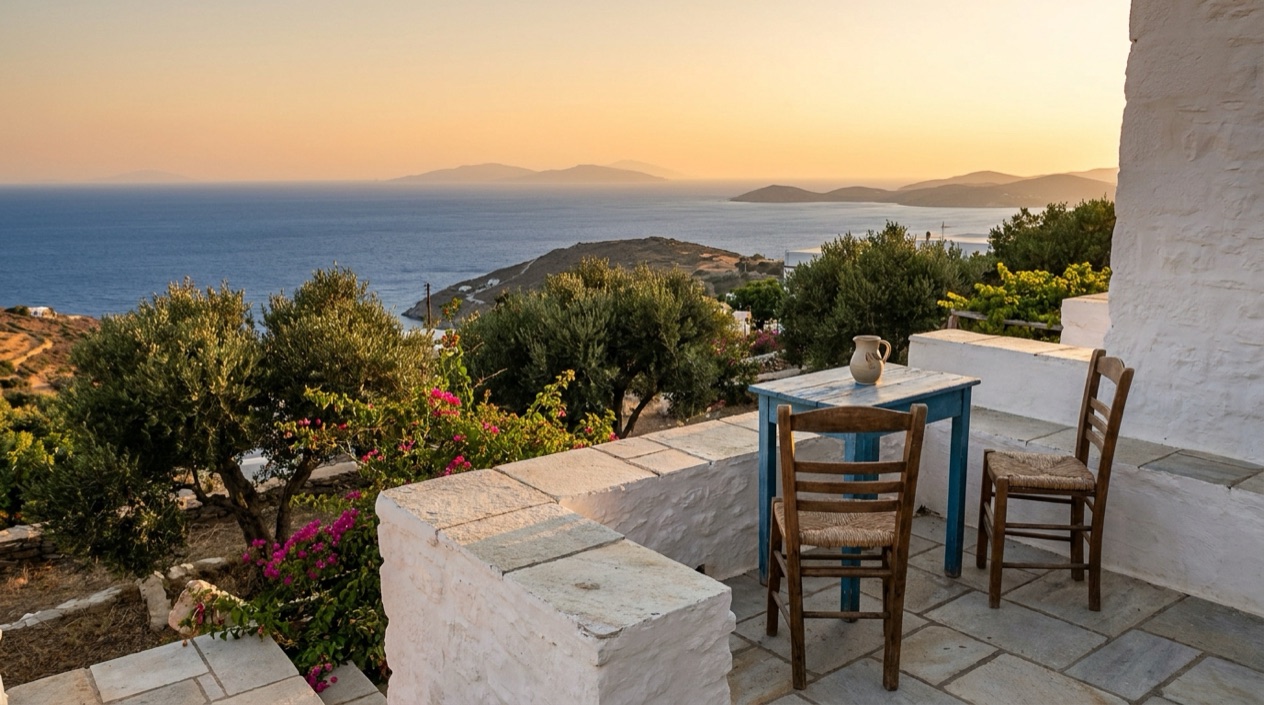
Is Greece good for older travelers?
Greece gives older travelers a wide range of ways to spend a trip, from pilgrimage and history to beaches, hiking and time on the water, and the pace is yours to set. Nothing obliges you to string together a dozen islands in a week. People choose one region, one base and a handful of experiences, then add a meal or a walk to the evening in the way Greeks do themselves.
What follows is built on what the country is known for, not on a checklist of age. You will know better than any guide how far you like to walk, how long you like to sit in a car or on a deck, and how much heat suits you. The places below are described for what they hold, so you can match them to your own habits.
Pilgrimage and sacred places
Religious tourism has its two great centers in Greece: Mount Athos, and the sites that the Apostle Paul visited during his travels, especially Philippi. For travelers who care about faith, Orthodox tradition or the early Christian story, these are the places that give a trip a spine. You come for the monastic world on one hand and for the ruins and the story of Paul’s journeys on the other.
The Via Egnatia, in northern Greece, is part of the pilgrimage route to Jerusalem. Following its line through the north turns an ordinary road trip into something with a purpose, because each stop connects to the one before. Add the icons, the incense and the quiet rituals of Orthodox services, and a journey that begins as sightseeing can end as something closer to reflection.
Beaches, the sea and the table
The most famous mainland beaches lie in Chalkidiki, Epirus and the Peloponnese, which means you can have a seaside vacation without ever boarding an island ferry. A day on the coast tends to follow a shape travelers know well: a swim, a lunch of grilled octopus, tomatoes and feta under a canopy of vines, and a coffee that lasts as long as the conversation.
Grilled fish, olives, fresh bread and a glass of ouzo or wine come out of the same kitchen logic in nearly every taverna, and a meal can be as slow as you like. Small plates called meze let you taste several things without committing to a large dish, which suits shared tables and unhurried afternoons.
A football evening, if you like one
If a sporting night appeals, Greek football gives you an evening full of color. Olympiakos plays at Karaiskakis Stadium in Piraeus, and AEK Athens and Panathinaikos are also based in Athens, while PAOK plays in Thessaloniki. Fourteen clubs play in the Super League, and the songs, flags and flares of the home stands are as much a part of the show as the match itself.
It is a way to see a Greek city on its own terms, among people who live there. Even if you never go in, the cafés near the grounds on a match day tell you a good deal about how seriously the country takes its teams.
Which places and transport suit them?
The mainland coasts of Chalkidiki, Epirus and the Peloponnese are the places to start, and the boat is the form of transport that opens the islands. Each gives a different kind of trip, so the question is less which one is best than which one matches the days you picture.
Chalkidiki, Epirus and the Peloponnese
These three regions hold the most famous mainland beaches in the country. Chalkidiki, in the north, is where the Mount Athos world sits close to the seaside, so a trip there can mix a beach stay with a spiritual interest. Epirus pairs its coast with national parks, which means a swim can be followed by a day among forests and rivers.
The Peloponnese is a region of long coastlines, olive groves and old towns, and it fits travelers who want a base on land and a few outings from it. Because all three are on the mainland, you can arrange the stay around one region instead of moving between islands. Choose the one whose landscape matches what you want to see in the morning.
The islands by sea
Greek sailing is a world of its own, and the most popular areas are the Ionian Islands, the Cyclades, the Saronic Gulf Islands, the Dodecanese and the Sporades. Each group has its own character. The Ionian Islands are ideal for novice sailors thanks to mild winds and short distances, which is why they come up first when people plan a first trip under sail.
The North Aegean Islands are less known for sailing, but the distances between islands are greater, which means fewer boats are typically present and anchorages are easier to find. You do not need to sail yourself to enjoy this world. Harbors, quayside tavernas and the sight of boats coming in at evening are available to anyone who spends time on an island waterfront.
Naturist beaches
Among the islands, the most popular for naturist beaches include Crete, Zakynthos, Rhodes, Gavdos and Antiparos. For readers who enjoy that kind of seaside holiday, these names are the ones to look at first. Each island is a full destination in its own right, with towns, food and landscapes beyond the beaches.
Greece is large enough that you can choose a shoreline that suits your taste and leave the others alone.
What should you know before you go?
The main thing to know is that the season you choose shapes the trip, especially on the water. The best times for sailing in the Aegean are spring and autumn, because July and August can bring strong Meltemi winds, reaching up to 8 Beauforts, which are more suitable for experienced skippers. That tells you something useful even if you never touch a rope: the Aegean in high summer can be a windy place.
Choosing your months
For anyone planning time on or beside the Aegean, spring and autumn are the seasons that the sailing community itself names as the best. That reasoning carries over to travelers who prefer to be on the water as passengers or who simply want an island stay without the summer wind. Ionian waters, with their mild winds, are a different case and are the ones described as ideal for beginners.
Pick your region first and your month second. A pilgrimage trip in the north, a beach week on the mainland and a sailing week among the islands each ask different things of the calendar, and the pleasure lies in matching them. Travelers who like to have a slow breakfast and plan the day afterward will find the shoulder seasons fit that rhythm.
Hiking areas for those who walk
The most popular hiking areas in Greece are Mount Olympus, the gorges in Crete, the national parks in Epirus and the less-known Rhodope Mountains. Walking here means wild country, rock walls and forest, and each area has its own mood. Olympus is a mountain with a name that carries the whole of Greek myth, and the Crete gorges cut deep through the island’s interior.
You do not have to go far into any of them to feel the scale. Choose the area that matches your own sense of what you enjoy, and treat the rest as scenery you can look at from a village terrace. The Rhodope Mountains, being less known, appeal to those who like to be away from the usual routes.
Putting a trip together
A sensible plan joins two or three of the elements above instead of all of them. A week might pair a coastal base in the Peloponnese with a few evenings in an Orthodox monastery town, or a stay in Epirus with time among its national parks and its beaches.
Leave room in the day for the things Greece does best: a long table, a stroll at dusk when the harbor lights come on, a second coffee. The country is generous with pleasures that need no schedule, and the best plans leave space for them.
Good to know before you go
Money matters are simple to settle once you arrive, and the rhythm of a Greek day, with its late lunches and late dinners, is easy to adopt. In summer on the Aegean, the Meltemi can blow strongly, and the heat of July and August is worth keeping in mind when you plan outdoor days. Spring and autumn give the water-based parts of a trip their most comfortable months, and the sea is part of what draws travelers to the Ionian Islands, the Cyclades and the other sailing areas.
Sources
- Wikivoyage, Greece, section Do (https://en.wikivoyage.org/wiki/Greece#Do), checked October 12, 2026
To plan your stay
- Best Time to Visit Greece: September and Late May to Early June
- Arachova: Parnassus Mountain Town, Formaela Cheese, Ski Season and Saint George's Day
- American Airlines Flights to Greece: U.S. Cities, Athens Arrivals and Onward Island Flights
- Greece on a Budget: Cash Machines, Cards, Beaches and Ferries