
At the end of a long taverna dinner, the plates are cleared, a small dish of fruit appears on the house, and the waiter asks how you would like to settle up. The same moment comes at the hotel desk, the ferry agency and the souvenir stall. In Greece, a Visa or Mastercard handles a good share of a trip, but a few euros in your pocket still matter, and the details differ from one kind of place to the next.
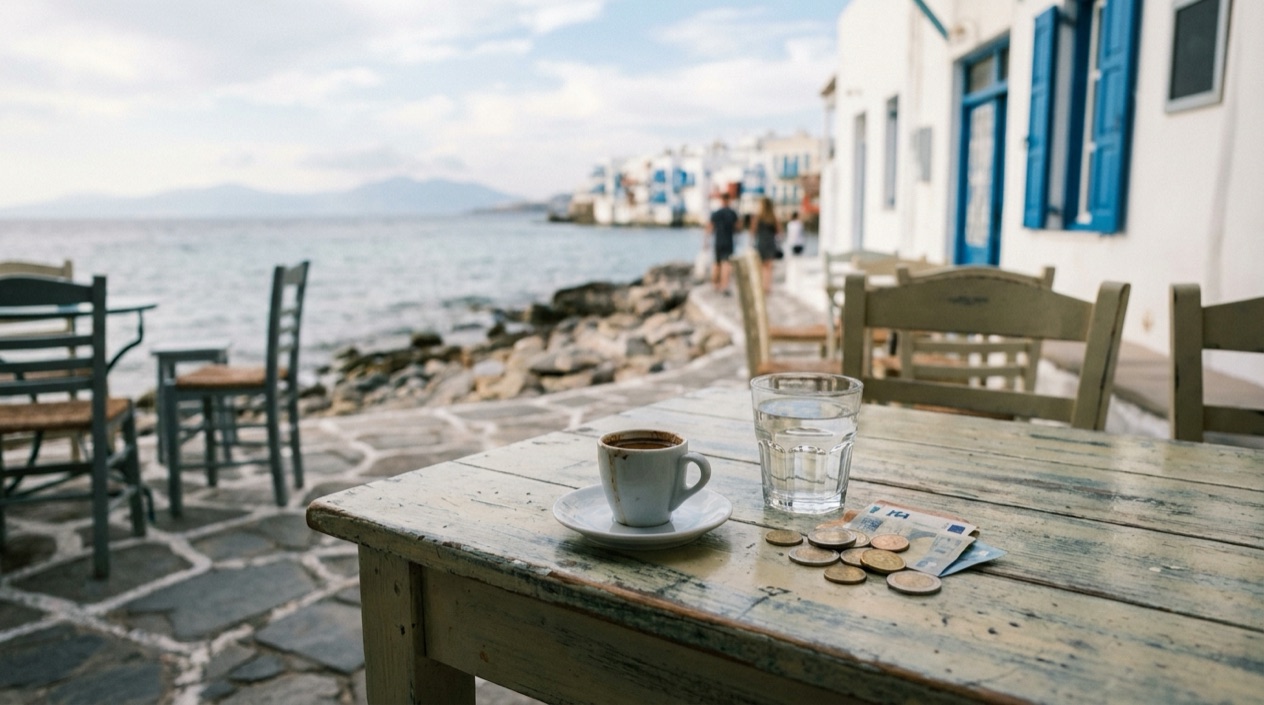
Are credit cards accepted in Greece?
Yes, cards work across a large part of daily travel spending in Greece, with some gaps among restaurants. MasterCard, Visa, Maestro and Eurocard are widely accepted in retail stores, hotels and travel and transportation agencies. That covers the big bills of a trip: the room, the tickets, the shopping. A card is the natural tool for them, and the euro is the currency on every receipt.
The gap is in the smaller, more personal places. Some restaurants do not take cards, and the little shops that sell souvenirs have their own conditions. Think of the card as the main way to pay for the large items and the cash as the backup for the rest of the day.
Hotels, travel agencies and shops
Hotels are the easiest place to hand over a card, whether you are paying for the room, an extra night or a service at the desk. Travel and transportation agencies, the small offices where you collect tickets or arrange a transfer, are also on the list of places that take Visa, Mastercard, Maestro and Eurocard.
Retail stores in general follow the same pattern. A clothing shop, a pharmacy or a bookshop in a city center is the kind of place where the card terminal sits next to the register and nobody blinks when you reach for plastic. Maestro and Eurocard are named alongside the two big networks, so a debit card carrying one of those logos is also part of the picture.
Restaurants and tavernas
Restaurants are where the answer becomes less certain, because some of them do not accept cards at all. A meal in Greece tends to be a long, shared affair, with meze (small plates) arriving in waves, a carafe of wine and a last round of something sweet. Paying is the one moment where the plan can change.
The practical habit is simple. Keep enough cash on you for dinner, even if you intend to use the card, and treat a terminal on the table as a pleasant surprise rather than a given. The same goes for the small grill house serving souvlaki at lunchtime, where the bill is short and the cash is already in your pocket.
Souvenir shops and discounted items
Local souvenir shops usually require a minimum purchase before they let you use your card. A single magnet or a bag of herbs may therefore be a cash purchase, while a larger basket of olive oil soap, ceramics and woven goods can go on the card.
These shops may also refuse the card for special sales and deeply discounted items. If you spot a sale rack outside, expect that its prices are meant for cash. Bargaining is also part of the culture here, especially for clothing and souvenirs, and a conversation about price tends to be friendlier when you hold notes in your hand.
Where do you still need cash?
Cash is still useful at restaurants that do not take cards, at small souvenir stalls, at newsstands and at the places where you bargain. Greece rewards a traveler who carries both, and the cash side of the wallet has its own habits.
Kiosks, small purchases and markets
The períptero is the street kiosk found in Greek cities, a small booth that sells newspapers, magazines, chilled drinks, confectionery, snacks, tobacco and ice cream. It is the place for a cold bottle of water on a hot afternoon or a quick treat while crossing a square. Purchases like these are small, and coins and small notes suit them.
Markets and stalls work along similar lines. Cash makes that kind of talk smooth, and it fits the souvenir shops that attach a minimum to card payments.
Large notes and getting change
Many businesses in Greece are reluctant to accept notes larger than €50. One reason is a scarcity of change, which you notice quickly when a small kiosk has to break a big bill for a bottle of water. The other is that larger notes have a history of being counterfeited.
The result for you is a small piece of planning. When you take money out, smaller denominations will travel further than a few big ones, and the coins you collect, the lepta and the larger pieces, are worth keeping in a pocket for the next kiosk or the next coffee stop.
Seashores and the afternoon break
Seashores in Greece are usually free, but around Athens many of them charge an entrance fee. That is a small cash moment on a beach day, and it is worth having a few coins or notes ready before you walk down to the water.
Shopping hours also shape how you use your money. Outside tourist resorts, and apart from large supermarkets, shops in Greece usually close for a long break in the middle of the day. They open again in the evening and sometimes stay open even later. If you need cash for a small purchase, you will be happier getting it before the shutters come down.
ATMs and your PIN
Cash comes from ATMs, and the one technical detail to sort out is the PIN. Many ATM machines in Greece may not accept PIN numbers with five digits, so card users whose PIN has five digits are advised to change it before leaving home.
The replacement should have four digits. It is a small task to finish at home, and it spares you a frozen moment at a machine on a quiet street or a ferry port, with luggage at your feet.
What about foreign transaction fees?
The fee that shows up most clearly in Greece is the one charged at the ATM, and it comes on top of whatever your own bank demands. ATMs in Greece usually charge €2.50–3, which is added to the withdrawn amount and invoiced to your bank. In other words, a withdrawal can carry two layers of cost, the machine’s and your bank’s.
The ATM charge in practice
The machine’s charge is added to the amount you withdraw and then billed to your bank, so it appears on your statement along with the cash itself. Because your bank may add its own charge, the receipt from the machine and the line on your statement are worth comparing when you get home.
That is also a reason to treat cards and cash as a pair. Hotels, retail stores and travel agencies take cards, so those large payments need no cash withdrawal at all, and the money from the machine can go to the smaller things: the kiosk, the stall, the restaurant that does not take a card.
Travellers cheques and the euro
Branches of the Greek bank Alphabank will exchange Euro American Express Travellers Cheques and US$ American Express Travellers Cheques into euros at their usual bank rates, without fee or commission. It is a niche option, but for anyone still holding those cheques it is a clear answer.
Everything is counted in euros, which are divided into 100 cents. In Greece, the cents are called lepta, and the singular is lepto. You may hear the word at a kiosk or a bakery counter when the change comes back in small coins.
Good to know before you go
Bring a card for hotels, shops and travel agencies, and keep notes and coins for kiosks, markets and restaurants that do not take plastic. Smaller bills go further than large ones, and a four-digit PIN keeps the ATM from becoming a problem. On the coast, the meltemi and the summer heat are matters for the weather forecast, while the wallet only needs a little cash for the beach.
| Fee | Amount | Who pays |
|---|---|---|
| Seashore entrance around Athens | €4-5 | Each person |
Sources
- Wikivoyage, Greece (https://en.wikivoyage.org/wiki/Greece), checked October 12, 2026
To plan your stay
- Best Time to Visit Greece: September and Late May to Early June
- Arachova: Parnassus Mountain Town, Formaela Cheese, Ski Season and Saint George's Day
- American Airlines Flights to Greece: U.S. Cities, Athens Arrivals and Onward Island Flights
- Greece on a Budget: Cash Machines, Cards, Beaches and Ferries