
On the terrace at Oia, with the caldera of Santorini spread out below and every phone raised toward the same view, the question of what visiting costs the place itself feels very present. The climate crisis resilience fee belongs to that question: a charge asked of visitors in connection with the climate pressures that Greece’s busiest destinations face. What follows sets out what it is for and which parts of a Greek trip it touches.
What is the climate crisis resilience fee?
It is a charge on visitors that links a stay in Greece to the cost of protecting the country from climate effects such as heat, fire and storms. The idea rests on a simple observation: the places travelers love are the same places that feel the strain of the climate most directly, and the people who come to enjoy them are asked to help pay for that resilience.
For a traveler, it helps to think of it as part of the price of the trip, in the same family as the other small charges that come with a night away from home. It does not change what you see, eat or do. It changes the line on the bill, and it explains why the islands and the cities you visit talk so much about preparing for hotter summers.
Why the question comes up in Greece
Tourism in Greece typically peaks between May and September, when approximately 75% of all tourist visits happen. That concentration is the heart of the matter. A country of islands, ancient sites and mountain villages receives most of its guests in the hottest months, so the pressure on water, roads, shorelines and emergency services arrives at the very moment the climate is hardest on them.
Mass tourism in modern Greece started to flourish in the 1960s and 1970s, and large-scale construction projects for hotels and other facilities were undertaken in those decades. The country built itself around visitors, which is why a charge tied to the resilience of the places they visit sits naturally in the conversation today.
What it pays for, in plain terms
The purpose is adaptation: making towns, coasts and heritage better able to cope with the weather that is coming. Greece has 21 UNESCO World Heritage Sites, among the most in Europe and the world, and it has 752 thermal springs, many classified as therapeutic. Landscapes and sites of that kind are exactly what a resilience effort tries to keep intact.
As a traveler you will not see a receipt for any particular project. What you will notice is the places themselves: the Acropolis still standing above Athens, the caldera view from Oia still drawing people to the edge of the village, the springs still running.
How much is it?
The amount depends on the kind of stay and the rules in force for it, so the figure you pay is the one shown on your accommodation bill rather than a single number applied to every trip. What stays constant is the logic: it is a modest addition to the cost of a visit, folded into the same accounting as the rest of your lodging.
How it fits into the cost of a trip
A Greek trip is built from many small pieces: a ferry to an island, a room in a village, a taverna dinner with grilled fish and a plate of meze, a museum visit. The resilience fee is one more small piece, and it is easiest to treat it that way when you plan a budget. It sits beside lodging costs, not beside the big items such as flights.
Because the amount is read from the bill itself, the useful habit is to look at the breakdown when you check in or check out. Lines for charges and taxes are usually listed separately from the room rate, and this is where a visitor will see it.
Season and the size of your trip
Because so much of Greece’s tourism falls between May and September, the stays that bring the visitors to the most stressed places are summer stays. A trip in those months to Santorini or Mykonos will naturally include more nights, more bookings and more line items than a quiet winter visit to a ski town such as Arachova, Kalavryta, Karpenisi or Metsovo, the main destinations for skiing in Greece.
It means that the fuller your itinerary, the more nights you spend in places where the charge applies, and the more it adds up across the trip.
Where is it charged?
The place you sleep is the place where it appears, which makes your accommodation the point of contact between you and the fee.
Athens and the mainland
Athens has been a visitor magnet for a long time. Ancient Roman tourists visited famous centers of Greek philosophy and science in Athens, Corinth and Thebes, and in modern times the 2004 Summer Olympic Games and the Eurovision Song Contest 2006, both held in Athens, greatly helped to boost tourism. The New Acropolis Museum also contributed to the flow of tourists.
A night in a hotel in the capital is part of nearly every itinerary, which makes it the most common place to meet the charge. Thessaloniki, European Youth Capital in 2014, is another city stay where the same logic applies, and the mountain ski towns follow it too when you sleep there in winter.
The islands
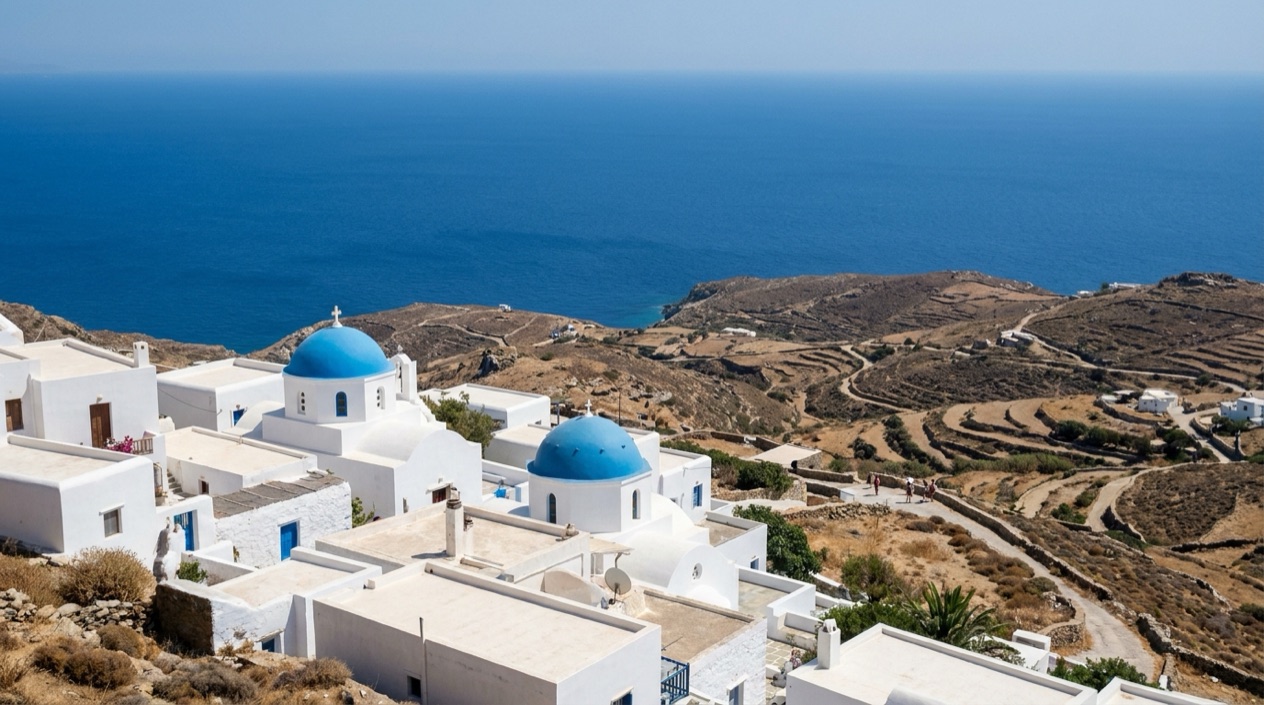
The islands are where the climate conversation feels most concrete. Santorini, with its panoramic caldera view from Oia, and Mykonos, which together with Skiathos is ranked among the most LGBT-friendly destinations in Europe and the world, receive visitors who sleep there for several nights at a time.
Syros is linked to Piraeus by a ferry that takes only 2.5 hours, which puts an island stay within reach of an Athens base. If you split your trip between the capital and an island, you will meet the fee in both places, once for each lodging you book.
Good to know before you go
Treat the fee as a small, separate line on your lodging bill and look for it at check-in or check-out. Keep a little room in your budget for charges of this kind, and remember that the more nights you spend in the busiest places, the more of them you will see. Greece rewards the visit with a long list of sites, springs and views that the charge is meant to help protect.
Sources
- Wikipedia, Tourism in Greece (https://en.wikipedia.org/wiki/Tourism_in_Greece), checked October 12, 2026