
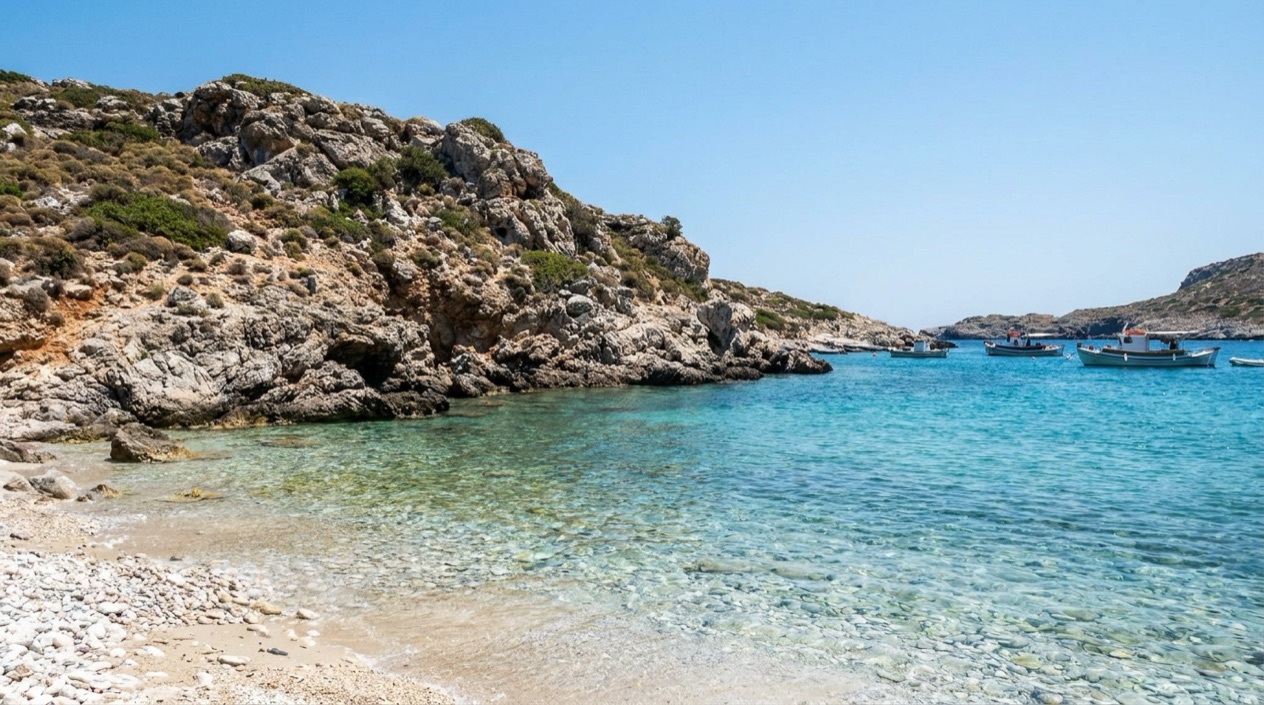
Start with five names that come up again and again in lists of Greece's loveliest beaches: Elafonisi and Balos on Crete, Navagio on Zakynthos, Myrtos on Kefalonia and Porto Katsiki on Lefkada. Add the quiet coves, family strands and windsurfing capes below, and aim for late spring, when the island greens are lush and the heat of July and August has not yet arrived.
Which part of Greece has the best beaches?
The Ionian islands on the west side (Corfu, Lefkada, Kefalonia, Zakynthos) are home to some well-loved beaches, with sheer cliffs and electric-blue water. The Aegean islands mix volcanic rock, windy capes, sandy family beaches and party coves. Crete, the largest island, has a coastline all its own, with pink sand, turquoise lagoons and some of the best-loved beaches in the country.
Where are the most dramatic beaches?
Navagio Beach, Zakynthos
Navagio is the blockbuster of Greek beaches. Also called Shipwreck Beach, it fills a sandy cove framed by towering vertical cliffs, with azure water and the rusting wreck of the MV Panagiotis, which washed up after a storm in the 1980s.
Navagio is reached by boat, and in summer the water just offshore fills with sightseeing cruises, so visiting in the low season gives you a better chance of enjoying it at its calmest. Above the cove, a lookout platform signposted between Anafonitria and Volimes gives you a view from high up, though it feels a little precarious. Elsewhere on Zakynthos, a glass-bottom boat shows off the brilliant water of the Blue Caves, and sandy Gerakas is a protected nesting site for loggerhead turtles.
Myrtos, Kefalonia
As the road zigzags down to Myrtos, the fame makes sense long before you reach the bottom. Electric-blue water meets what looks like searing-white sand and is actually white pebbles, under towering limestone cliffs. Sun beds and parasols are for rent, though many are taken well before noon, and early morning tends to be peaceful. A parking area rather spoils the view, but you forget it once you're in the water. The nearest village, Divarata, has a couple of tavernas, and buses run daily from Argostoli.
Porto Katsiki, Lefkada
Lefkada is joined to the mainland by a causeway, so you can drive straight onto the island. Nicknamed the Caribbean of Greece for its turquoise water, Lefkada shines at Porto Katsiki and Egremni, where sheer cliffs drop to the sea. Both are reached by winding paths. Milos, Kathisma and Agiofilli beaches are also worth a stop.
Apella, Karpathos
Apella is a standout in the Dodecanese, with wildflowers covering the hillside behind it, cliffs rising to the north and south, and a good taverna just above the beach. Some call it sandy, but expect pebbles. The steep spur road drops seaward from the east coast highway about 11 miles (17 kilometers) north of Pigadia and is not for the faint-hearted, so the easier way in is a boat from Pigadia.
What are the best beaches on Crete?
Elafonisi
In Crete's southwestern corner, soft pink-white sand, turquoise shallows and low rosy dunes make a scene that feels almost dreamlike, and as the water washes over the sand, rainbows shimmer across its surface. Elafonisi Islet lies just offshore. Sometimes a thin sandy isthmus joins it, making a double beach.
High summer is the catch. Hundreds of umbrellas and sunbeds crowd the sand, straining a delicate ecosystem and the minimal facilities, especially the toilets. Come out of season for a calmer visit. Boats run from Palaiochora, and buses from Chania.
Balos, Falasarna and Preveli
Balos is known for two shallow lagoons in vivid shades of turquoise set against a rugged, scruffy mountainside, and its clear water has been compared to the Caribbean. Falasarna is Crete's sunset beach, a broad sweep of pink-cream sand with clear water, rolling waves and water sports. Settle in on the Big Beach at the southern end, or choose one of the coves divided by rocky spits to the north. It gets busy from mid-July to mid-August, mostly with day trippers from Chania and Kissamos. Public buses from Chania take about 90 minutes, and there is parking above the beach. Adventurous travelers can head to Preveli, where a freshwater river meets the sea in a lush oasis of palm trees.
Which beaches are best for peace and quiet?
Possidi Cape, Halkidiki
On the Kassandra Peninsula, long stretches of sand are washed by clear water, with a lighthouse and pine forest behind. It's lovely all year and is a rare spot for quiet even in peak summer, though there is little shade. There are no facilities and no lifeguard, and the currents can be dangerous, so bring the essentials and swim with care. A car or 4×4 is the best way in.
Seychelles Beach, Ikaria
Marble-like pebbles, emerald water and giant boulders polished by the waves make this small cove feel like the Indian Ocean, which is how it got its name. It lies about 2 miles (3 kilometers) east of Manganitis. Leave the flip-flops behind.
Koufonisia
Koufonisia, a tiny island in the Lesser Cyclades a couple of hours from Naxos, has hardly any tourists and an unhurried pace. Many beaches are within walking or biking distance of the main town. Water taxis run from the main port to east coast coves such as Fanos and Italida. For sunset, head up the hill across from the ferry port to the peninsula with the old windmill, a lovely spot to watch the sun go down.
Which beaches suit families, parties or active days?
Mykonos covers all three. Platys Gialos on the south coast is the family-friendly pick, a broad stretch of soft sand with calm water, restaurants and an excellent water sports center for Jet Skis, paddleboards and windsurfing. Buses run there from Hora's Fabrika station. Psarou has a relaxed feel and waterfront dining, and Panormos and the northwest are the quiet side of the island. Mykonos is known as the Island of the Winds, so expect breezes.
Beach bars, sunbeds and water sports keep it lively, and though the area is a protected nature reserve, it gets very busy in summer. Buses run from Skiathos Town.
On Rhodes, Lindos Beach sits below the village and its acropolis, with soft sand and shallow turquoise water ideal for easy swimming. For a wilder day, take the windswept road about 6 miles (10 kilometers) south from Kattavia to Prasonisi, where the Aegean meets the Mediterranean and the wind and waves draw windsurfers and kitesurfers. In summer a narrow sandy isthmus links the beach to Cape Prasonisi, the island's southernmost point. Outfitters handle rental gear, lessons and beds in surfer hostels, but it all shuts down in winter.
Which Cyclades islands have the best beaches?
Paros has Kolymbithres, across the bay from Naoussa and reachable by boat from its port, where unusual granite and white rock formations shape natural swimming coves good for snorkeling. Piso Livadi, near a fishing village, is the quieter choice, with golden sand and calm water.
Naxos has Plaka, a long golden beach with sunbeds, tavernas and windsurfing, and Alyko, a quiet cove among cedar trees and protected dunes.
At Sarakiniko, white rock carved by the sea and wind makes a lunar landscape with smooth ledges for lounging and jumping into the blue water. A boat trip to Kleftiko Bay is a highlight.
Does Santorini have good beaches?
Santorini's volcanic past shows in its red and black sand beaches, though most visitors come for the towns and sunsets. The standout is Kokkini, the Red Beach, near Akrotiri in the southwest, where rust-and-fire cliffs make it one of the most photogenic beaches in Greece. There are no facilities, though vendors sell fresh fruit and drinks in peak season, when arriving early is the way to score a good spot. Wear sturdy shoes for the short walk down from the nearby church, which has parking and a handful of good restaurants, or come by boat or bus from Akrotiri.
When is the best time to visit Greek beaches?
Late May and early June is the sweet spot. The sea is a little cooler, but the islands are green after the winter rains, the days are warm without being scorching, and evenings stay pleasant, though a light sweater may come in handy. July and August bring heat and plenty of crowds to the popular beaches. Thanks to its mild climate, Crete enjoys a longer beach season than the Cyclades, where things wind down by mid-November. In the dry summer months, forest fires are common and occasionally close roads.
How do you get around the Greek islands?
Many of the best beaches take a boat, a winding road or both to reach. Ferries link the mainland and the islands, and several islands are a short ride apart, so it's easy to pair a big island with a small one on the same trip. Crete has plenty of direct flights into Heraklion and Chania. Public transport on the Ionian islands is poor, so a car makes exploring far easier there.
Greek law requires drivers to carry a valid U.S. driver's license, and insurance companies may require an international driver’s permit. Drive carefully on those winding roads, since Greece has one of the highest traffic fatality rates in the European Union. Thieves in Greece target rental cars to steal passports, valuables and luggage, so avoid leaving valuables in a parked car. On buses and other public transportation, buy the right ticket and validate it, because fines can reach 60 times the basic fare.
What do Americans need to know before going?
The U.S. State Department says U.S. citizens can visit Greece without a visa for up to 90 days of tourism, and a passport should have at least three months of validity beyond your planned departure date. A passport that has been reported lost or stolen will not get you in. Be ready to show proof of sufficient funds and a return ticket or other evidence of departure if asked, and carry your passport or another photo ID at all times. Greece is generally safe, but pickpocketing and other petty crime are common at popular tourist sites. Most care providers in Greece usually accept only cash, so keep some on hand. Transportation strikes are common and can shut down taxis, seaports and airports, so check for any planned strike before a ferry or flight day.
Sources
- lonelyplanet.com (https://www.lonelyplanet.com/articles/best-beaches-greece), checked October 18, 2026
- luggageandlipstick.com (https://luggageandlipstick.com/best-greek-beaches/), checked October 18, 2026
- exquisitecoasts.com (https://www.exquisitecoasts.com/best-beaches-in-greece.html), checked October 18, 2026
- greece-like-a-local.com (https://www.greece-like-a-local.com/travel-guide/what-to-do/greece-beautiful-beaches), checked October 18, 2026
- rtwin30days.com (https://rtwin30days.com/best-greek-islands-for-beaches/), checked October 18, 2026
- U.S. Department of State (https://travel.state.gov/content/travel/en/international-travel/International-Travel-Country-Information-Pages/Greece.html), checked October 15, 2026
- U.S. Department of State (https://travel.state.gov/content/tsg_aem/us/en/home/international-travel/travel-advisories/destination.grc.html), checked October 15, 2026
To plan your stay
- Best Time to Visit Greece: September and Late May to Early June
- Arachova: Parnassus Mountain Town, Formaela Cheese, Ski Season and Saint George's Day
- American Airlines Flights to Greece: U.S. Cities, Athens Arrivals and Onward Island Flights
- Greece on a Budget: Cash Machines, Cards, Beaches and Ferries