
On a ferry ramp in a Greek island port, the first thing you see is often a row of scooters and ATVs parked in the sun, with a hand-lettered sign and a shopkeeper ready to hand over keys. The idea is tempting, and the rental shops are there for it. Before you sign anything, though, the paperwork behind the rental counts for more than the machine: the right license, a permit from home, and a clear idea of who pays if something gets scratched.
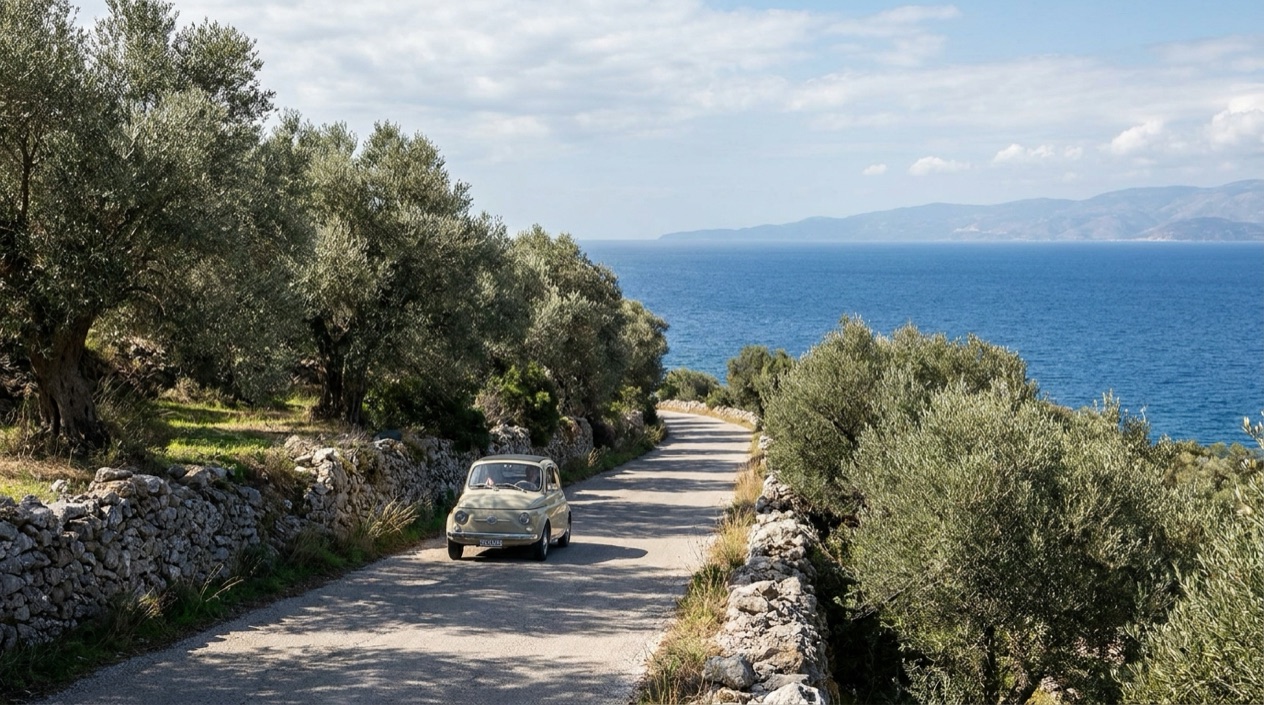
Can you rent an ATV or a scooter in Greece?
Yes, small motorbike and all-terrain vehicle (ATV) rental firms operate in Greece, and the real question is what stands behind the rental. Many of these firms are small, independent businesses, and the details of the contract matter far more than the daily rate on the sign.
The U.S. State Department points out that small motorbike and ATV rental firms in Greece frequently carry no insurance and require customers to cover the cost of all damages to their vehicles. Your own insurance company may not cover two-wheel or ATV rentals either. In practice, a scratch, a dropped bike or a crash on a gravel turn could land on you in full, so the contract deserves a slow read before you hand over a card.
What the rental shop is, and what it is not
A rental shop in a Greek port town is usually a small operation, sometimes part of a family business that also rents bicycles or cars. The vehicles are lined up out front, the paperwork is brief, and the conversation is friendly. That ease is exactly why it pays to slow down and ask what the price includes and what happens to the damage bill.
The warning about missing insurance applies to the firms themselves, so the question to put to the shopkeeper is plain: who covers damage to the vehicle? If the answer is you, then the rental is a financial risk as well as a way to get around, and it is better to know that at the counter than at the return.
Why your own policy may not help
Most insurance companies require both a valid U.S. license and an international driver’s permit for coverage in Greece. That is one condition. The other is the kind of vehicle: your insurer may simply not cover two-wheel or ATV rentals at all, whatever your permit says.
So the two checks go together. Look at the policy you carry for what it says about motorbikes and ATVs, and look at the rental contract for what it says about damage. If neither covers the vehicle, you are the insurance.
Other ways to get around
If a scooter or an ATV does not suit your trip after all, Greece has other options. KTEL is the national government-subsidized network of independent businesses, and together they form a dense route system serving almost the entire country. KTEL bus routes from major cities to islands near the mainland, such as Corfu and Cephalonia, include the ferry crossing in the price of the bus ticket.
Trains are a narrower story. Most rail traffic is in the Athens-Thessaloniki corridor and their suburban railways, while lines like Thessaloniki-Florina, Lamia-Trikala and Thessaloniki-Serres usually have only one or two trains per day. Ferries tie the islands together, and they come with their own rhythms, which matter if you plan to rent on more than one island.
What license do you need?
U.S. visitors driving in Greece must carry a valid U.S. driver’s license, and insurance companies may require an international driver’s permit. That covers the car on the highway and the scooter on the village road alike, since the rule is about driving in Greece.
The international driver’s permit
The IDP is a companion to your home license, not a replacement for it. Drivers who do not hold an EU driving license must carry an international driver’s permit obtained in their home country, and it is certainly required if you are involved in an accident or pulled over by police. A shop owner who waves it off at the counter does not change what an officer or an insurer will ask for afterward.
The cost of skipping it can be steep. If you drive without a U.S. license and IDP in Greece, you may face high fines of 1,000 Euros or more, or be responsible for all expenses in the event of an accident. Together with the rental firms’ habit of passing damage costs to the customer, that is a good reason to treat the permit as part of the packing list.
Where to get it
The U.S. Embassy in Greece does not issue IDPs. Travelers must obtain their IDP in the United States from the American Automobile Association (AAA) or the American Automobile Touring Alliance (AATA), so it is a task for the weeks before departure rather than something to sort out in Athens.
If you realize it too late, AAA has a mail-in option for applying from overseas. It is worth contacting AAA directly to ask about it, but it will likely take days or weeks, which is long enough to spoil a short island stay.
A long stay changes things
The permit and the U.S. license cover a visit. A Greek license is required if you stay more than 185 days in Greece. For a vacation that point never comes up, but for a long season on one island it does.
A word on manual and automatic: about 90% of rental cars in Greece are manual, so anyone who wants an automatic car is advised to reserve one in advance. That note is about cars, but it shows how the Greek rental market is built, and it is one more reason to settle the details of any vehicle before you arrive.
What should you know before you rent?
Know four things before you rent: who pays for damage, what the helmet law says, how Greek roads behave, and what ferries do to your plans. Each one is a short conversation at the counter or a short read of the contract.
Damage, insurance and the contract
Start with the money. Small motorbike and ATV rental firms frequently carry no insurance and ask customers to cover all damages to their vehicles, and your own policy may not extend to two-wheel or ATV rentals. Walk around the machine before you leave, note what is already scratched, and make sure the contract says in plain words who is responsible for what.
If your insurer does cover Greece, remember that most insurers want both the valid U.S. license and the IDP. A claim made without them can be refused, which turns a minor fall into a large bill. The permit, the license and the contract belong in your bag together.
Helmets, phones and alcohol
Greek law requires all motorcyclists to wear a helmet. That is a rule for the rider, and it is wise to look at the helmet the shop gives you the way you would look at the bike itself.
Talking or texting on a mobile phone while driving is illegal in Greece, and the police check phone records when investigating accidents. Driving under the influence of alcohol or drugs is also illegal, and police conduct random alcohol testing. On an island where a long lunch with wine at a seaside taverna is part of the pleasure, the scooter keys are best left in your pocket until the table is cleared and the meal is well behind you.
How Greek roads behave
…so do not rely on lane markings.
For a rider that means watching mirrors and the road ahead rather than trusting the paint. A car that seems to be in its own lane may be about to move, and a slower vehicle on the shoulder may pull back in. Drive as if the markings were only a suggestion.
Ferries and island-hopping
Rental car terms in Greece often restrict taking the vehicle on ferries. The note concerns cars, but it is a reminder to read what any rental says about crossing the water, because a trip that links several islands is built on ferries.
The Greek ferry system is basically hub-and-spoke, with the spokes radiating from Piraeus out to the various island groups. The Western Cyclades (Serifos, Sifnos, Milos) and the Central Cyclades (Naxos, Paros, Mykonos) are on different spokes, so in summer you can usually get from one island to another in the same group on any day, but boats between the groups, such as Naxos to Sifnos, may be significantly less frequent. Athens has three ports, Piraeus, Rafina and Lavrio, and for central Cyclades islands such as Tinos and Mykonos it is often better to leave from Rafina.
Seasons shape the sailings too. In August, ferries fill up because of the National Holiday on 15 August, so travelers should plan ahead. During the winter off-season, from January to March, weather on the Aegean can be extremely rough and boats are often kept in port for days at a time. Santorini is an 8-hour slow boat from Athens, and the view as the boat enters is spectacular.
Good to know before you go
Put the license, the IDP and the rental contract in one folder and read the contract before you ride. The same habits that suit a quiet island lane suit a Greek highway: hands off the phone, a helmet on, and no driving after a glass of wine. If the plan changes, KTEL buses reach almost the whole country, and on the islands nearest the mainland, such as Corfu and Cephalonia, the ferry crossing is already in the bus ticket.
Sources
- U.S. Department of State, Greece travel information, travel and transportation (https://travel.state.gov/content/travel/en/international-travel/International-Travel-Country-Information-Pages/Greece.html), checked October 12, 2026
- Wikivoyage, Greece, section Get around (https://en.wikivoyage.org/wiki/Greece#Get_around), checked October 12, 2026
To plan your stay
- Best Time to Visit Greece: September and Late May to Early June
- Arachova: Parnassus Mountain Town, Formaela Cheese, Ski Season and Saint George's Day
- American Airlines Flights to Greece: U.S. Cities, Athens Arrivals and Onward Island Flights
- Greece on a Budget: Cash Machines, Cards, Beaches and Ferries