
Standing at the gate of a Greek site with a ticket booth on one side and a view of broken columns on the other, many travelers start wondering what a ticket pays for and who decides who walks in without one. The answer sits with the Greek state, which runs its ancient places through one national service.
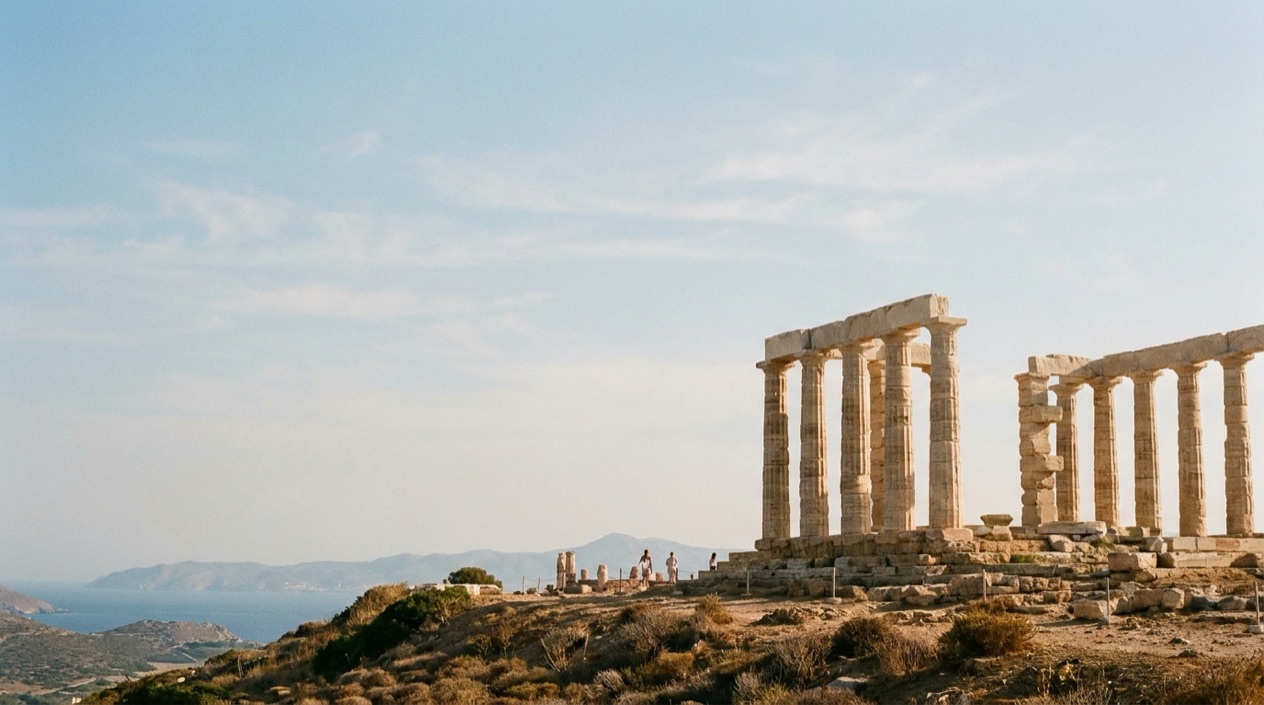
Who gets free entry?
Free entry, like every other admission rule at a Greek archaeological site, is set by the state, through the Archaeological Service and the Ministry of Culture it belongs to. The Service oversees all archaeological excavations, museums and the country’s archaeological heritage, so a gate at Delphi, a ticket office at Mycenae and a museum desk in Athens all answer to the same national body. That is the first thing to hold on to: there is no separate system for each island or each site, and the rules you meet are the ministry’s rules.
The Archaeological Service is the oldest institution of its kind in Europe. It was the Service that came to hold the right to issue excavation permits to the foreign archaeological institutes working in Greece, a right the archaeological law of 1932 gave it. When you see a trench, a roped-off area or a sign from a research team at a site, you are looking at work that runs under that same national authority.
The ministry behind the gates
The Ministry of Culture was established on 26 August 1971 as the Ministry of Culture and Sciences. Today the minister responsible is Lina Mendoni, and Iason Fotilas serves as deputy minister for Contemporary Culture. Olympia Vikatou became director of the Archaeological Service in 2023. These are the names that stand behind the official announcements about opening arrangements and admission, which is why a change to a rule is made at ministry level and then applied at each site.
The Acropolis Museum in Athens is a child agency of the Ministry of Culture. That places it inside the same family as the excavated sites, even though a museum building and an open-air hillside feel nothing alike when you walk through them. If you are mapping an Athens day around ancient sites and museums, it helps to know they share one parent, since an announcement from the ministry can touch both.
Where your ticket money goes
The Archaeological Receipts Fund was established in 1885. It uses the proceeds from the sale of tickets, casts and catalogues by museums to fund the conservation and restoration of ancient monuments. In plain terms, the money you hand over at the booth goes back into the stones: the work that keeps a wall standing, a mosaic readable or a path through a site open.
That is the reason a free admission day is a real decision rather than a casual gesture. Each ticket sold feeds the upkeep of the monuments, so the state weighs when to open the gates to everyone. For you as a traveler, the useful habit is to treat any free day as an exception to the usual arrangement and to confirm it for the specific site before building a day around it.
What a site visit looks like
Greek archaeological sites vary a great deal in feel. At Olympia you walk among the foundations and fallen drums of the sanctuary where the ancient games were held, with a museum of finds nearby.
At Delphi the ruins climb a slope above a valley of olive trees, and the museum holds the sculpture that once stood among them. At Knossos you pass through reconstructed halls and painted rooms, and at Mycenae you enter through a gate of massive stones.
At Epidaurus the draw is the ancient theater, where the stone seating curves around a circular stage. Athens gathers several places in one city, with the Acropolis rock, the Parthenon and the museum that sits at its foot. Each of these is a separate site with its own gate, so a free arrangement that applies at one does not automatically describe another. Treat each ticket office as its own question.
What should you know?
The most useful thing to know is that the Greek state keeps a central point of information for its cultural sites and that a few special activities, such as filming and photography, are handled through a formal process. TAP, the body that manages the state’s cultural assets, provides information on applying and paying for filming permits at Greek cultural sites. It does the same for photography permits at its sites.
If you are a visitor with a phone or a camera, none of that changes your walk through the ruins. If you are planning anything more organized, such as a professional shoot or a project with equipment, the permit route exists and it runs through TAP. TAP also allows cultural or gastronomic events to be organized at archaeological sites and monuments, which explains why a ruin sometimes hosts a concert or a dinner set among the stones.
Photography and filming
A site such as the Acropolis or Delphi is a place people photograph constantly, and the permit system is there for work that goes beyond a casual snapshot. TAP gives information on how to apply for and pay for a photography permit at its sites, and a separate process for a filming permit. These are two distinct permissions, so a photographer and a film crew do not follow the same path.
For a traveler, the practical reading is simple. Your own pictures of columns, theaters and hillsides are part of an ordinary visit. When a project needs a formal permit, the information is held by TAP, and the Hellenic Heritage platform at hh.gr is the address the Greek state gives for its cultural heritage.
Events among the ruins
Because TAP allows cultural and gastronomic events at archaeological sites and monuments, a ruin can double as a stage. A concert, an evening of food or a cultural program set against ancient walls is a different experience from a daytime walk, and it is organized through the same state channel rather than by the site’s gatekeepers on the day.
If a program like that interests you, the event belongs to its own arrangement, separate from the usual ticket at the gate. It is a way to see a familiar monument in a different setting, with its stones as the backdrop for music or a meal rather than the main subject.
Planning around the sites
A good trip to Greek ruins mixes the open-air site with the museum that holds what was found there. Olympia, Delphi, Mycenae and Knossos each work this way, and in Athens the Acropolis Museum fills that role for the rock above it. Reading the objects first and then walking the ground, or the other way round, gives the stones a context that a bare field of foundations cannot.
Pack for the walk itself: sun protection and sturdy shoes for stone paths, since these are open-air places with uneven ground. Admission arrangements belong to the Ministry of Culture and its Archaeological Service, so the ticket office at the site you are visiting is the place that settles your question.
Good to know before you go
Greece uses the euro, and the amounts at any ticket booth are stated in euros. The state’s cultural heritage platform is hh.gr, and the sites themselves are open-air places where sun and long stretches on foot are part of the day, so water and a hat belong in the bag.
Sources
- Hellenic Archaeological Resources Fund (TAP) (https://www.tap.gr/), checked October 12, 2026
- Wikipedia, Greek Archaeological Service (https://en.wikipedia.org/wiki/Greek_Archaeological_Service), checked October 12, 2026
- Wikipedia, Hellenic Ministry of Culture (https://en.wikipedia.org/wiki/Hellenic_Ministry_of_Culture), checked October 12, 2026
To plan your stay
- Best Time to Visit Greece: September and Late May to Early June
- Arachova: Parnassus Mountain Town, Formaela Cheese, Ski Season and Saint George's Day
- American Airlines Flights to Greece: U.S. Cities, Athens Arrivals and Onward Island Flights
- Greece on a Budget: Cash Machines, Cards, Beaches and Ferries