
The little ferry pulls away from the port of Paros, and within minutes the strait is behind you and the harbor of Antiparos is coming up, with boats bobbing at the quay and the smell of grilled octopus drifting from the waterfront. Antiparos is a small Cycladic island with a village at its heart, sandy beaches with emerald water, and a pace set by the sea. It is made for people who want to swim, eat well and do very little else.
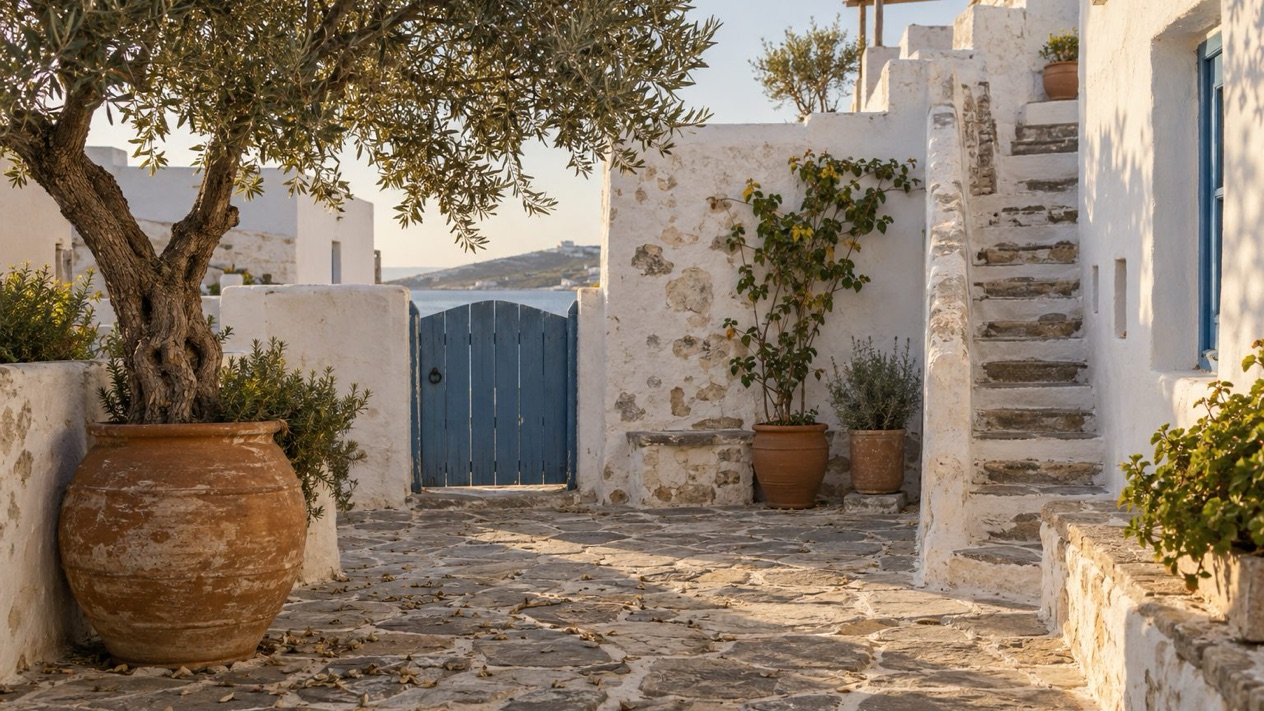
Where is Antiparos and what is it like?
Antiparos is a small island in the southern Aegean Sea, at the heart of the Cyclades, separated from its larger neighbor Paros by a narrow and shallow strait. Its own capital carries the same name as the island and sits on the northeastern coast, which is where the ferry from Paros arrives. In antiquity the island was known as Oliaros, a name that still turns up in local shops and rooms.
The island stretches 6.8 miles from north to south and reaches 2.8 miles across at its widest, so you take it in as a whole rather than as a list of stops. Just over a thousand people live here, and that figure explains the mood: a handful of settlements, a single main village, and a landscape where the sea is always close. The highest point, St. Elias, rises in the middle of the island and watches over everything else.
Antiparos suits peaceful vacations away from all the noise, and that is its promise. Beach days, long lunches by the water and boat trips fill the hours. Two other villages give the island its shape: Kambos in the mid-west and Agios Georgios on the southwestern coast.
If you want a long list of museums, big nightlife or a dozen sights to tick off, the island may feel thin. If you want a place where the day is organized around the next swim and the next meal, it fits very well.
Its closeness to Paros also shapes how people use it. Some stay on Antiparos and treat Paros as the big neighbor across the strait, a place for the ferry and the wider world. Others cross for a day to see the island’s beaches and village and go back in the evening. Either way, the short sea link gives the island the feel of a place set slightly apart.
What is there to do in Antiparos?
The main reasons to come are the beaches, the boat trips and the village itself, with a deeper layer of ancient history under the islet nearby. Antiparos is different from its neighbors because it asks so little of you: nothing is far, and nothing demands a plan.
Beaches on the south and west coasts
The beaches of Antiparos are sandy, with clear, emerald water. Three names stand out among the rarest of them: Sostis Bay, Monastiria and Livadi, found on the far south or west coast of the island. They are spread out on purpose, so a beach day here usually means choosing one and staying put, with the sea in front of you and the island behind.
The road matters as much as the sand. Some roads on Antiparos are very poor, especially the one to Monastiria, which is suited only to ATVs or tough 4×4 cars, not SUVs. That detail shapes the day: reaching Monastiria is part of the adventure, and the other beaches can be approached with the same patience. Pack what you need for the day, since you are heading to the edge of the island.
A boat trip with Captain Antonis
Going around Antiparos by water is one of the pleasures of the island, and the boat Alexandros, run by Captain Antonis, is one way to do it. The trip comes with a meal on board: octopus, sea urchin, tzatziki (the yogurt, cucumber and garlic dip), local sausage and souvlaki, the grilled skewers found all over Greece.
The captain is generous with his bottle of ouzo, the anise-flavored spirit that turns cloudy when water or ice is added. Seen from the sea, the coastline gives you a different idea of the island than the road does, and the lunch turns the outing into a long, unhurried afternoon on the water.
The village and the ancient past
The capital, on the northeastern coast, is the natural base for wandering: you arrive there, you eat there, and you can spend an evening watching the harbor. It is the place for a slow meal of grilled fish, salads and a glass of ouzo or local wine as the boats come and go.
The island also has a very old story. The oldest Neolithic settlement in the Cyclades was discovered on the islet of Saliagos, near Antiparos. You will not find a theme-park version of it, but knowing it is there changes how the nearby sea looks: people were living on these shores long before the villages you see today.
How many days do you need in Antiparos?
The island is small enough that you do not need much time to see it, and the pleasure comes from repeating the same things: the same swim, the same harbor, the same table.
With a short stay, spend your first day in and around the capital. Walk the waterfront, have lunch by the sea and pick one nearby beach. On the next day, add a boat trip around the island, with a lunch of octopus and ouzo on board. That already gives you the heart of what Antiparos offers: sea, food and the view of the coast from the water.
A longer stay opens up the far coasts. Sostis Bay, Monastiria and Livadi are spread across the south and west, and each deserves its own day rather than a rushed visit.
The rough road to Monastiria is a good reason to leave time in the schedule, since you will go slowly. You can also use the days to visit the villages of Kambos in the mid-west and Agios Georgios on the southwestern coast, to see how the island looks away from the harbor.
Because Paros is just across the strait, a stay on Antiparos can easily include a ferry crossing to Parikia, the port of Paros, if you want a change of scene. That makes Antiparos a good base for a week split between a quiet island and a larger one, or a calm end to a longer Cyclades trip.
Where to stay in Antiparos
The capital on the northeastern coast is the most natural place to stay if you want to step out and find the harbor, the restaurants and the ferry at your door. It is where the island’s life is most concentrated, and it suits anyone who likes to have everything within a walk and to return to the same waterfront each evening.
From there you are better placed for the western beaches than you would be from the capital. It makes sense for visitors who plan to spend their days at the sea and come back to a simpler setting at night.
Agios Georgios, on the southwestern coast, is the choice for people who want to be close to the water on the far side of the island. It is a base for those who care more about the beaches than about the harbor scene. Given that some island roads are very poor, staying near the beach you most want to visit saves effort and keeps the days relaxed.
Whichever area you pick, remember the scale: the island is only 6.8 miles from end to end, so none of these bases is truly remote. The choice is really about what you want to see first thing in the morning, the working harbor or the open sea.
How do you get to Antiparos and get around?
You reach Antiparos by sea, on a local ferry that connects the island to the port of Paros. The passenger ferry runs from Parikia, which lies 5.0 miles from Antiparos, and the strait it crosses is narrow and shallow. Paros is therefore the gateway: you arrive on Paros first and cross from its port.
Once on the island, you get around within a small area. The capital sits on the northeastern coast, where the ferry docks, and the other settlements are Kambos in the mid-west and Agios Georgios on the southwestern coast. The distances are those of a small island, and the shape of the roads matters more than the length of the trips.
The roads deserve attention. Some are very poor, especially the one to Monastiria, which is suited only to ATVs or tough 4×4 cars and not to SUVs. If your plan includes the far beaches of the south and west, such as Sostis Bay and Livadi, keep that in mind when you think about how to travel and how much time to leave.
Another way around the island is by boat. A trip with Captain Antonis on the Alexandros takes you along the coast, with food and drink served on board, and offers a view of the shoreline that the roads do not.
When is the best time to visit Antiparos?
Summer, the months when the sea is for swimming, is the natural season for Antiparos, because the island’s whole appeal is its sandy beaches and clear emerald water. That is when the boat trips, the long lunches on the waterfront and the days at Sostis Bay, Monastiria and Livadi make the most sense.
Outside the swimming months, the island is a different kind of place. The village, the harbor and the walking still exist, but the beach-and-boat rhythm that defines Antiparos is less central. Come then if you want the island for its pace and its setting rather than for the sea.
There is no big festival to plan a trip around here, and the island’s character is that of a place built for peaceful vacations. Choose your month by what you want from the sea: a swim every day, or simply the village and the view across the strait to Paros.
Good to know before you go
Antiparos is a place to travel light and unhurried. The beaches that reward the effort are on the far south and west coasts, and the road to Monastiria in particular is only for ATVs or tough 4×4 cars, so plan those days with that in mind. Food is part of the pleasure: octopus, sea urchin, tzatziki, local sausage and souvlaki turn up at the table and on the boat, usually with a glass of ouzo alongside.
The island is small and home to just over a thousand people, which makes it a place of short conversations at the harbor and familiar faces by the second day. Leave room in your plans for the unplanned: a longer swim, a second round at lunch, a last look at the strait before the ferry takes you back toward Paros.
Sources
- Visit Greece (GNTO), Antiparos (https://www.visitgreece.gr/islands/cyclades/antiparos/), checked October 12, 2026
- Wikipedia, Antiparos (https://en.wikipedia.org/wiki/Antiparos), checked October 12, 2026
- Wikivoyage, Antiparos (https://en.wikivoyage.org/wiki/Antiparos), checked October 12, 2026
To plan your stay
- Best Time to Visit Greece: September and Late May to Early June
- Arachova: Parnassus Mountain Town, Formaela Cheese, Ski Season and Saint George's Day
- American Airlines Flights to Greece: U.S. Cities, Athens Arrivals and Onward Island Flights
- Greece on a Budget: Cash Machines, Cards, Beaches and Ferries