
Climb the stone-paved lanes of Ano Poli and the city’s noise drops away behind you. Wooden-balconied houses lean over the street, a cat naps on a church step, and the smell of someone’s lunch drifts from an open kitchen window. This is the Upper Town of Thessaloniki, the old hillside neighborhood where the walls still stand and the Byzantine and Ottoman past is part of the street plan.
What is Ano Poli like?
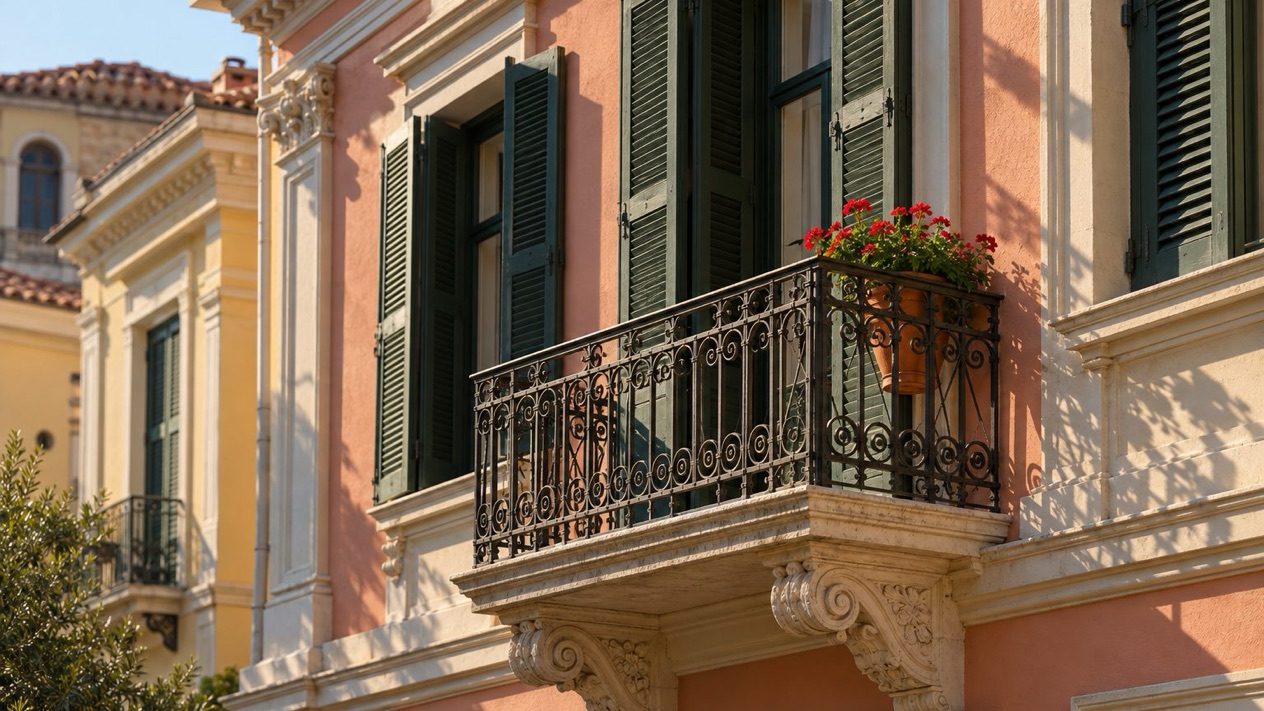
Ano Poli is the old town of Thessaloniki, a hillside neighborhood of narrow stone-paved streets, small squares and houses in traditional Greek and Ottoman style. It sits around the city’s acropolis, north of the city center, and it is the highest part of Thessaloniki. The streets climb and turn back on themselves, so the neighborhood is best taken slowly, with a stop whenever a church or a corner square appears.
Its story explains its look. In the Ottoman period this was the main district of the city’s Turks, while Greeks, western Europeans and Jews lived lower down around the port. When the Great Fire of 1917 destroyed much of the city below, the hillside kept much of its Byzantine and Ottoman design, and that is why Ano Poli feels so different from the avenues of the center.
It has long been a home for poets, intellectuals and bohemians, and it still draws people who like old houses, church courtyards and a slower pace of walking. Remains of the old city walls still surround the district, and the Eptapyrgio fortress crowns it. It is one of the most traditional areas of a city known across Greece for its food and its culture.
Things to do in Ano Poli
The Eptapyrgio and the old walls
The Eptapyrgio is the Byzantine and Ottoman era fort that dominates the Upper Town, and it serves as the city’s acropolis. Its stone towers and ramparts mark the top of the hill, and from the highest point of Thessaloniki you look back over rooftops toward the Thermaic Gulf, the sea the city overlooks.
Remains of the old walls still surround Ano Poli, and following them is a good way to understand the shape of the old town. Stretches of stone run along the edge of the neighborhood, with lanes and houses pressed up against them. The walls and the fort together give the district its sense of being a small town set apart from the city below.
Byzantine churches on the hillside
Several Byzantine churches stand among the houses of Ano Poli, and visiting them is the surest way to read the neighborhood’s age. The Church of Prophet Elijah, the Church of St. Nicholas Orphanos, the Taxiarches church and the Church of Saint Catherine all stand here, each in its own corner of the streets.
They are small buildings set into the lanes rather than on grand squares, so you come upon them as you wander. Walk from one to the next and you cross the old streets that connect them, passing courtyards, garden walls and doorways. The Vlatades Monastery belongs to the same story, a religious house in the Upper Town that adds to the Byzantine layer.
Ottoman traces: the bath, the mosque and the Atatürk Museum
Ano Poli was the Turkish district under Ottoman rule, and its buildings still show it. The Byzantine bath, the Alaca Imaret Mosque and the Atatürk Museum all stand here, so one walk through the neighborhood crosses both the Byzantine and the Ottoman city.
Beyond these, look at the houses themselves. Their upper floors, their wooden details and their stone bases show the traditional Greek and Ottoman architecture the district is known for. Karipio Melathro and Villa Varvara are other landmarks of the Upper Town, buildings that add a more recent layer to the old streets.
Wandering the stone streets and squares
Do not plan too tightly here. The small stone-paved streets and old squares are the main attraction, and the pleasure comes from turning down a lane you did not intend to take. Corners open onto little squares, and a church or a view often appears at the end of a street.
Because Ano Poli escaped much of the destruction that changed the rest of the city, the street plan itself is part of what you see. Wear shoes that suit stone paving and a climb. The lower city, with the White Tower on the waterfront, lies within reach once you come back down the hill.
Eating and drinking in Ano Poli
Ano Poli eats the way Thessaloniki eats, which is to say with appetite. The city is known as the gastronomic capital of Greece, and the hillside carries that into small tavernas, kafenia and cafés set in old houses and on corner squares. Many travelers who love old neighborhoods choose it for exactly that mix of history and daily life.
A taverna meal here usually starts with meze, a spread of small plates for the table: grilled vegetables, fried zucchini, dips, cheese and bread. Grilled meats follow, along with souvlaki, which are skewers served with pita, and dishes such as moussaka. Feta appears in salads and pies, and a carafe of house wine or a glass of tsipouro, the clear spirit of northern Greece, often comes alongside. Ouzo is the other classic pour.
For something lighter, the kafenio is the traditional Greek coffeehouse, a place for a coffee, a glass of water and a long sit. Bakeries sell koulouri, the ring of sesame bread, and bougatsa, the flaky pastry filled with cream or cheese that Thessaloniki loves for breakfast. After a morning among the churches and walls, a pastry and a coffee on a shaded square suit the pace of the neighborhood.
Sweets finish the meal. Expect honey-soaked pastries, spoon sweets served with a glass of water, and a small dessert often sent to the table at the end of a taverna dinner.
Staying in Ano Poli
Staying in Ano Poli means sleeping in the old town, among stone-paved streets and traditional houses rather than on the avenues of the center.
The trade-off is the hill. Ano Poli is the highest part of Thessaloniki, so every return from the lower city is a climb up stone streets. If you plan long days along the waterfront near the White Tower, remember that each trip back is uphill, and that the lanes are narrow.
Compared with the center and the waterfront below, the Upper Town has a different mood. The lower city holds the avenues, the port and the seafront promenade, while the hillside keeps its lanes, its courtyards and its sense of a separate small town.
If you want the old town and the lower city both, you can choose the hill for its character and come down for the rest. Travelers who love old neighborhoods choose it for exactly that mix of history and daily life.
Getting to Ano Poli
Ano Poli lies north of the center of Thessaloniki, on the hillside around the Eptapyrgio, and you reach it by climbing from the lower city. The district is the highest part of Thessaloniki, so wherever you start, the way leads uphill, through streets that narrow as they rise.
Once you are in the Upper Town, the streets are small, stone-paved and old, so you move on foot. The lanes were laid out long before cars, and the old squares, churches and houses sit close together along them. The walls that still surround the district mark its edge, and the fortress at the top marks its crown.
The lower city waits at the foot of the hill. The White Tower stands on the waterfront, and the Thermaic Gulf spreads out beside it, so coming down from Ano Poli brings you back to the sea and the main avenues of Thessaloniki.
Plan the walk the way the neighborhood invites it. Start at the top near the Eptapyrgio, then follow the streets down past the churches, the bath and the old houses toward the city below.
Good to know before you go
Ano Poli is a district of stone paving and slopes, so shoes with a good grip matter more than anything else you pack. Many of its sights are churches and a monastery, which are places of worship as well as places to visit, so move through them as you would any sacred space. Everything you see is set among houses where people live, which makes a low voice and a light step a natural courtesy.
Bring cash for a coffee or a small pastry at a corner kafenio, and expect that old-town lanes are narrow and uneven. Between the walls, the fortress and the churches, the neighborhood rewards a slow wander more than a fixed list.
Sources
- Wikipedia, Upper Town (Thessaloniki) (https://en.wikipedia.org/wiki/Upper_Town_(Thessaloniki)), checked October 12, 2026
- Thessaloniki Airport (https://www.thessalonikiairport.gr/en), checked October 12, 2026
- Thessaloniki Tourism Organization (https://www.thessalonikitourism.gr/), checked October 12, 2026
- Visit Greece (GNTO), Thessaloniki (https://www.visitgreece.gr/mainland/macedonia/thessaloniki/), checked October 12, 2026
To plan your stay
- Best Time to Visit Greece: September and Late May to Early June
- Arachova: Parnassus Mountain Town, Formaela Cheese, Ski Season and Saint George's Day
- American Airlines Flights to Greece: U.S. Cities, Athens Arrivals and Onward Island Flights
- Greece on a Budget: Cash Machines, Cards, Beaches and Ferries