
Along the Matsukawa River in spring, the cherry trees lean over the water until the boats seem to float through a pink tunnel. Behind the city, the mountains hold their snow long after the streets have turned green, and the Sea of Japan lies the other way. Toyama is a place for travelers who like a city with a landscape on both sides, and who would rather linger than tick off a list.
Where is Toyama and what is it like?
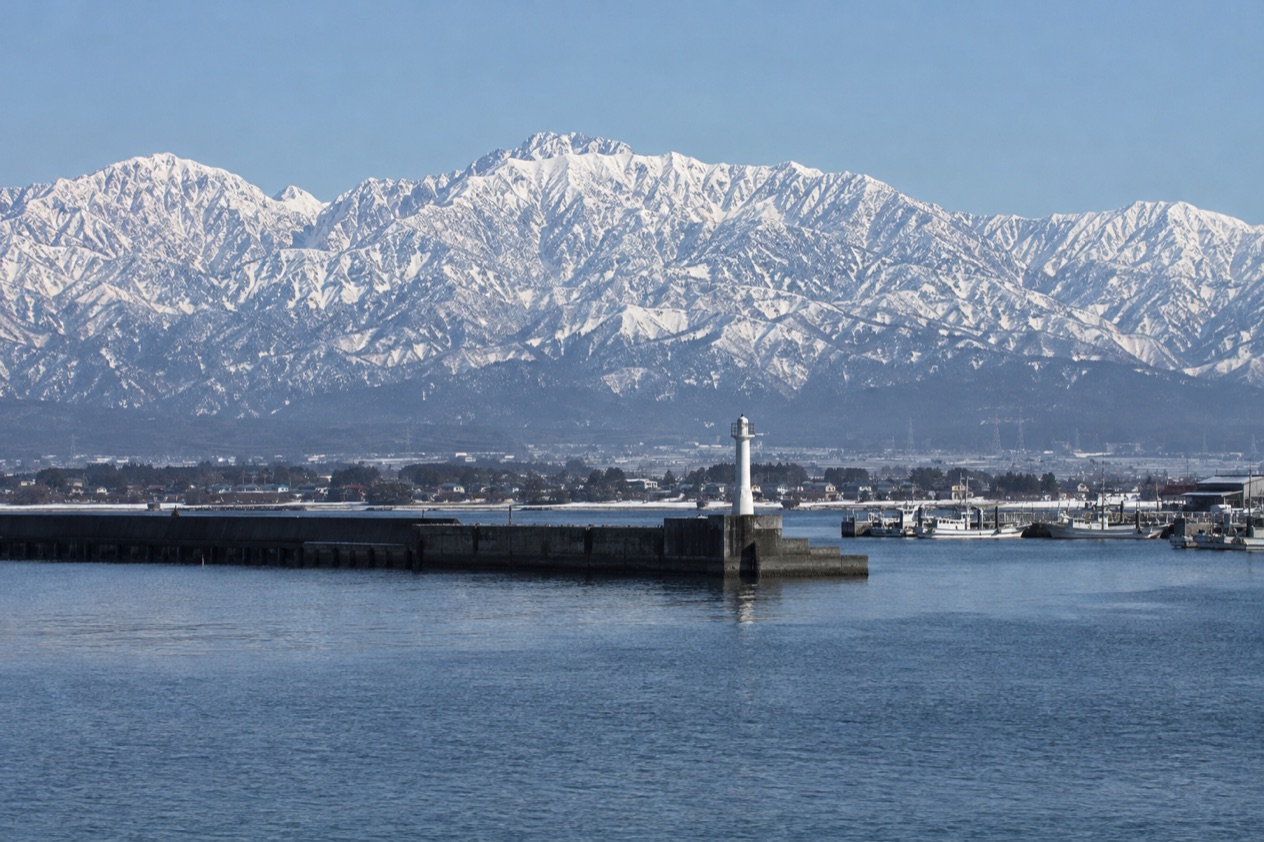
Toyama is the capital of Toyama Prefecture, on the coast of the Sea of Japan in the Chubu region of central Honshu, and it sits between the sea and the mountains. It is about two hours north of Tokyo by Shinkansen, a ride that places it within reach of a weekend from the capital. Nagoya lies to the south, and the Alps rise inland.
The city is the administrative heart of its prefecture rather than a headline destination, and that shapes its pace. You will find a working, lived-in center with a river running through it, a glass art museum, and a station that serves as the gateway to everything else. Mornings can start with a walk by the water, and afternoons with a museum or a coffee.
Winter here is a real season. Toyama receives a great deal of snow, almost all of it falling from December through March, which gives the city a hushed white look and turns the mountains into the main event. That suits travelers who like the cold months, hot drinks and a slower rhythm.
Who will love it? Visitors who want a base with mountain scenery on the doorstep, who enjoy art and river walks, and who are happy to trade big-city spectacle for a calmer day. Who may not?
What is there to do in Toyama?
Toyama gives you the mountains, a river lined with blossoms, and a museum devoted to glass, all within one city’s orbit. What sets it apart from its neighbors is the combination of a coastal city and an alpine gateway in a single stay.
The Tateyama Kurobe Alpine Route
The great draw of the area is the Tateyama Kurobe Alpine Route, a mountain sightseeing route that runs between Tateyama in Toyama and Omachi in Nagano. It covers 23 miles of high country, and it links two prefectures by crossing the mountains rather than skirting them.
Traveling it means moving through changing mountain scenery from one end to the other, so it suits travelers who like a journey that is the attraction itself. Because the route connects Toyama with Nagano, it can also be a way to continue a trip rather than return to your starting point.
Cherry blossoms on the Matsukawa River
In spring, a cruise on the Matsukawa River takes you through a tunnel of cherry blossoms. Seen from the water, the branches arch overhead and petals settle on the surface, a different view from the one you get walking along the bank.
It is a spring pleasure, tied to the short bloom, so it suits those who can plan their visit around the season. Outside those weeks the river remains a pleasant place for a walk through the city.
The Toyama Glass Art Museum
The Toyama Glass Art Museum is a local attraction in the city and a good choice when the weather turns, which in a snowy place is worth knowing. Glass is a craft the city has embraced, and the museum gives you an indoor stop where color and light do the work. Pair it with a stroll through the center of town and a meal, and you have an unhurried day that needs no mountain weather to succeed.
How many days do you need in Toyama?
A long weekend is enough to enjoy the city itself, and a few more days let you reach into the mountains. Toyama rewards a stay that is built around one big outing plus easy days in town.
With two or three days, you can spend one on the river and the glass art museum, wander the center, and sit down to a seafood dinner, since the city faces the Sea of Japan. The Shinkansen ride from Tokyo is about two hours, so a Friday arrival and a Sunday departure works without feeling rushed.
If you want the mountains, give the Tateyama Kurobe Alpine Route its own day, or more if you plan to cross into Nagano and carry on from there. In that case Toyama becomes one end of a larger journey rather than a stop on a round trip.
In spring, add time for the blossom cruise on the Matsukawa River, and in winter keep a day spare for the snow. A week would let you combine all of these at a leisurely pace, with room to simply enjoy being in a city that is not trying to impress you.
Where to stay in Toyama
The most practical area is around Toyama Station, where the Hokuriku Shinkansen stops. Staying here puts you at the point where trains arrive and depart, which suits anyone arriving from Tokyo or heading off to the mountains and the Alpine Route.
The central part of the city, toward the river and the glass art museum, suits travelers who want to spend their time on foot in town and who like returning to the water in the evening. In spring, a base near the Matsukawa River puts the blossoms close at hand.
If you have a flight at Toyama Airport, with its international and domestic routes, staying in the city the night before is a sensible way to keep your plans calm. Whichever area you choose, the city is built around the station and the river, so you are never far from the things worth seeing.
Travelers who plan a mountain day may prefer a base that lets them start the Alpine Route fresh, while those who prefer city rhythms can settle near the center and treat the mountains as a single excursion. Both approaches work, and the choice mostly comes down to whether the city or the peaks matter more to you.
How do you get to Toyama and get around?
The Hokuriku Shinkansen is the way visitors arrive from Tokyo, and it takes about two hours. The fastest service, the Kagayaki, takes as little as 2 hours 5 minutes, while the Hakutaka, which stops at every station north of Nagano, takes about 2 hours 30 minutes. Toyama Station is operated by JR West, and the Shinkansen is covered by the Japan Rail Pass.
A long-distance bus also connects Toyama and Tokyo in about 7 hours, and some companies offer night buses. That is a slower way in, but it gives you another option.
Toyama Airport has international flights to Shanghai, Seoul, Vladivostok and Dalian, and local service to Tokyo, Sapporo and Fukuoka. Schedules change heavily with the season, so travelers should check in advance what is available.
Once in the city, the center is organized around the station and the river, and you can explore by foot for much of what matters in town. For the Tateyama Kurobe Alpine Route, the route itself is how you travel, running between Tateyama and Omachi in Nagano.
When is the best time to visit Toyama?
Spring is the season most associated with the city, when the Matsukawa River is lined with cherry blossoms and a cruise takes you beneath them. That is the moment to come if you want Toyama at its most photogenic.
Winter is the other defining season. Snow arrives almost entirely between December and March, and the city receives about 12 feet of it each season, so those months suit travelers who enjoy snowy landscapes and do not mind cold, wet streets. If you dislike winter travel, avoid those months.
The Alpine Route and its mountain scenery are the draw of the warmer part of the year, and you can build a stay around them outside the snowy months. Because flight schedules at Toyama Airport shift with the season, it helps to settle your dates before you look at flights.
Good to know before you go
Toyama is a city where winter weather shapes daily life, so pack for snow and wet pavement if you visit between December and March. The rest of the year, the mountains and the coast keep the city varied, and the Shinkansen makes it simple to pair with Tokyo or other stops along the line. Plan your Alpine Route day and your airport connections early, since both depend on the season.
Sources
- Japan National Tourism Organization, Toyama (https://www.japan.travel/en/destinations/hokuriku-shinetsu/toyama/toyama-and-around/), checked October 11, 2026
- Wikipedia, Toyama (city) (https://en.wikipedia.org/wiki/Toyama_(city)), checked October 11, 2026
- Wikivoyage, Toyama (https://en.wikivoyage.org/wiki/Toyama), checked October 11, 2026
- Wikipedia, Tateyama Kurobe Alpine Route (https://en.wikipedia.org/wiki/Tateyama_Kurobe_Alpine_Route), checked October 11, 2026
To plan your stay
- Best Time to Visit Japan: Cherry Blossoms, Autumn Colors, Weather and Festivals
- Where to Stay in Japan: Ryokan, Temple Stays, Capsule Hotels and the Best Cities to Base In
- Sending Luggage from the Airport in Japan: Hands-Free Travel, Hotel Delivery and Coin Lockers
- Know Before You Go to Japan: Entry, Money, Etiquette and Getting Around