
Steam rises off a free outdoor hot spring in Rausu while the Sea of Okhotsk turns slate gray beyond the rocks, and a fishing boat motors in with its catch. Shiretoko is the far northeastern tip of Hokkaido, a peninsula of volcanic peaks, forest and cold water that feels like the end of the road. It suits travelers who want wildlife, coastline and a good soak more than a checklist of temples.
Where is Shiretoko and what is it like?
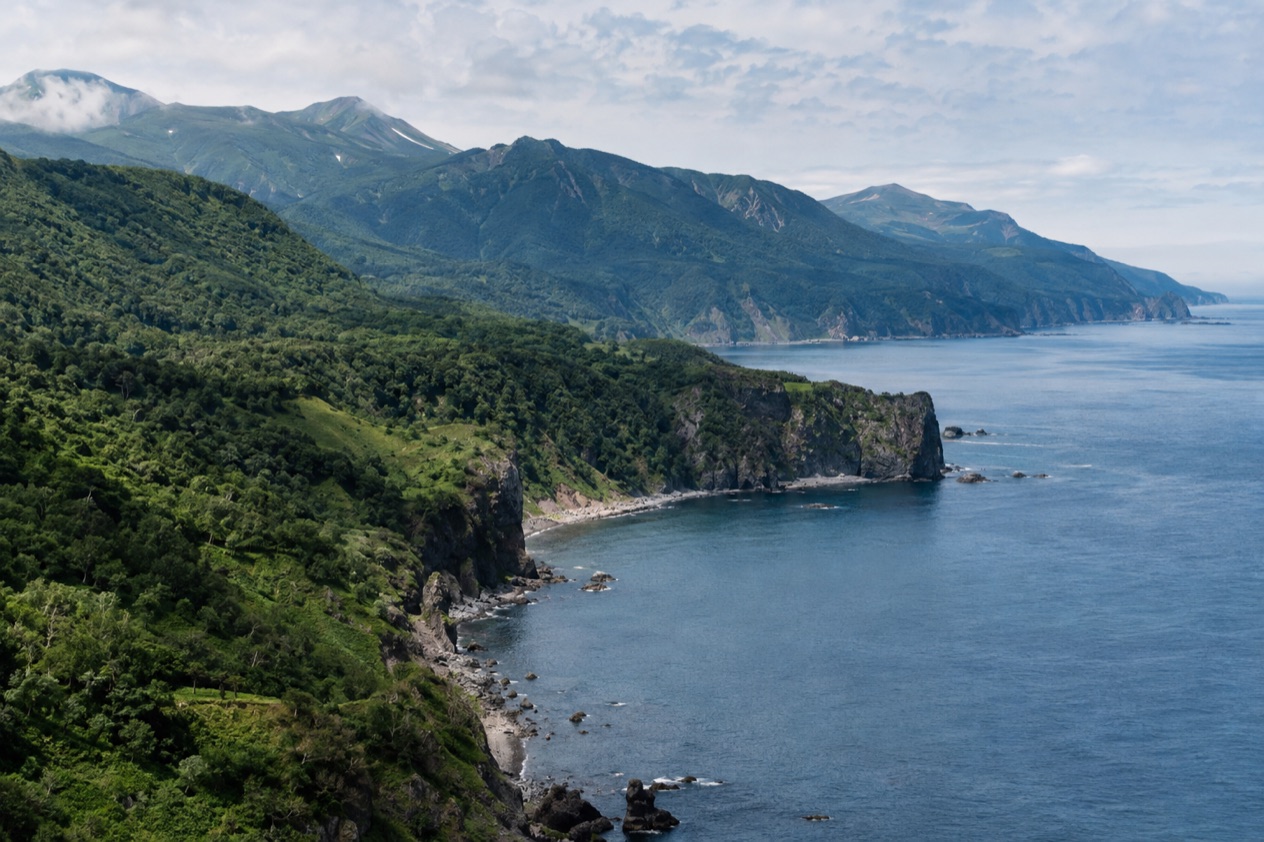
Shiretoko is the peninsula on the easternmost portion of Hokkaido, jutting into the Sea of Okhotsk, and Shiretoko National Park protects the remote northeastern part of the peninsula. That makes it a remote corner of an island that is already far from Tokyo and Kyoto. Two small coastal towns, Utoro and Rausu, are the places where visitors sleep, eat and board boats, and the land between and beyond them is mostly wild.
The character here comes from the water and the mountains pressed close together. Mount Rausu rises to 5,449 feet, the highest peak on the peninsula, and the volcanic spine runs down the middle with forest below it. The sea matters as much as the land.
In winter the Soya Current carries sea ice down from the Sea of Okhotsk and dams it against the west side of the peninsula, which gives Shiretoko the lowest latitude where sea ice regularly forms anywhere on Earth. That detail is the reason the peninsula was registered as a UNESCO World Heritage Site in 2005.
The pace is slow and tied to nature. Days are organized around a boat departure, a trail, a bath, a plate of grilled seafood. Evenings are quiet, with an izakaya (a casual Japanese pub) or a small inn dinner and not much else.
People who love open landscapes, fishing-town food and long soaks tend to fall for it. If you need nightlife, department stores or a dense choice of sights within walking distance of each other, Shiretoko will feel thin, and that is simply what it is.
What is there to do in Shiretoko?
The reasons to come are the wildlife, the walking, the hot springs and the sea, and they set Shiretoko apart from the more visited parts of Hokkaido. Here the park itself is the attraction, and a visit means being outdoors in a protected landscape. Four things fill most stays.
Whale watching and the sea
Whale watching is a popular attraction around the peninsula, and thirteen or fourteen species of cetaceans have been recorded in the area. Boats head out from the harbor towns along the coast, and the trip is as much about the cliffs and the open Okhotsk horizon as about the animals. Sightings are a chance, never a promise, so go with an open mind about what swims past.
Cruises along the peninsula also show the coastline the roads do not reach, with waterfalls dropping straight into the sea and forested slopes behind them. Dress for wind on deck. Fishing boats in the harbors and the smell of the catch are part of the scene before and after.
Walking and climbing in the national park
The park gives you forest paths, lakes and lookouts, and for serious hikers a climb of Mount Rausu. It starts near a hot spring, which gives the climb a fitting finish for tired legs.
If a mountain day is not what you want, the peninsula still rewards slower walking. Bring layers and expect the landscape to feel wilder than in most Japanese parks. Brown bears live on the peninsula, and the park is one of the places in Japan known for them, so treat the forest with respect and pay attention to the guidance posted at trailheads and the visitor center.
Hot springs and the Rausu Visitor Center
Rausu has two baths that cost nothing. Kuma no Yu is an onsen open around the clock, and Iwaobetsu Onsen is a free mixed open-air hot spring, which means men and women bathe in the same pool. Soaking outdoors with the cold air on your face is the signature Shiretoko pleasure.
The Rausu Visitor Center is the place to learn what the park is about and to ask about trails and conditions. Its hours change with the season.
| Site | Open |
|---|---|
| Rausu Visitor Center | May through October 09:00 to 17:00, November through April 10:00 to 16:00, closed Mondays and around New Year’s |
| Kuma no Yu onsen, Rausu | Open 24 hours, free |
Winter sea ice
What makes Shiretoko different from its neighbors in Hokkaido is the ice. In winter the sea itself freezes over and drifts against the coast, a sight tied to the reason the peninsula is protected. It turns a summer-and-autumn nature destination into a winter one too, with an entirely different palette of white, gray and deep blue.
Seeing the ice depends on the season and on how the ice behaves from one winter to the next, so treat it as a chance. A hot spring is a natural companion to a cold day here.
How many days do you need in Shiretoko?
Two nights is a workable minimum, and three or four let the peninsula unfold at its own pace. Because Shiretoko sits at the far end of Hokkaido, a one-night stop would spend most of the visit just arriving and leaving.
With two nights you can fit one boat trip and one walk, plus an evening in a free hot spring. The two towns each have their own feel, so sleeping in one and eating in the other is a pleasant way to see both.
With three or four nights, the pace relaxes and the weather matters less, since a gray day can become a bath-and-book day while a clear one goes to the trails. This is also the length that suits the Mount Rausu climb, because a 9-to-12-hour route needs a rest day on either side. Time spent in Rausu lets you take in the harbor, the seafood and a second soak.
With more time, the rest of eastern Hokkaido becomes a natural extension of the trip. The peninsula itself is the draw, though, and travelers are better off spending extra days here, watching the sea change, than hurrying on. Keep the schedule loose and let the weather pick the activity for each day.
Where to stay in Shiretoko
Rausu and Utoro are the two bases, and the choice between them is really a choice between two moods. Both are small coastal towns on the peninsula, and both are set up for people who come for the park.
Rausu is the town of the harbor and the hot springs. It is where Kuma no Yu and Iwaobetsu Onsen are, along with the Rausu Visitor Center, so it suits travelers who plan to soak every day, who care about seafood straight from the boats, or who are aiming at the Mount Rausu trail. Staying here puts you in a working fishing town and not a resort.
Utoro is the other base, a town where visitors to the national park tend to stay and where many of the coastal excursions begin. It suits people who want to be close to the park’s lakes and trails and the whale-watching and cruise departures. Small inns, minshuku (family-run guesthouses) and hotels of the kind found across Hokkaido’s nature areas are the usual choices, and a stay with dinner included often means a table of local seafood.
In both towns the lodging is modest in scale, and the surroundings, not the room, are what you are paying for. If you want a hot spring in your lodging, many inns have their own baths, which can be a pleasure after a day outdoors. Choose the town by what you plan to do each morning, and you will likely be happy with either.
How do you get to Shiretoko and get around?
Shiretoko is reached by traveling across Hokkaido to the northeastern tip of the island, where the peninsula protrudes into the Sea of Okhotsk. It is a remote corner, and the journey is part of the experience, with the landscape shifting as you go east.
Once you are on the peninsula, the logic of the place is simple. The towns of Utoro and Rausu are the hubs, the national park covers the whole peninsula, and the activities, from boat trips to trailheads to hot springs, are spread along its coast. Because distances and schedules here depend on season and operator, the most useful habit is to ask at your lodging or at the Rausu Visitor Center about what is running during your stay.
Walking is how you move within a town and along a trail, and the rest is a matter of fitting your plans to what operates on the peninsula in that season. The visitor center keeps seasonal hours, with longer days from May through October and shorter ones from November through April, and it closes Mondays and around New Year’s, so plan a stop there accordingly.
Boats are the other way of getting around, since the coast is as much a part of the park as the forest. A cruise or whale-watching trip gives you access to parts of the shoreline that are not reached on foot. Plan your days around that, and the peninsula feels less like a distant corner and more like a place with its own rhythm.
When is the best time to visit Shiretoko?
Summer through October is the season for walking, boats and whale watching, and winter is the season for the ice. The Rausu Visitor Center keeps its longer hours from May through October, which is a good sign of when the park is in full swing for hikers and sightseers.
May through October suits trails, cruises and a climb of Mount Rausu, and it is when whale watching is the headline, with its usual chance, not a promise, of sightings. The forest and the coast are the draw, and you can plan days outdoors with the sea always in view. October is also when the visitor center is still on its longer schedule before it shifts for the cold months.
Winter, from November through April on the visitor center’s calendar, is the time of sea ice, the feature that earned the peninsula its World Heritage listing. The Soya Current brings ice down from the Okhotsk and piles it against the west side of the peninsula, and hot springs like Kuma no Yu, open all hours, make the cold part of the pleasure. Nothing here is guaranteed from one winter to the next, so go for the atmosphere and treat the ice as a bonus.
Good to know before you go
Shiretoko is a place of wild country, and the habits that serve you in a park apply here: dress in layers, stay on marked trails, and take notice of what the visitor center says about wildlife and conditions. Brown bears live on the peninsula, so the guidance posted there is worth reading.
The free hot springs in Rausu follow Japanese bathing custom, with a wash before entering and the pool shared, in the case of Iwaobetsu Onsen, by men and women together. Carry some cash for small-town shops and meals, and keep your plans flexible, since the weather and the sea make the schedule.
Sources
- Wikipedia, Shiretoko Peninsula (https://en.wikipedia.org/wiki/Shiretoko_Peninsula), checked October 11, 2026
- Wikivoyage, Shiretoko National Park (https://en.wikivoyage.org/wiki/Shiretoko_National_Park), checked October 11, 2026
- Wikipedia, Shiretoko National Park (https://en.wikipedia.org/wiki/Shiretoko_National_Park), checked October 11, 2026
To plan your stay
- Best Time to Visit Japan: Cherry Blossoms, Autumn Colors, Weather and Festivals
- Where to Stay in Japan: Ryokan, Temple Stays, Capsule Hotels and the Best Cities to Base In
- Sending Luggage from the Airport in Japan: Hands-Free Travel, Hotel Delivery and Coin Lockers
- Know Before You Go to Japan: Entry, Money, Etiquette and Getting Around