
On Sado Island, a drum beat can carry across a village at dusk, deep and rolling, from the taiko players who train here. Out on the water, ferries pull away from the Honshu shore and the island rises slowly out of the Sea of Japan.
This is Niigata Prefecture’s offshore world of old mining tunnels, rice terraces, fishing ports and mountain roads. It suits travelers who like their Japan slow, rural and a little separate from the mainland.
Where is Sado Island and what is it like?
Sado Island sits in the eastern part of the Sea of Japan and belongs to Niigata Prefecture, governed as a single municipality, Sado City. The nearest point of Honshu is about 20 miles away, so the island feels close to the mainland on a map and far from it once the ferry has left the harbor. It is the sixth largest island in Japan, which explains why it behaves less like a small getaway and more like a region of its own, with several districts, two mountain ranges and a long, indented coastline.
The character is rural and varied. Fishing towns line the shore, rice fields fill the low ground between the ranges, and the highest point, Mount Kinpoku, anchors the mountains. Part of the island belongs to the Sado-Yahiko-Yoneyama Quasi-National Park, and on the north side of Mount Sado, Senkaku Bay is a famous tourist spot, a place of cliffs and sea views that visitors come to see.
What you find here is a layered history and a living folk culture. The island’s gold mining past still shapes the town of Aikawa, and in Ogi the taiko group Kodo has made its home at Kodo Village. Add the island’s food (seafood from the surrounding sea, local rice, sake) and you have a place where days are organized around meals, drives and a single big sight or two.
Sado rewards people who enjoy driving or riding along coastal roads, stopping where something catches the eye and letting the afternoon drift. Distances are large for an island, towns are spread out, and the rhythm is that of the countryside rather than a resort strip.
What is there to do in Sado Island?
The big reasons to come are the gold mine and the island’s mining history, the taiko drumming of Ogi, and the scenery of the coast and the mountains. What sets Sado apart from the mainland towns across the water is the combination: a mining town, a living drum tradition and a national park within a single ferry ride.
Sado Gold Mine and the history museum
You walk through old galleries and see how the work was done, and the story reaches beyond the tunnels to the town that grew around them. It suits travelers who like industrial history and anyone who enjoys stepping out of the sunlight into something cooler and darker.
The Sado History and Traditional Museum adds the wider story of the island: its folk customs, the people who were sent here in exile over the centuries, and the performing arts that took root. Pair it with the mine for a day that is more about understanding than about scenery. Both keep seasonal hours.
| Site | Open |
|---|---|
| Sado Gold Mine | Daily 08:00 to 17:30, closes at 15:00 in winter |
| Sado History and Traditional Museum | 08:30 to 17:00 from April to November, 09:00 to 16:30 from December to March |
Taiko at Ogi
Ogi is the home of Kodo Village, and the Sado Island Taiko Center stands one minute from it. Taiko here is more than a performance: it is a way of living around rhythm, with players who train for years on the big drums and the smaller ones. Even a visit with no show is an introduction to how the island thinks about music, as a physical, communal thing.
Every August, the town hosts the Earth Celebration, a festival that gathers drummers and other performers in the Ogi area. For travelers it is the reason to plan a trip around a particular week. If the festival is not your timing, the taiko center still gives you the chance to try the instrument yourself.
Coast and mountain scenery
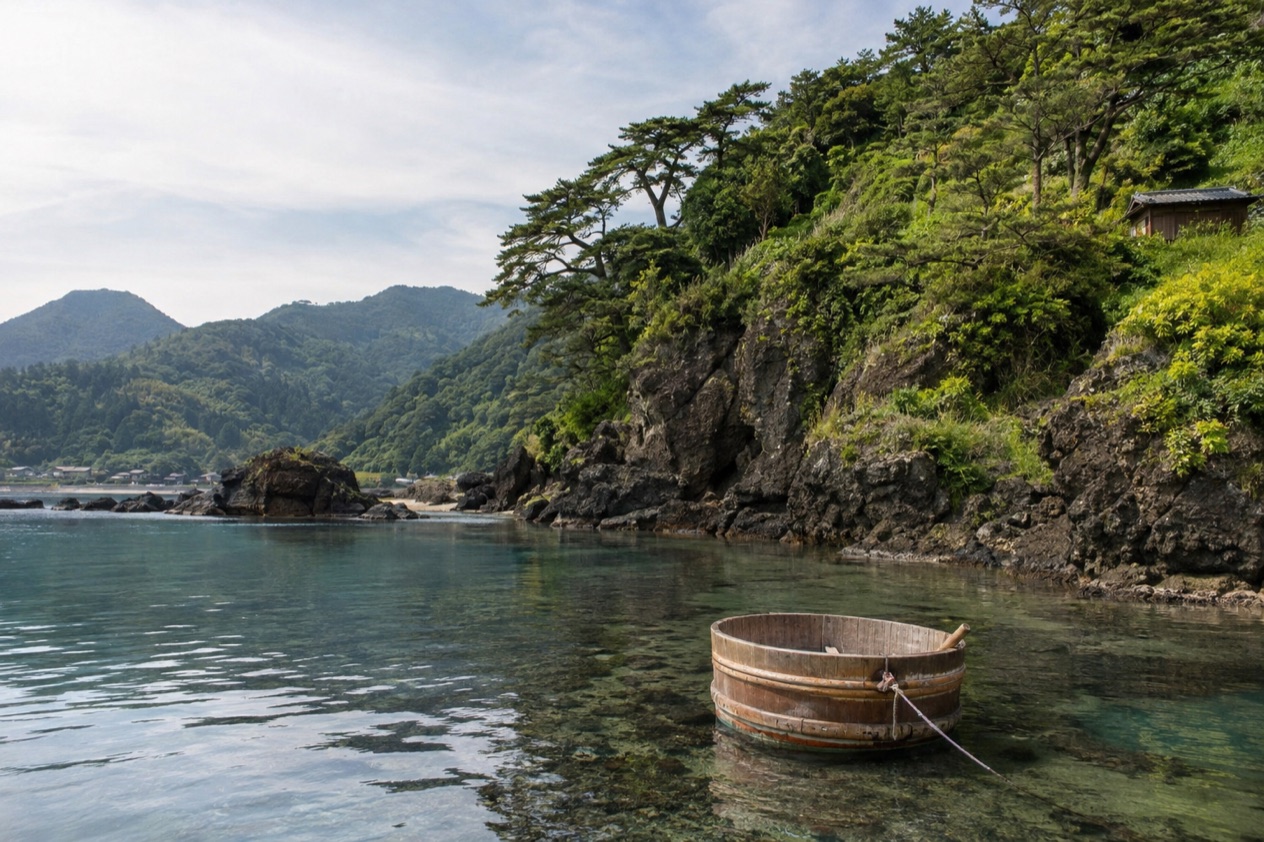
Senkaku Bay, on the north side of Mount Sado, is the scenic highlight of the coast, with rocky shoreline and open sea. Elsewhere, fishing harbors, small beaches and rice fields appear one after another as you drive. In Ogi, the island is also known for its round tub boats, small craft used for gathering seafood in the shallows, which give the harbor a look found almost nowhere else.
The Ō-Sado Skyline road runs between Kanai and Aikawa and takes you high into the mountains with wide views over the island. It is closed from the end of November to April, so it belongs to the warmer part of the year. Walking and driving here are the best ways to feel how large the island is.
How many days do you need in Sado Island?
A long weekend is enough to see the main highlights, but the island rewards a longer stay, since it is large and its sights are spread out.
With a few more days, you can slow down and add the things that make Sado feel like a place rather than a checklist. The ferry schedules also matter for planning, since some sailings do not run all year.
Timing your stay around a festival changes the shape of the trip. Earth Celebration in late August fills Ogi with drummers and visitors, while the International Triathlon on the first Sunday of September brings a very different energy, athletes on the island roads and a crowd to cheer them on. Either event can anchor a weekend, with the quieter districts left for the days around it.
With a week, you can treat the island as a region: base yourself in two areas, cover the south and the north separately, and leave room for weather. Sado is also a natural place to combine with the mainland side of Niigata, since the ferry ports lie on that coast. The point of a long stay is not more sights but more unhurried time.
Where to stay in Sado Island
Because the island is large and its attractions are scattered, the choice of area shapes the trip. Ogi suits travelers drawn by taiko, Kodo Village and the Earth Celebration, and it puts the harbor and its tub boats close by. Staying here makes sense if drums and festivals are the reason you came.
Aikawa suits visitors who want to be near the gold mine and the mining history. It is a town built around that past, and it gives you an evening setting that feels part of the story. Travelers who like to wake up near the sight they came for often prefer it.
The central part of the island, around Kanai, is where the Skyline road starts, so it works for those who plan to drive the mountains. Along the coast, small guesthouses and traditional inns, ryokan (Japanese inns with tatami rooms and set meals), offer a more local stay, often with seafood on the table. These places tend to reward those who like quiet evenings over nightlife.
Visitors split their nights between two bases, one on each side of the island, so that they spend less time driving back and forth. If you are coming for the late August festival, it is worth thinking about your base early, since the Ogi area is where the events happen.
How do you get to Sado Island and get around?
You reach Sado Island by ferry from the mainland. From Niigata city, the car-ferry takes about 2 hours 30 minutes, while the jetfoil, a faster passenger vessel, takes about 1 hour 7 minutes. Sado Kisen operates the ferries to the island from two ports, and some of the sailings do not run year-round.
A second route links Naoetsu with Ogi by jetfoil. This service operates during busy periods except winter, with two daily departures. It lands you at Ogi, the town of Kodo Village and the Earth Celebration, which makes it a natural fit for a taiko-focused trip.
The car-ferry carries vehicles, so the choice of boat shapes how you will move around on the island. Once there, the distances are those of a large island, with the coast road linking the fishing towns and the mountain road crossing the heights. The Ō-Sado Skyline between Kanai and Aikawa is closed during winter, from the end of November to April, which affects routes across the mountains in that season.
Getting around on Sado means planning each day around a district, because the sights are far apart. Travelers coming on foot or by public transport tend to base themselves in one area and explore it well, while those with a vehicle can cover more of the island and follow the coast at their own pace.
When is the best time to visit Sado Island?
Late summer is the strongest case for a visit, because the island’s two big events fall then. Earth Celebration takes place in the Ogi area in late August, and the Sado International Triathlon is held each year on the first Sunday of September. Together they make August and early September the time when the island has the most going on.
The warmer part of the year also opens the island’s roads and services. The Ō-Sado Skyline between Kanai and Aikawa is closed from the end of November to April, so a mountain drive belongs to the months outside that window. The Naoetsu-Ogi jetfoil runs in busy periods except winter, and some ferries do not operate throughout the year, which is one more reason to plan around the milder seasons.
Winter has its own character. The gold mine closes early in the day then, and the history museum shortens its hours from December to March, so sightseeing days are compressed. It is a season for travelers who like a stripped-down, seasonal island and who accept that some routes are shut. Festival weeks bring more visitors to Ogi, so expect the area to be busier around them.
Good to know before you go
Sado is a place where timetables matter. Ferry operations vary by season, mountain roads close in winter, and sights keep their own seasonal hours, so build your days around those limits rather than against them.
Carry some cash for small harbor towns and rural spots, keep an eye on the weather forecast when you plan crossings, and leave room in the schedule for a delayed sailing. Most of all, plan to take the island at the pace it sets, with long meals, drives along the coast and an evening listening for the drums.
Sources
- Japan National Tourism Organization, Sado Island (https://www.japan.travel/en/destinations/hokuriku-shinetsu/niigata/sado-island/), checked October 11, 2026
- Wikipedia, Sado Island (https://en.wikipedia.org/wiki/Sado_Island), checked October 11, 2026
- Wikivoyage, Sado Island (https://en.wikivoyage.org/wiki/Sado_Island), checked October 11, 2026
To plan your stay
- Best Time to Visit Japan: Cherry Blossoms, Autumn Colors, Weather and Festivals
- Where to Stay in Japan: Ryokan, Temple Stays, Capsule Hotels and the Best Cities to Base In
- Sending Luggage from the Airport in Japan: Hands-Free Travel, Hotel Delivery and Coin Lockers
- Know Before You Go to Japan: Entry, Money, Etiquette and Getting Around