
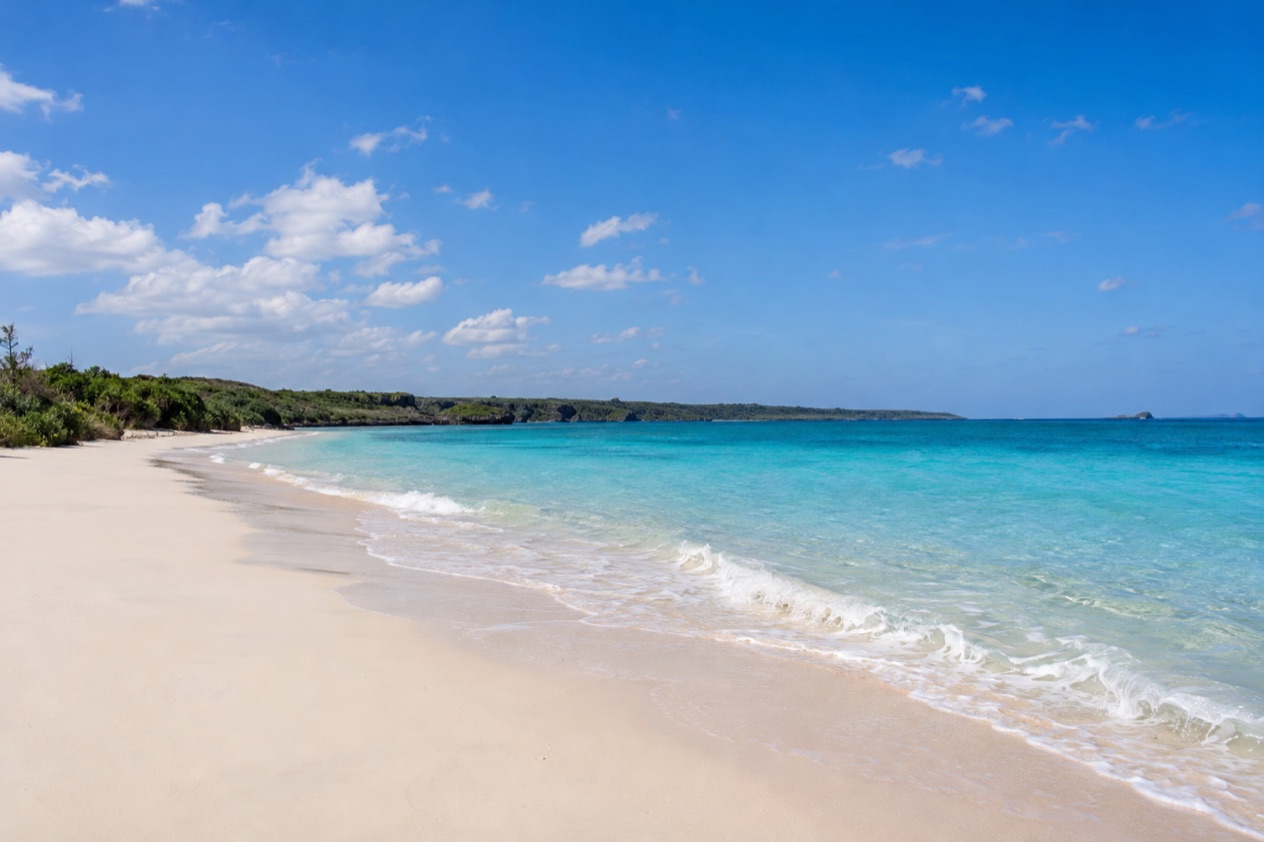
A road runs between sugarcane fields under a wide sky, and then the trees open onto a bay with pale sand and water in colors you stop to look at. Miyako Island has that kind of rhythm: long drives, sudden views, a pause at the shore. It is a flat, rural island in Okinawa Prefecture, built for beach days, diving, cycling and unhurried meals, and it suits travelers who want to slow down.
Where is Miyako Island and what is it like?
Miyako Island lies in the Pacific Ocean, east of Taiwan, and belongs to Okinawa Prefecture, about 186 miles southwest of Okinawa Island itself. It is the main island of the Miyako group and a flat, farmland-and-coast kind of place, not a mountain retreat. The highest point, Nakao, reaches just 376.6 feet, so the horizon is wide and the sky does most of the work.
The island covers 61.34 square miles, and it is linked by bridges to the smaller islands of Kurima and Ikema. That bridge connection matters for the feel of a stay. You can cross from one island to the next by road and treat the little neighbors as part of the same trip, with the sea on both sides of the car window.
The coastline is the main character. Coral reefs ring the island, and the water inside them runs in emerald tones. White sand beaches line the north, east and west coasts, while the south coast is mostly cliffs, so the island offers both soft shorelines and dramatic edges. At the southeastern tip, Higashi-hennazaki, the Eastern Cape, is a nationally designated Place of Scenic Beauty, a long finger of land where the island simply runs out.
The climate is tropical. Every month of the year has a mean temperature of at least 64°F, so winters are mild by mainland standards and nothing here depends on a short season. Days revolve around the sea, the sun and a long lunch.
The island suits people who like to build a day around a beach, a reef or a bicycle. It is less suited to travelers who want a dense program of temples, museums and neighborhoods to hop between.
Japanese is the main language, with the local Miyako language and the dialects of individual towns alongside it. English speakers can be found, though they are rare, so a phrasebook or a translation app earns its place in your pocket.
What is there to do in Miyako Island?
Miyako is known for sun, beaches, golf, cycling and diving among coral reefs. What sets it apart from the bigger island of Okinawa to the northeast is its scale and its emptiness: there is less to tick off and more space to spend a day on a single stretch of coast. Four reasons carry most trips.
Beaches on three coasts
The white sand beaches face north, east and west, which gives you a choice depending on where you are staying and which way you feel like driving. A typical beach day here is simple: a towel, a hat, a cold drink from a small shop or a hotel, and hours of watching the water shift between pale turquoise and deeper blue over the reef.
Read the water as you find it, and follow whatever signs or advice the local operators give you about the sea conditions on a given day. Between beaches, stop at roadside stands for fruit or shaved ice, which is a pleasure of island driving in its own right.
Diving and the coral reefs
The reefs around the island are the reason many divers come. Diving here means coral gardens and the clear emerald water that the island is known for, and it is a draw for people who plan whole trips around underwater time.
If you do not dive, the reef still shapes your visit, because it is what gives the shallows their color and the shore its character. Dive shops on the island run outings for different experience levels, and it is worth asking them directly what is on offer for the days you will be there.
Cycling and slow driving
Bicycles and scooters are available for rent, and the flat terrain shapes the whole island experience. Roads pass sugarcane fields, low villages and sudden views of the sea, and the bridges to Kurima and Ikema give a clear destination for a day on the road.
Driving the full circuit of the island takes three to four hours, which tells you that Miyako is the sort of place where you can see a lot without a heavy schedule. Plan on stops, because the point is the pauses at beaches, bridges and lookouts.
Higashi-hennazaki and the cliffs
The southeastern cape, Higashi-hennazaki, is a nationally designated Place of Scenic Beauty and an obvious reason to point the car toward the island’s far end. You come for the view of land narrowing into the Pacific, with the wind in your face and the sea on both sides.
The south coast of the island is mostly cliffs rather than sand, so it gives a different picture from the beach coasts. Pair the cape with a stop for lunch and a beach on another coast, and the day shows you how varied a flat island can be.
Food is part of the program. Okinawa soba, goya champuru (a stir-fry with bitter melon), sea grapes, local brown sugar and glasses of awamori, the island’s distilled spirit, are the kinds of things to look for at small restaurants and izakaya (casual pubs). Golf adds another reason to come for those who bring clubs.
How many days do you need in Miyako Island?
A long weekend is the minimum that makes the trip worthwhile, and a week lets the island do what it is best at, which is to slow you down. Because the beaches, the reef and the cape all ask for time rather than a checklist, extra days rarely feel wasted here.
A short stay
With three or four days you can cover the essentials: a beach day on one coast, a drive out to Higashi-hennazaki, a crossing by bridge to Ikema or Kurima, and a few long meals of Okinawan food.
Flights and your arrival and departure times will shape the first and last days, so treat those as lighter days and keep the full ones for the middle of the stay.
A week on the island
A week gives room for diving days, a second and third beach coast, a day on the bicycle or scooter, and the kind of slow mornings that island trips are made for. It also lets you adapt to the sea and the sky. If a day turns out gray or windy, you swap in a drive, a long lunch or a visit to the bridged islands, and lose nothing.
Golfers can fit rounds around beach time, and divers can string several outings together without squeezing them between sightseeing stops. With more days you can also explore the smaller roads between villages, where sugarcane fields give way to the sea at the end of nearly every lane.
Adding Ikema, Kurima and beyond
Ikema and Kurima are linked to Miyako by bridges, so they work as day outings by car or by bike without any change of boat or plane. They are small islands with their own coastlines, and crossing the bridge is part of the pleasure.
Tarama, the third of the main islands of the group, is separated from the others by a two-hour boat ride or a short flight. It makes sense as an extension for those with a longer trip. From Miyako Airport there are also direct flights to Ishigaki, which allows a trip that links more than one island in the chain.
Where to stay in Miyako Island
White sand beaches run along the north, east and west coasts, so staying near one of them puts the sea at your doorstep. The south coast, mostly cliffs, has a different character and is less a place for a beach-front base.
Near the beaches
Beach-side hotels and resorts suit travelers who plan to spend their days on the sand and in the water. You can walk out to the shore in the morning, return for a rest and go out again as the light changes. This is the natural choice for couples, families who want to be near the sea and divers who want an early start.
Some hotels provide shuttles, which is useful because local buses are not easily accessible on the island. If you are not renting a car, a property with its own shuttle can solve part of the transport question, though it is worth asking exactly what the service covers.
In the main town
Hirara, the island’s main town, is the base for those who want restaurants, izakaya and small shops within reach in the evening. After a day on the coast, a stay in town lets you step out for a bowl of Okinawa soba or a glass of awamori without planning a drive.
A town base suits travelers who prefer evening options over a beach doorstep, or those arriving on a late flight who want something simple. With a rental car, a scooter or a taxi you can still reach any coast for the day.
On the bridged islands
Ikema and Kurima, linked to Miyako by bridges, are options for travelers who want a quieter corner and do not mind crossing back by road for dinners and outings. They are small, so your daily rhythm will be set by what you bring with you and what the nearest shore offers.
Whichever area you choose, think about transport first. With a rental car or a taxi, you can live anywhere on the island and still reach every coast. Without one, a location with shuttles or rental bicycles close by matters more than the view from the room.
How do you get to Miyako Island and get around?
Miyako Island is reached only by plane, landing at Miyako Airport. Direct flights connect it with Tokyo’s Haneda Airport, Osaka’s Kansai Airport, Nagoya Centrair International Airport, Naha Airport on the main island of Okinawa, Ishigaki and Tarama. That list gives you a few ways to build a trip, from a flight straight from the mainland to a hop from Naha or Ishigaki as part of a wider journey through Okinawa.
Getting around by car and taxi
Renting a car or taking a taxi is the best way to get around the island. Local buses are not easily accessible, so the freedom of a car matters here more than in a mainland city. The drive around the whole island takes three to four hours, and that figure gives you a sense of how the coasts connect.
Taxis work for shorter outings, a dinner in town or a transfer to a beach. A car lets you follow your own schedule, stopping at a bridge, a cape or a roadside fruit stand when something catches your eye.
Bicycles, scooters and hotel shuttles
Bicycles and scooters are available for rent, which suits travelers who like to move at the pace of the island and stay near their base. Flat ground makes the island a natural fit for two wheels, and the bridges to Kurima and Ikema give you a clear destination for a longer ride.
Some hotels run shuttles, which can cover the gap left by the limited buses. Ask what your property offers before you arrive, since it can shape whether you need a car at all.
To the other islands
Ikema and Kurima are reached by road over their bridges. Tarama is a different matter, separated from the other islands by a two-hour boat ride or a short flight, and it has its own direct flight link with Miyako Airport. Because English is rare on the island, it helps to have your destinations written in Japanese on your phone when you talk to taxi drivers or rental counters.
When is the best time to visit Miyako Island?
Miyako has a tropical climate in which every month averages at least 64°F, so there is no month when the island closes down or turns cold in the mainland sense.
Because the island is a place of sun, beaches and sea, the warmer months naturally draw the beach-and-reef crowd, while the cooler stretch of the year suits those who care more about driving, cycling, golf and long meals than about time in the water. Weather on a small flat island in the Pacific can change from one day to the next, so build a few flexible days into any stay and keep a car or a bicycle plan that works in sun or cloud.
Storms and heavy rain belong to the Pacific, and the sky can turn gray on any given day. When it does, the island still offers plenty: a long drive to Higashi-hennazaki, the bridges to Ikema and Kurima, a slow meal of Okinawa soba or a tasting of awamori. Look at the weather forecast close to your dates, and let it set your order of days rather than your whole plan.
Good to know before you go
Japanese is the main language on the island, with the Miyako language and local dialects in the background, and English speakers are rare, so a translation app and written destinations are useful. Plan your transport before you land, since local buses are not easily accessible and a rental car or taxi is the best way around. Bring sun protection for long days by the sea, and keep an eye on the weather forecast, since the island sits in the open Pacific.
Sources
- Japan National Tourism Organization, Miyako Island (https://www.japan.travel/en/destinations/okinawa/okinawa/miyako-island/), checked October 11, 2026
- Wikipedia, Miyako Island (https://en.wikipedia.org/wiki/Miyako_Island), checked October 11, 2026
- Wikivoyage, Miyako Islands (https://en.wikivoyage.org/wiki/Miyako_Islands), checked October 11, 2026
To plan your stay
- Best Time to Visit Japan: Cherry Blossoms, Autumn Colors, Weather and Festivals
- Where to Stay in Japan: Ryokan, Temple Stays, Capsule Hotels and the Best Cities to Base In
- Sending Luggage from the Airport in Japan: Hands-Free Travel, Hotel Delivery and Coin Lockers
- Know Before You Go to Japan: Entry, Money, Etiquette and Getting Around