
On a summer afternoon in Karuizawa the air under the larch and maple trees is cool enough that people stroll in light sweaters while the rest of Japan sweats. Shop doors stand open along the Old Road, bakeries send out the smell of fresh bread, and the dark cone of Mount Asama sits over the town. Karuizawa is a mountain resort town in Nagano prefecture, built for people who want to slow down, and it suits couples, families and anyone who prefers cool air and a long lunch to a checklist.
Where is Karuizawa and what is it like?
Karuizawa is a town in Nagano prefecture, set high in the mountains, with Mount Asama, an active volcano, rising close by. The altitude is the whole story here. In summer the town is generally a good deal cooler than Tokyo, which is exactly why it became a place to escape to in the first place.
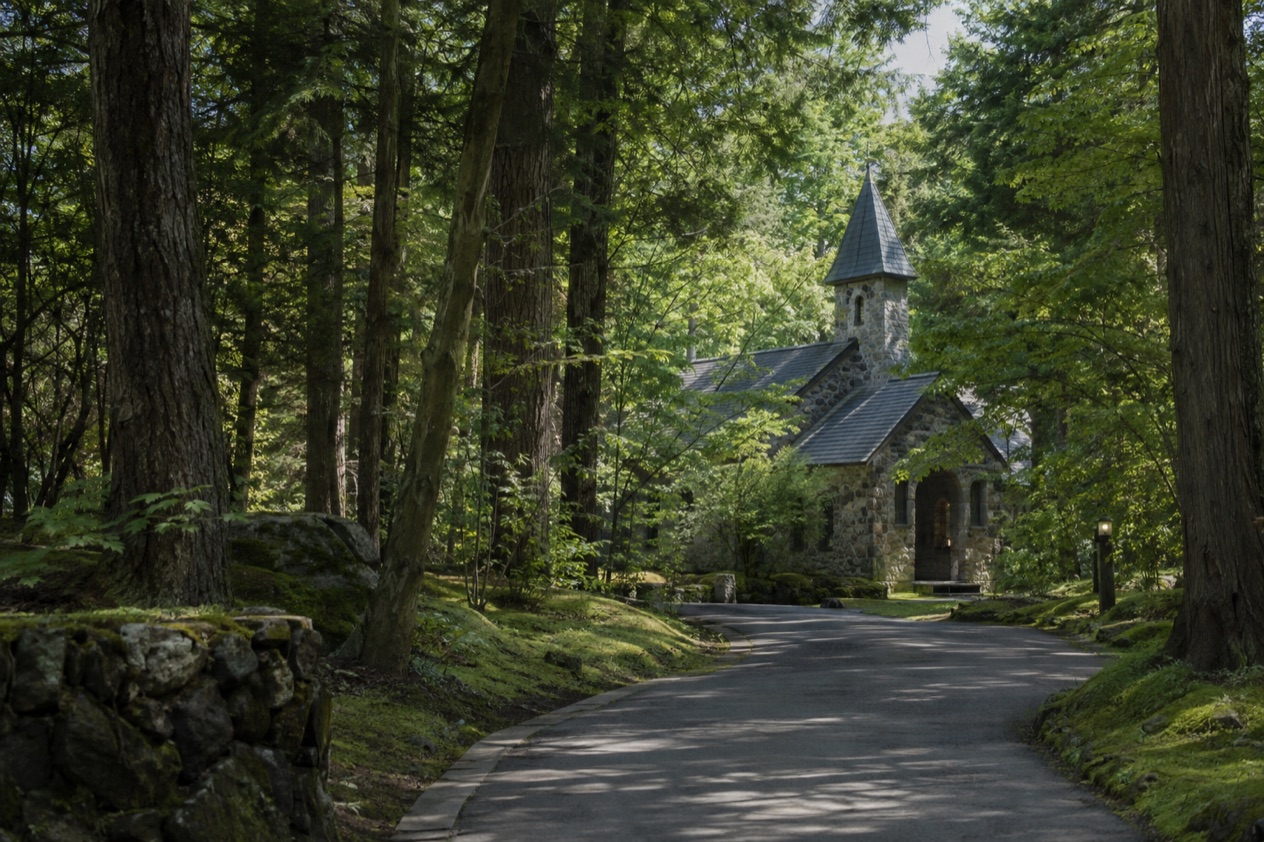
The resort began in 1888, when a Scottish-Canadian missionary developed it as a European-style retreat. That foreign beginning still shows in the way the town feels. Wooded lanes lead to private villas half hidden among the trees, small churches sit among the greenery, and the cafés and bakeries lean toward the Western side of the menu, with bread, jam, coffee and cakes set beside the soba and other regional cooking of Nagano.
The pace is unhurried. It is a place for rest, for cool-weather walks, and for browsing small shops and galleries.
Travelers who measure a trip in temples seen and sights checked off may find it a little thin. There is no great castle or grand shrine to anchor a day. What you get instead is atmosphere, greenery and the feeling of a resort that has been welcoming holiday visitors for well over a century.
What is there to do in Karuizawa?
The big reasons to come are the Old Road and its shops, the hot springs, the Olympic story that gives the town an unusual place in sports history, and the mountain scenery around Mount Asama. What sets Karuizawa apart from other mountain stops in Japan is its resort character: it was designed for leisure, so the days here are built around wandering, eating and bathing.
The Old Road shopping street
Karuizawa is known for its historic shopping street, called Ginza dori or Kyu-do, which means Ginza Street or the Old Road. This is the place to start. Low buildings line the street, and the shops sell the kinds of things a resort town does well: jams and preserves, baked goods, local crafts, small gifts and clothing for a weekend in the hills.
Treat it as a street to graze along rather than rush through. Step into a bakery for something warm, stop at a café when your feet ask for it, and look into side lanes where smaller shops and restaurants sit under the trees. It suits rainy days as well as sunny ones, since you can duck from shop to shop.
Onsen and the Tourism Hall
Soaking in hot spring water after a day on your feet is one of the classic pleasures of the Japanese mountains, and Karuizawa Sengataki Onsen is one place to do it. Bathing is the point of an evening here, and the cool mountain air makes the hot water feel even better. The Karuizawa Tourism Hall is the place to pick up information on the town and its surroundings.
| Site | Open |
|---|---|
| Karuizawa Tourism Hall | 9:00–17:00, until 18:00 in the summer |
| Karuizawa Sengataki Onsen (weekdays) | 14:00–21:30, last entry 45 minutes before closing |
| Karuizawa Sengataki Onsen (Saturdays, holidays and other special days) | 10:30–22:00, last entry 45 minutes before closing |
The Olympic story
Karuizawa hosted the equestrian events of the 1964 Summer Olympics and the curling of the 1998 Winter Olympics. That made it the first city in the world to host both Summer and Winter Olympic events, a surprising fact for a town of this size. It adds a layer to a visit if you enjoy sports history, and it says something about the town’s character, which is as comfortable with horses and open green space as with ice and snow.
You do not need to be a sports fan to enjoy the idea. It gives you a story to tell over dinner, and a reason to look at the town’s wide, open landscapes with a bit more curiosity.
Mount Asama and the mountain views
Mount Asama is an active volcano near the town, and it shapes the skyline and the sense of place. Climbing close to its summit is prohibited, so admire it from the town and from the viewpoints and lanes around it. Seeing the mountain from a café terrace or a quiet road under the trees is part of what makes Karuizawa feel like a mountain resort rather than a city.
Around the town, the woods themselves are an attraction. Larch and maple give the lanes their character, and in autumn the leaves change color. Walking among the villas and trees is an activity in its own right here.
How many days do you need in Karuizawa?
A long weekend is enough to enjoy Karuizawa properly, and a night or two is the minimum to feel the resort mood instead of just passing through. The town rewards slowness, so a rushed visit tends to miss the point.
With a short stay, give one day to the Old Road: a bakery breakfast, a long wander through the shops, a late lunch with something from Nagano on the table, and a stop at the Tourism Hall for information. Keep the evening for the onsen. Sengataki is open into the evening, so a soak after dinner or before a late meal fits naturally.
A second day can go to the surroundings. Take in the views of Mount Asama, wander the wooded lanes where the old villas stand, and leave room for a café or two. A third day lets you slow down even more, with a morning walk, a long lunch, and time to read or simply sit in the cool air.
With more time, the mountain landscape of Nagano prefecture opens up. Karuizawa is served by both the Hokuriku Shinkansen and the Shinano Railway, so the rail line gives you ways to continue to other places on the same lines.
If you are the kind of traveler who needs a full schedule, two days will feel like plenty. If you are happy with long meals, shops and baths, a longer stay will not feel empty.
Where to stay in Karuizawa
The best base depends on how you want your days to feel. Staying near the Old Road puts the shops, bakeries and cafés on your doorstep, so you can step out for breakfast and drift back whenever you like. This suits travelers who like to browse and to eat out, and who enjoy a street with some life to it.
Staying among the wooded lanes, away from the shopping street, suits people who want the resort in its villa-and-trees mood. Here the town feels like the retreat it was built to be, with the trees close around and Mount Asama above. It works for couples and for anyone who wants their evenings to be still.
A stay near the onsen suits those who care most about bathing, since you can soak and then settle in for the night. The hot spring has long afternoons and evenings of operation, so a late check-in does not have to mean missing the water.
A stay near the railway station suits those arriving and leaving by train, especially on a short visit. The town is served by the Hokuriku Shinkansen and the Shinano Railway, so being close to the station keeps your arrival and departure simple. Whatever you choose, think about the kind of evening you want. Karuizawa is a town of unhurried hours, and the right base is the one that lets you enjoy them.
How do you get to Karuizawa and get around?
Karuizawa is reached by rail: the JR East Hokuriku Shinkansen and the Shinano Railway both serve the town. The Nagano Shinkansen opened in 1997, and it is that line, now part of the Hokuriku Shinkansen, that put the resort within easy reach of the cities for a weekend away.
Arriving by Shinkansen has its own charm. You leave the flat sprawl behind and the land rises into the mountains, and when you step off the train the air is noticeably different. In summer that cool air is the first thing visitors notice, since the town is generally a good deal cooler than Tokyo.
Once in town, the centers of interest are the Old Road and its shops, the Tourism Hall and the onsen. The Tourism Hall is the practical stop for information on getting around, and it is open daily hours that stretch later in summer. Beyond that, the character of the town is best taken at your own speed, with the woods and the views as your companions.
Mount Asama sits close to the town and is a landmark as you move around. Remember that climbing close to its summit is prohibited, so the volcano is something to look at rather than to climb.
When is the best time to visit Karuizawa?
Summer is the season Karuizawa was made for. The town is generally a good deal cooler than Tokyo in the warm months, and the resort first took shape as a summer retreat. July and August are the months when the cool mountain air is most welcome, when the shops along the Old Road are busy and when the Tourism Hall keeps its longer summer hours.
Autumn is the other great draw. The maples and larches that give the lanes their character change color, and the cool air that was a relief in August turns crisp. A walk among the villas or a coffee on a terrace with Mount Asama in the distance is a fine way to spend an October day. Foliage timing shifts from one year to the next, so treat any date as a rough guide.
Winter brings the sports side of the town into view. Karuizawa hosted the curling of the 1998 Winter Olympics, and the cold season suits a hot spring soak particularly well. Spring is a time of fresh green in the woods and a return of the resort mood.
The Sengataki onsen has later hours on weekends and holidays, which is worth remembering when planning around the busier days. Public holidays and school vacations are the times to expect more visitors in a resort town like this.
Good to know before you go
Karuizawa is a resort town, so a few small habits make the visit smoother. Keep the opening hours of the Tourism Hall and the onsen in mind when you plan the day, since the onsen opens later on weekdays than on Saturdays and holidays. In an onsen, the custom is to wash before entering the bath, a habit worth following anywhere in Japan.
Respect the mountain too. Mount Asama is an active volcano, and climbing close to its summit is prohibited, so enjoy it from a distance. Pack layers for cool evenings, even in summer, because the altitude keeps the air fresher than in the cities.
Sources
- Wikipedia, Karuizawa, Nagano (https://en.wikipedia.org/wiki/Karuizawa,_Nagano), checked October 11, 2026
- Wikivoyage, Karuizawa (https://en.wikivoyage.org/wiki/Karuizawa), checked October 11, 2026
To plan your stay
- Best Time to Visit Japan: Cherry Blossoms, Autumn Colors, Weather and Festivals
- Where to Stay in Japan: Ryokan, Temple Stays, Capsule Hotels and the Best Cities to Base In
- Sending Luggage from the Airport in Japan: Hands-Free Travel, Hotel Delivery and Coin Lockers
- Know Before You Go to Japan: Entry, Money, Etiquette and Getting Around