
Kanto holds all of this at once: the great metropolis, a port city with a foreign past, hot spring towns and mountain villages. It suits travelers who want a big city as a base and a long list of escapes within reach.
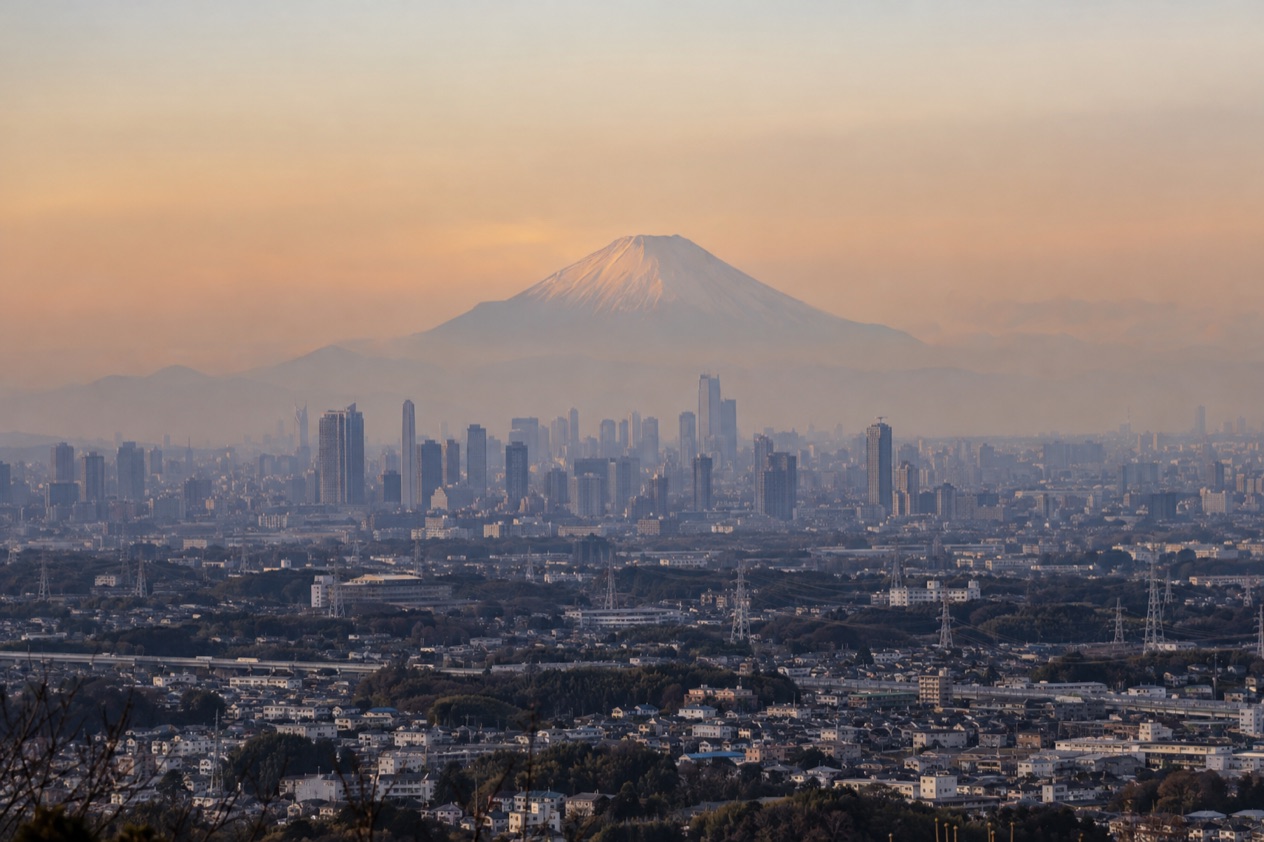
Where is the Kanto region and what is it like?
Kanto sits on the eastern side of Honshu, the main island of Japan, and is a broad plain gathered around Tokyo Bay and the seven prefectures of Chiba, Gunma, Ibaraki, Kanagawa, Saitama, Tochigi and Tokyo. It is a region of one enormous city and many satellites, with mountains and islands at its edges.
The Kanto Plain covers just over 45 percent of the land, and the rest is hills and mountains that mark the borders with neighboring regions. Tokyo dominates everything, and the region is nearly synonymous with the megalopolis of Tokyo and its suburbs.
Yet the same capital also contains mountains and semitropical islands, and the Ogasawara Archipelago offers a subtropical getaway with endemic wildlife and crystal-clear waters. The highest point is the summit of Mt. Nikko-Shirane, on the border between Nikko City in Tochigi and Katashina Village in Gunma.
Kanto is the center of Japan’s politics and economy, and its dialect is the base of the standard Japanese taught in schools and heard on television. The pace in Tokyo is brisk, the trains are dense and the neighborhoods change block by block. Go a little farther to Yokohama, Kamakura, Kawagoe or Nikko and the rhythm slows to that of a port, a seaside temple town, an old warehouse district or a mountain shrine complex.
People who love cities, food, shopping and layered history will be happy here. Travelers who want a single, quiet village experience from start to finish may find the scale of the capital too much, though the hot spring and mountain areas answer that wish.
What is there to do in the Kanto region?
Kanto offers hot spring resorts, wild gorges, pristine beaches, UNESCO World Heritage sites and cultural treasures. What sets it apart from its neighbors is the range: a global capital, a historic port, a former shogunate seat and mountain country all share one rail network.
Tokyo, from Ginza to the bay
Tokyo is the capital of Japan and the most populous metropolitan area in the world, sitting on Tokyo Bay. Ginza is an upscale downtown district of high-end restaurants and luxury shops, and neighboring Nihonbashi belongs to the same part of the city. You can spend days moving between districts that each have their own character, from department store food halls to quiet shrine grounds tucked between towers.
It suits first-time visitors who like to wander on foot and stop wherever a smell or a lantern pulls them in. Leave room in the day for a long meal, since eating is one of the main reasons people come.
Yokohama and Kamakura
Yokohama is a diverse port city on Tokyo Bay, south of the capital, and its harbor was officially opened on June 2, 1859. That open-to-the-world history still shapes the waterfront and its mix of neighborhoods. It makes a change of mood from Tokyo without asking you to change hotels.
Kamakura was the political capital of Japan during the Kamakura shogunate, from 1185 to 1333, and today it is a city of temples and hillside paths. Visitors come to follow that medieval story through its temple grounds.
Nikko and Hakone
Nikko, in Tochigi Prefecture, is inscribed as a UNESCO World Heritage site, and visitors can explore it calmly on foot among its shrines and forested surroundings. Its wider area stretches into mountain country that reaches the highest point of Kanto.
Hakone, in the western part of Kanagawa Prefecture and within the Fuji-Hakone-Izu National Park, is renowned for its natural hot springs and views of Mount Fuji. Hakone-Yumoto is known for its many restaurants and gift shops. The Hakone Freepass covers eight kinds of transportation there, including the Hakone Tozan Train, the Hakone Ropeway and the Hakone Sightseeing Cruise, so the area can be seen by train, cable and boat.
Kawagoe, the Little Edo
Kawagoe, a city in Saitama Prefecture, is known as Little Edo for its preserved warehouse district. The bell tower called Toki no Kane, the Bell of Time, is a famous landmark near Kashiya Yokocho. Come for the old merchant streets and the sweets lane, and for a glimpse of what the region looked like before the skyscrapers.
How many days do you need in the Kanto region?
A week is a comfortable stay for Kanto, though a long weekend is enough to taste Tokyo and one nearby escape. The region is large, and it rewards visitors who choose a base and radiate outward rather than moving hotels every night.
Add Yokohama if you want a change of scene in a single outing, since it lies on the same bay.
With about a week, the day trips open up. Kamakura gives you a day of temples and old shogunate history. Hakone suits a night or two in a hot spring town, with the freepass for moving among the train, ropeway and cruise.
Nikko is the one that asks for more time, and it is worth considering an overnight there so the shrines and the mountains do not feel rushed. With ten days or more, you can combine all of these and still leave an unplanned day for whatever caught your eye in the capital. If you have the appetite for something far from the city, the Ogasawara Archipelago is a subtropical escape, though it is a different kind of trip altogether.
Where to stay in the Kanto region
Visitors base themselves in Tokyo, which sits at the center of the region and the rail network. Ginza and Nihonbashi suit travelers who like an upscale downtown with fine restaurants and shops on the doorstep. Other districts of the capital offer different moods, and the choice often comes down to whether you want polish, nightlife or a quieter residential feel.
Yokohama works as an alternative base for those who prefer a port city atmosphere, with Yokohama Station as the more central stop compared with Shin-Yokohama. From there, the capital and Kamakura are both reachable by rail.
For a change of rhythm, stay a night in Hakone, where the hot springs and the views of Mount Fuji are the draw, and Hakone-Yumoto has the restaurants and gift shops. Nikko suits those who want to wake up near its UNESCO shrines. Kawagoe and Kamakura are usually seen as outings, but each has its own character if you prefer to sleep somewhere smaller than the capital.
How do you get to the Kanto region and get around?
Narita Airport is Japan’s main international gateway, and it opens onto the Tokyo area. From there, rail connects you to the capital and the rest of the region.
Within Kanto, trains do most of the work. From central Tokyo, a JR train or one of several private railway lines reaches Yokohama Station in about 1 hour, and that station is more central than Shin-Yokohama. For Kamakura, one option from Shinjuku is the private Odakyu line to Fujisawa, then the Enoden line, for a trip of about 90 minutes. Tobu-Nikko Station is about 2 hours from Asakusa Station and Shinjuku Station.
Arriving from western Japan, the Nozomi Shinkansen stops at Shin-Yokohama Station. The travel time is 1 hour 25 minutes from Nagoya, 2 hours from Kyoto and Osaka, and 3 hours 40 minutes from Hiroshima.
Once in Hakone, the Hakone Freepass offers unlimited rides on eight different means of transportation, including the Hakone Tozan Train, the Hakone Ropeway and the Hakone Sightseeing Cruise. The region runs on Japan Standard Time, which is UTC+09:00.
When is the best time to visit the Kanto region?
Kanto has no single answer, because the region stretches from a giant city on the bay to mountain country and subtropical islands. The seasons shape the mood of each place, and the capital is a destination in every month.
Spring and autumn are the usual choices for walking between temples, gardens and shrines such as those at Nikko and Kamakura, when the days suit long hours outdoors. Those are also the seasons people plan around for blossoms and leaf color, though dates shift from one year to the next and vary from city to city.
Hot spring towns such as Hakone have their own appeal in cooler weather, when a soak in natural hot springs and a view of Mount Fuji are the point of the trip. Summer brings heat and rain to the plain, and typhoon season is worth keeping in mind when planning flexible days. The Ogasawara Archipelago is the place for a subtropical getaway, with its clear waters and wildlife.
Good to know before you go
Kanto is the economic center of Japan, and in the capital and its neighboring cities you will move through the same dense rail network whether you are heading to a shrine or a shopping district. Keep a little flexibility in your plans for the rainy and typhoon seasons, since weather can reshape an outing to the mountains or the coast. Because the regions of Japan are not official administrative units, a trip described as Kanto simply gathers the capital and its seven surrounding prefectures, so plan by city and by train line rather than by the region’s name.
Sources
- Japan National Tourism Organization, the Kanto region (https://www.japan.travel/en/destinations/kanto/), checked October 11, 2026
- Wikipedia, Kantō region (https://en.wikipedia.org/wiki/Kant%C5%8D_region), checked October 11, 2026
- Wikipedia, Regions of Japan (https://en.wikipedia.org/wiki/Regions_of_Japan), checked October 11, 2026
- Wikivoyage, Kanto (https://en.wikivoyage.org/wiki/Kanto), checked October 11, 2026
- Japan National Tourism Organization, Tokyo (https://www.japan.travel/en/destinations/kanto/tokyo/), checked October 11, 2026
- Japan National Tourism Organization, Yokohama (https://www.japan.travel/en/destinations/kanto/kanagawa/yokohama-and-around/), checked October 11, 2026
- Wikipedia, Yokohama (https://en.wikipedia.org/wiki/Yokohama), checked October 11, 2026
- Wikipedia, Kamakura (https://en.wikipedia.org/wiki/Kamakura), checked October 11, 2026
- Wikivoyage, Kamakura (https://en.wikivoyage.org/wiki/Kamakura), checked October 11, 2026
- Japan National Tourism Organization, Nikko (https://www.japan.travel/en/destinations/kanto/tochigi/nikko-area/), checked October 11, 2026
- Wikipedia, Nikkō, Tochigi (https://en.wikipedia.org/wiki/Nikk%C5%8D,_Tochigi), checked October 11, 2026
- Japan National Tourism Organization, Hakone (https://www.japan.travel/en/destinations/kanto/kanagawa/hakone-and-around/), checked October 11, 2026
- Hakone Tourist Information (https://www.hakonenavi.jp/international/en/), checked October 11, 2026
- Wikipedia, Kawagoe (https://en.wikipedia.org/wiki/Kawagoe), checked October 11, 2026
- Wikivoyage, Kawagoe (https://en.wikivoyage.org/wiki/Kawagoe), checked October 11, 2026
To plan your stay
- Best Time to Visit Japan: Cherry Blossoms, Autumn Colors, Weather and Festivals
- Where to Stay in Japan: Ryokan, Temple Stays, Capsule Hotels and the Best Cities to Base In
- Sending Luggage from the Airport in Japan: Hands-Free Travel, Hotel Delivery and Coin Lockers
- Know Before You Go to Japan: Entry, Money, Etiquette and Getting Around