
In Dotonbori the takoyaki griddles hiss, neon signs flicker over the canal, and someone is always arguing happily about where to find the best okonomiyaki. A few train rides away, a temple bell rolls across a Kyoto hillside and deer wander between the lanterns of Nara. Kansai is the part of Japan where the old capitals, the castles and the appetite for good food sit side by side, and it suits travelers who want temples in the morning and a long dinner at night.
Where is the Kansai region and what is it like?
Kansai is the western region of Honshu, Japan’s main island, lying in the southern-central part of it, and it is a patchwork of cities, mountains and old pilgrim routes rather than a single town. It takes in the prefectures of Hyogo, Kyoto, Mie, Nara, Osaka, Shiga and Wakayama. Japan’s regions are not official administrative units, but they are used on maps, in geography books and in weather reports, so you will hear “Kansai” everywhere.
It is also a crowded corner of the country. The region counted 21,811,927 people on October 1, 2025, which makes it second only to Kanto, the region around Tokyo. That weight shows in the cities, but the character is distinct.
Osaka is described as charming and relaxed, known for its food, entertainment and nightlife. Kyoto carries a cultural heritage that has developed over 1,200 years. Kobe faces the bay across from Osaka, and Nara sits east of Osaka and south of Kyoto.
Kansai is often called the spiritual and cultural center of Japan, and the label fits the way days here unfold: you move between shrines, castle keeps, covered shopping arcades and tiny restaurants, mostly by train. It rewards people who like to wander, eat their way through a neighborhood and look closely at wooden buildings, gardens and lanterns.
It may suit you less if you want one place to unpack and do nothing. The region asks you to keep moving, and the pleasure is in the contrast between a temple town in the hills and a city that never seems to stop eating.
What is there to do in the Kansai region?
The big reasons to come are the ancient capitals, the castles, the food and nightlife of Osaka, and the temple mountain of Koyasan. What sets Kansai apart from its neighbors is that all of these sit within one region, so a single trip can swing from a mountain monastery to a neon canal without changing your base.
Kyoto: temples, townhouses and tradition
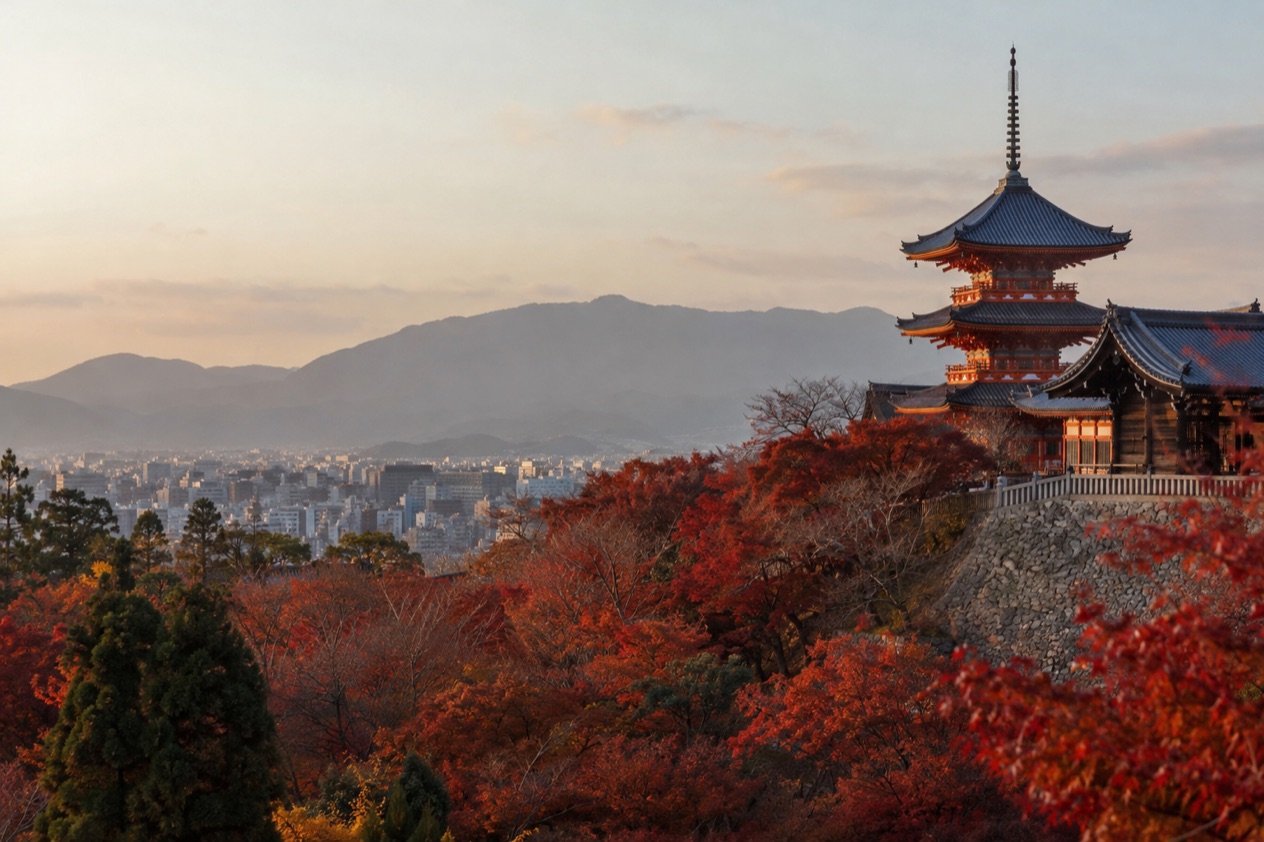
Kyoto is where the Kansai picture of Japan comes together. Its traditions include machiya townhouses (narrow wooden houses with latticed fronts), the Gion Matsuri festival, and the hanamachi districts where geishas live and work. Visitors fill days with temples and shrines such as Kiyomizu-dera, Kinkaku-ji and Fushimi Inari, with its tunnels of red torii gates.
Between the big sights, slow down in the old streets, stop for a tea house or a bowl of ramen, and look for the small neighborhood shrines tucked between houses. Kyoto Station itself holds a full floor of ramen restaurants, an Isetan department store and a theater, so it is a place to eat as well as to arrive.
Osaka: street food and neon
Osaka is the region’s table. Dotonbori and Shinsaibashi are the districts where you eat standing up at stalls, browse long shopping arcades and watch the signs reflect in the canal. Takoyaki (octopus balls), okonomiyaki (savory pancakes) and kushikatsu (breaded skewers) are the dishes people go looking for.
The city also has castle and museum history to discover, but its nightlife is the draw for many, with entertainment districts that stay lively after dark. It suits travelers who like to graze from place to place rather than sit through one formal meal.
Nara: deer, great halls and quiet paths
Nara is another of the ancient capitals, and its cultural and historical sites sit close to the town’s two main stations, JR Nara and Kintetsu Nara. Picture Todai-ji with its enormous wooden hall, then the park around it where deer come up to you looking for the crackers sold by vendors.
The city is reached by train from both Osaka and Kyoto, which makes it a natural companion to either. Moss-covered stone lanterns lead to Kasuga Taisha, and the walk through the trees is as much a part of the visit as the buildings.
Himeji and Kobe: a castle and a port
Himeji Castle is the largest original castle in Japan, a national treasure and a World Heritage Site, and it dates back more than 400 years as one of the 12 original castles in the country. It reopened in 2015 after years of renovation and is now whiter than ever, so the keep stands out against the sky as you approach through its gates and baileys.
Kobe, the capital of Hyogo Prefecture and the sixth largest city in Japan, makes a different kind of stop. It is a port city across the bay from Osaka, known for its Kobe beef, its cafés and its bullet train station at Shin-Kobe. Pairing it with Himeji gives you a day of castle walls and harbor air.
Koyasan: a night among the temples
Koyasan, in Wakayama Prefecture and south of Osaka, is a religious center that has drawn visitors for centuries. The monk Kukai first settled Mount Koya in 819, and it is the world headquarters of the Koyasan Shingon sect of Japanese Buddhism.
You walk among temples and cedar-lined paths, and the mountain is noticeably cooler than Osaka, which matters for what you pack. Some travelers stay in a temple lodging (shukubo) and eat vegetarian monastic meals, an experience with no real match in the cities below.
How many days do you need in the Kansai region?
A long weekend gives you a taste, and about a week lets you see the region properly without rushing between stations. Three or four days fits Kyoto and Osaka together, with Kyoto’s temples and old streets on one day and Osaka’s food districts at night.
With five or six days you can add a castle day. Himeji is about 1.5 hours west of Osaka by train, so it works as a full outing, and Kobe fits well on the same trip because it lies across the bay from Osaka.
Koyasan deserves a night rather than a rushed visit, so you can stroll among the temples once the day trips have gone. Mie and Shiga are further prefectures of the region, and extra days leave room to wander beyond the main cities if you like to go off the usual routes.
Keep in mind that Kansai has five UNESCO World Heritage listings, including Himeji Castle and the Historic Monuments of Ancient Kyoto. If those are your priorities, plan your days around them first and let food and neighborhoods fill the gaps. Pace matters here: a day with two big sights and a long dinner is usually more satisfying than one with five.
Where to stay in the Kansai region
The main choices are Kyoto, Osaka, Nara and Kobe, each with a different mood, and travelers split a trip between two of them. Staying in Kyoto puts you near the temples, townhouse streets and geisha districts. The area around Kyoto Station is a practical base, since the Tokaido Shinkansen stops there and the station building holds restaurants, a department store, a theater and a hotel.
Osaka suits people who want evenings to be part of the trip. Shinsaibashi and Dotonbori are reached on the Midosuji Line from Osaka or Umeda Station, and staying near them means the canal, the arcades and the food stalls are right outside your door. Shin-Osaka Station is where many bullet trains from Tokyo arrive.
Nara works for travelers who prefer a smaller town and want to see the deer and temples without a rush. Its two main stations, JR Nara and Kintetsu Nara, give you ways in from both Osaka and Kyoto. Kobe, with its bullet train station at Shin-Kobe, is the choice if you like a harbor setting and cafés over temple lanes.
For something different, spend a night on Koyasan in a temple lodging, which turns the mountain into an overnight stay rather than a day trip. Choosing a base is mostly a question of whether you would rather wake to temple bells or to the glow of city lights.
How do you get to the Kansai region and get around?
Most international visitors arrive at Kansai International Airport (KIX), on an artificial island south of Osaka, while Osaka’s Itami Airport (ITM) is the primary domestic airport. From either you can reach the closest cities, and Nara is about one hour and fifteen minutes from both airports by bus and train.
From Tokyo, the Tokaido-Sanyo Shinkansen runs to Shin-Osaka Station, and the journey takes about two and a half hours. Kyoto Station is also served by the Tokaido Shinkansen, which links it with major cities across Japan. Himeji is about 1.5 hours west of Osaka by train.
Within the region, trains tie the cities together. Nara is accessible by train from Osaka and Kyoto, and in Osaka the Midosuji Line takes you to Shinsaibashi Station for Shinsaibashi and Dotonbori. Beyond the stations, you get around the cities on foot, taking in the streets between sights.
Getting to Koyasan, in Wakayama Prefecture to the south of Osaka, involves heading into the mountains, and it is the stop where you most feel the shift from city to temple settlement. Think of Kansai as a network of stations: once you know the names of the main ones, the whole region opens up.
When is the best time to visit the Kansai region?
Spring around the cherry blossoms is the season travelers aim for, and mid-April is the moment on Mount Koya, a few weeks later than in the lowlands. That gap means blossom can be followed uphill, from the cities to the mountain, over several weeks.
Koyasan is noticeably cooler than Osaka, so it feels fresher on a warm day and calls for another layer when the cities are mild. Cities such as Osaka and Kyoto are sightseeing places in any weather, with covered arcades, station complexes and museums to fall back on when it rains.
Kyoto’s Gion Matsuri is the big festival to build a trip around if you like processions and street life, and the city’s traditions are on display around it. If you prefer to avoid festival crowds, pick the weeks around it instead, and spend that time among the temples and gardens that keep their appeal in every season.
Good to know before you go
Kansai is described as a region, but regions are a way of grouping prefectures rather than official administrative units, so the practical details change from city to city and temple to temple. Hours and fees belong to each site, so look them up place by place.
Yen is the currency, and it is worth carrying some for small stalls and temple visits. Take your time in the crowded arcades, and keep your belongings close as you would in any busy city. Pack layers if Koyasan is on your list.
Sources
- Japan National Tourism Organization, the Kansai region (https://www.japan.travel/en/destinations/kansai/), checked October 11, 2026
- Wikipedia, Kansai region (https://en.wikipedia.org/wiki/Kansai_region), checked October 11, 2026
- Wikipedia, Regions of Japan (https://en.wikipedia.org/wiki/Regions_of_Japan), checked October 11, 2026
- Wikivoyage, Kansai (https://en.wikivoyage.org/wiki/Kansai), checked October 11, 2026
- Japan National Tourism Organization, Kyoto (https://www.japan.travel/en/destinations/kansai/kyoto/), checked October 11, 2026
- Japan National Tourism Organization, Osaka (https://www.japan.travel/en/destinations/kansai/osaka/), checked October 11, 2026
- Japan National Tourism Organization, Nara (https://www.japan.travel/en/destinations/kansai/nara/), checked October 11, 2026
- Japan National Tourism Organization, Kobe (https://www.japan.travel/en/destinations/kansai/hyogo/kobe-and-around/), checked October 11, 2026
- Visit Kobe, the official travel guide (https://www.feel-kobe.jp/en/), checked October 11, 2026
- Japan National Tourism Organization, Himeji (https://www.japan.travel/en/destinations/kansai/hyogo/himeji-and-around/), checked October 11, 2026
- Wikipedia, Himeji (https://en.wikipedia.org/wiki/Himeji), checked October 11, 2026
- Wikipedia, Mount Kōya (https://en.wikipedia.org/wiki/Mount_K%C5%8Dya), checked October 11, 2026
- Wikivoyage, Koyasan (https://en.wikivoyage.org/wiki/Koyasan), checked October 11, 2026
To plan your stay
- Best Time to Visit Japan: Cherry Blossoms, Autumn Colors, Weather and Festivals
- Where to Stay in Japan: Ryokan, Temple Stays, Capsule Hotels and the Best Cities to Base In
- Sending Luggage from the Airport in Japan: Hands-Free Travel, Hotel Delivery and Coin Lockers
- Know Before You Go to Japan: Entry, Money, Etiquette and Getting Around