
Midway through the trip, you step out of a Kyoto temple, slip your shoes back on at the entrance, and walk past wooden machiya townhouses toward a bowl of ramen on a station floor lined with ramen counters. Behind you are the towers of Tokyo and a night in a Hakone hot spring.
Ahead lie the okonomiyaki grills of Hiroshima and a ferry to a shrine gate standing in the sea. This is a two-week route across Honshu for first-time visitors who want big cities, gardens, temples and a few quieter stops.
Is 14 Days enough for Japan?
Two weeks is enough to see a good slice of Japan, as long as you accept that it is a slice and not the whole country. This route links six bases on Honshu, the largest island: Tokyo, Hakone, Kanazawa, Kyoto with Nara, Osaka, and Hiroshima with Miyajima. Each base gets at least a night or two, and the days between them are short enough to leave time for wandering.
The route suits travelers who like to unpack twice a week rather than every night, and who are happy to mix a megacity with a hot-spring town and a garden city. It works well for a first visit, for a couple, and for friends traveling together. Anyone who wants to stay put in one place and live like a local should trim the list of stops rather than rush it.
What the route leaves for another trip is a long list. Hokkaido and its ski country, Okinawa and its islands, Kyushu and Shikoku are all outside it, as are the mountain towns that need their own days. Even on Honshu you will miss things. Nikko, Kobe, Nagoya and Yokohama stay on the shelf, and so do most of the smaller temples of Kyoto.
The route also leans on the rail network, which is the reason it fits. Japanese trains have a reputation for being always on time, which lets you plan a morning departure and an afternoon check-in with real confidence.
Public transport, shinkansen and regional trains alike, is extremely punctual, so the days between stops are not lost days. You can sip coffee on the train, watch rice fields and rooftops go past, and arrive ready for dinner.
A last point on pace. Two weeks reads long on paper and short in practice, because every city holds more than a day can use. Choose two or three anchors in each place, such as a shrine, a market, a district to wander at night, and let the rest of the day stay loose. The best evenings on this route are usually the ones nobody planned.
The itinerary stage by stage
Days 1 to 3: Tokyo
Tokyo is the capital of Japan and the most populous metropolitan area in the world, set on Tokyo Bay in the Kanto region. Spend the first day on a gentle arrival: a walk through Ginza, the upscale downtown area of high-end restaurants and luxury shops, and an evening meal that does not ask much of you. Sleep in a district with several train lines, since Tokyo is served by JR trains, Tokyo Metro lines and Toei Subway lines, among others.
Day three leans toward the modern side. Go to Shibuya for its crossing and shops, then ride to Roppongi and Akasaka for galleries, bars and late dinners.
Tokyo rewards a loose plan. Pick one neighborhood for each half day, eat at counters and in small izakaya (casual pubs that serve small plates), and let the train map do the rest. When you move on, the next stage is Hakone, reached by rail from Tokyo.
Days 4 and 5: Hakone
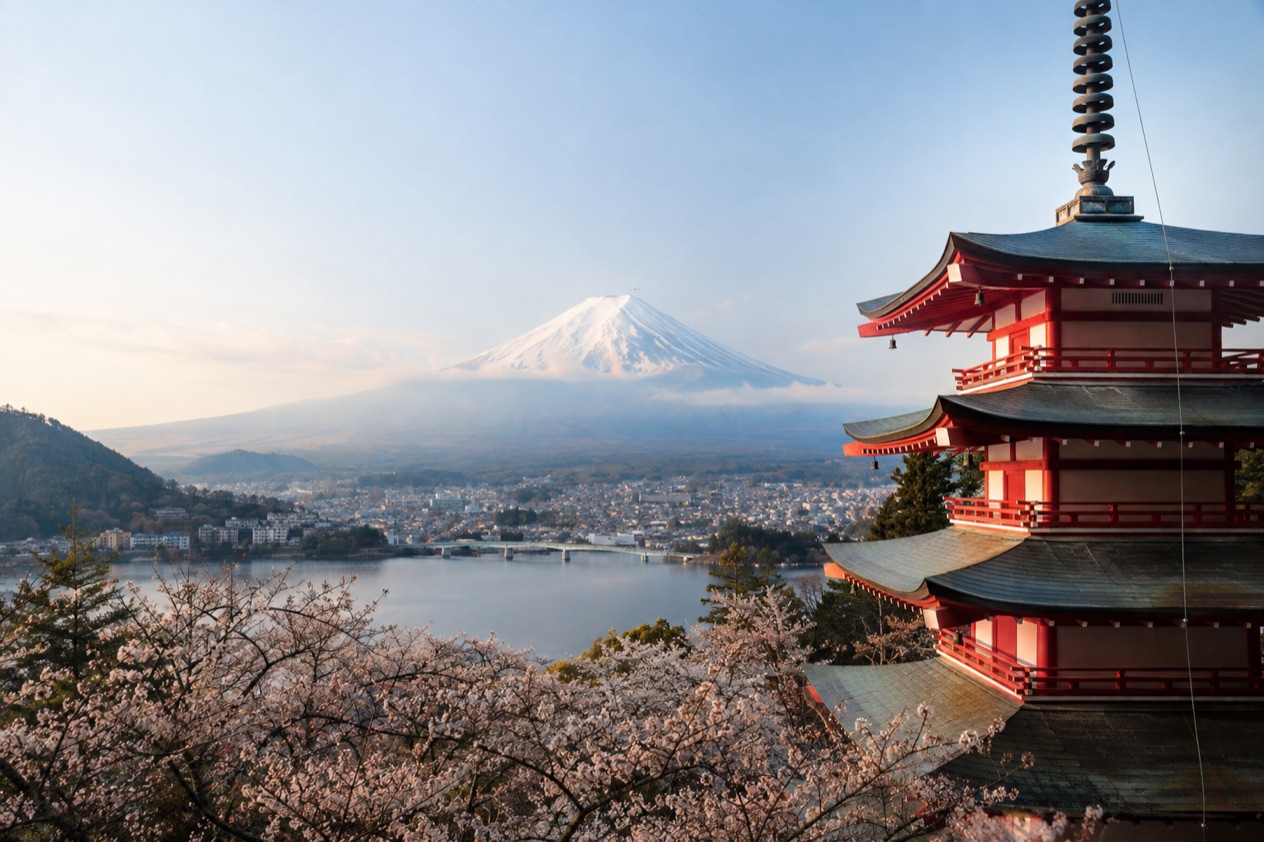
Hakone sits in the western part of Kanagawa Prefecture, inside Fuji-Hakone-Izu National Park, and it is known for its natural hot springs and views of Mount Fuji. You arrive by rail and spend a night or two at a ryokan, a traditional inn with tatami floors, a communal bath and a multi-course dinner. Shoes come off at the entrance, and slippers come off again before you step onto the tatami mats.
Hakone-Yumoto is known for its many restaurants and gift shops, a good place to wander before checking in. In the hills you ride the Hakone Tozan Train, the Hakone Ropeway and the Hakone Sightseeing Cruise, all of which belong to a single pass of unlimited rides. Between rides, look for art museums, a soak, and a slow dinner.
Whether Mount Fuji shows itself is never guaranteed, so treat any view as a bonus rather than a plan. The days work just as well around the baths, the walks and the pass. When you leave, you return to the rail network for Kanazawa.
Days 6 and 7: Kanazawa
Kanazawa is the capital of Ishikawa Prefecture, on a narrow strip of land along the Sea of Japan. During the Edo period it was one of the most important cultural and artistic centers in the country, and it remains a destination for people who love crafts, gardens and museums. The Hokuriku Shinkansen serves it from Tokyo, which makes it a natural change of scene after Hakone.
Spend the first day around Kenrokuen Garden and Kanazawa Castle Park. Free admission is offered to Kenrokuen, and both the castle park and the garden are illuminated at night, so an evening stroll is part of the plan. Walk the paths slowly, look at the ponds, the pines and the stone lanterns, and sit in a teahouse if one tempts you.
The second day is for the rest of the city: museums, craft shops, a market for seafood from the Sea of Japan, and an unhurried lunch. Choose a local bowl of seafood rice or a set meal, and finish with a pastry or sweet that comes with green tea. Then move on to Kyoto by rail.
Days 8 to 10: Kyoto and Nara
Kyoto has a cultural heritage that developed over the past 1,200 years, and it served as Japan’s capital and the emperor’s residence for over a thousand. Kyoto Station is served by the Tokaido Shinkansen line, and the station building holds a full floor of ramen restaurants, an Isetan department store, a theater and a Granvia hotel. Sleep in central Kyoto or near the station, and spend the first day on Nijo Castle, which was built by Tokugawa Ieyasu, the first shogun of the Edo period.
The second day belongs to the traditions: machiya townhouses, the hanamachi districts where geishas live and work, and the temples and shrines you have saved. Fushimi Inari, Kiyomizu-dera and Kinkaku-ji are the names travelers add to a list.
Pick a few and leave the rest, because the city repays slow wandering through its side streets, tea shops and small gardens. The Gion Matsuri festival belongs to the calendar here as well, so check what the season holds.
Day ten goes to Nara, easily accessible by train from both Kyoto and Osaka. Nara Park lies at the foot of Mount Wakakusa, and its tame deer can be approached and fed with crackers sold along the roadside. JR Nara Station and Kintetsu Nara Station are the two main stations. Return to Kyoto or move on toward Osaka for the night.
Days 11 and 12: Osaka
Osaka is a charming and relaxed city known for its food, entertainment and nightlife, with some history and culture to discover. From Tokyo the Tokaido-Sanyo shinkansen reaches Shin-Osaka Station, and the city has JR, Hankyu Railway, Hanshin Electric Railway and Keihan Railway lines, to name a few. Base yourself near Umeda or Shinsaibashi, where the subway and the rail lines meet.
Dotonbori and Shinsaibashi are the districts for an evening: from Osaka or Umeda Station, take the Midosuji Line to Shinsaibashi Station. Expect neon, signs, food stalls and shopping arcades. Try takoyaki (octopus balls), okonomiyaki and kushikatsu (breaded skewers), and wander at your own pace.
On the second day, visit Osaka Bay, reachable from Osaka or Umeda stations via the JR Loop Line and the Chuo subway line. The bay is a major port area on the Kansai coast and gives the day a change of pace after the arcades. Pack your bag in the evening for the next stage.
Days 13 and 14: Hiroshima and Miyajima
Hiroshima Prefecture has the Seto Inland Sea, wooded mountains and clear waters, together with peace-related sites, shrines and museums. In the city, walk through the Peace Memorial Park and look at the Atomic Bomb Dome.
Visitors cannot enter the dome, which can only be viewed from the outside, and it is a sober, moving place to stand. Each year on August 6, thousands of people write peace messages on lanterns that are lit at sunset and floated along the river in front of the dome.
Save a meal for the local version of okonomiyaki, a savory griddle dish layered with cabbage, noodles and sauce. Then take the excursion to nearby Miyajima Island, known for its deer and its floating shrine. On Miyajima, the Itsukushima Shrine has a red torii gate standing in the sea, and it was registered as a World Heritage Site in 1996.
Spend day thirteen on the city and day fourteen on the island, or the other way around if you prefer. The last morning stays loose for the journey home, so you can end with one more bowl of okonomiyaki rather than a rushed train.
Getting between stops
| Leg | How | Time |
|---|---|---|
| Tokyo to Osaka (Shin-Osaka) | Tokaido-Sanyo shinkansen | About 2.5 hours |
| Tokyo to Kanazawa | Hokuriku Shinkansen | Around 2.5 hours |
| Shibuya to Roppongi and Akasaka | Train | About 10 minutes |
| Kansai airports (Itami, Kansai International) to Nara | Bus and train | About 1 hour 15 minutes |
Most other legs on this route are made by rail, and the same goes for Tokyo to Hakone, Hakone to Kanazawa, Kanazawa to Kyoto, Kyoto to Nara, Osaka to Hiroshima and the final run back. Japanese trains have a reputation for being always on time, which lets you plan to the minute.
Local trains stop at every station, so they suit short distances. Rapid trains skip smaller stations and need no supplement, while express trains serve fewer stops and a supplement may apply.
Inside the cities, you rely on the subway and local rail. Tokyo has JR, Tokyo Metro and Toei Subway lines, and Osaka has JR, Hankyu, Hanshin and Keihan. IC cards work on trains, buses and boats as well as vending machines, convenience stores and some taxis, which saves you from buying a ticket for each ride. Most regions have their own cards with different names and characters, and the cards can be used throughout Japan.
Driving is a different matter, and this route does not need it. Traffic moves on the left, road signs are hard to read without Japanese, highway tolls can be very high and city traffic is often congested. Staying on rails keeps the days relaxed and leaves time for Kenrokuen at dusk or a second bowl of ramen.
What to book before your 14 Days in Japan
Three things deserve a decision before you leave. The first is the lodging for each base, including the ryokan in Hakone, because the stage plan depends on where you sleep. The second is the IC card, which most issuers sell against a 500 yen deposit.
The third is the Hakone Freepass, which offers unlimited rides on eight kinds of transport, and the Hako Ticket Plus version, which adds art museums, hot springs and activity facilities and is valid for 2 days or 3 days. Everything else on the route can stay free.
Adapting the route
With a week less, drop Hakone and Kanazawa and keep Tokyo, Kyoto with Nara, Osaka and Hiroshima. Every stage holds enough to fill an extra day, and the slower version of the route tends to be the happier one.
The seasons change what each day feels like. These are the Tokyo figures, and they describe Tokyo only, not the mountains, the coast or the other cities on the route.
| Tokyo, month | Average high (°F) | Average low (°F) | Days with precipitation | Precipitation (inches) |
|---|---|---|---|---|
| January | 49.6 | 34.2 | 4.5 | 2.35 |
| April | 66.9 | 49.6 | 9.5 | 5.26 |
| July | 85.8 | 72.3 | 10.5 | 6.15 |
| October | 71.6 | 58.6 | 10.5 | 9.24 |
April is mild, with showers, and it is a month for walking in parks and along rivers. July is hot and humid, with rainy days, so plan indoor stops, early starts and plenty of water.
October brings the mildest air of the four but also the most rain, so carry a light jacket and an umbrella. If a shower sets in, a museum, a department store, a covered arcade or a long lunch at a ramen counter fills the gap, and Kyoto Station alone has a department store, a theater and a floor of ramen restaurants.
Families and travelers who prefer a slower trip can cut the moves rather than the sights. Keep two long stays, perhaps in Tokyo and Kyoto, and use day outings by rail to Nara and Miyajima, where the deer are a draw for children. Hakone fits well as a two-night break with the pass and a bath.
Good to know before you go
Shoes come off at the entrance of a ryokan and many homes, and you put on indoor slippers, with a separate pair for the bathroom. Smoking while walking on the street is prohibited and can result in a fine, and designated outdoor smoking areas are limited. An IC card covers most small purchases, from vending machines to convenience stores. Leave the car at home and let the trains do the work.
Sources
- U.S. Department of State, Japan travel information, travel and transportation (https://travel.state.gov/content/travel/en/international-travel/International-Travel-Country-Information-Pages/Japan.html), checked October 11, 2026
- Japan National Tourism Organization, trains and buses (https://www.japan.travel/en/guide/how-to-travel-by-train-and-bus-in-japan/), checked October 11, 2026
- Japan National Tourism Organization, traveling by rail (https://www.japan.travel/en/guide/traveling-by-rail/), checked October 11, 2026
- Japan National Tourism Organization, manners, etiquette, shoes, bowing, chopsticks, public behavior (https://www.japan.travel/en/guide/understanding-and-mastering-japanese-manners-and-etiquette/), checked October 11, 2026
- Japan National Tourism Organization, getting around Japan: trains, subways, buses, taxis (https://www.japan.travel/en/plan/getting-around/), checked October 11, 2026
- Japan National Tourism Organization, IC cards, Suica, Pasmo, ICOCA, how to use (https://www.japan.travel/en/plan/ic-card/), checked October 11, 2026
- Japan National Tourism Organization, Tokyo (https://www.japan.travel/en/destinations/kanto/tokyo/), checked October 11, 2026
- Japan National Tourism Organization, Kyoto (https://www.japan.travel/en/destinations/kansai/kyoto/), checked October 11, 2026
- Japan National Tourism Organization, Osaka (https://www.japan.travel/en/destinations/kansai/osaka/), checked October 11, 2026
- Japan National Tourism Organization, Hiroshima (https://www.japan.travel/en/destinations/chugoku/hiroshima/), checked October 11, 2026
- Visit Hiroshima, the official guide (https://visithiroshima.net/), checked October 11, 2026
- Japan National Tourism Organization, Nara (https://www.japan.travel/en/destinations/kansai/nara/), checked October 11, 2026
- Japan National Tourism Organization, Hakone (https://www.japan.travel/en/destinations/kanto/kanagawa/hakone-and-around/), checked October 11, 2026
- Hakone Tourist Information (https://www.hakonenavi.jp/international/en/), checked October 11, 2026
- Japan National Tourism Organization, Kanazawa (https://www.japan.travel/en/destinations/hokuriku-shinetsu/ishikawa/kanazawa-and-around/), checked October 11, 2026
- Kanazawa Tourist Information Guide (https://www.kanazawa-tourism.com/), checked October 11, 2026
- Wikipedia, Kanazawa, Ishikawa (https://en.wikipedia.org/wiki/Kanazawa,_Ishikawa), checked October 11, 2026
- Japan Meteorological Agency (JMA), Normal values 1991-2020, monthly (https://www.data.jma.go.jp/stats/etrn/view/nml_sfc_ym.php?prec_no=44&block_no=47662), station Tokyo, elevation 25 m, checked October 11, 2026
- Plan de the (duree choisie by the redaction)
To plan your stay
- Best Time to Visit Japan: Cherry Blossoms, Autumn Colors, Weather and Festivals
- Where to Stay in Japan: Ryokan, Temple Stays, Capsule Hotels and the Best Cities to Base In
- Sending Luggage from the Airport in Japan: Hands-Free Travel, Hotel Delivery and Coin Lockers
- Know Before You Go to Japan: Entry, Money, Etiquette and Getting Around