
Pale gravel crunches underfoot, tall cedars close overhead, and the only other sounds are the clap of hands at a shrine gate and the tinkle of a purification stream. That is the rhythm of Ise, a city in Mie Prefecture where the most sacred Shinto shrine in Japan sits among old trees. It suits travelers who like their sightseeing slow, who are curious about Shinto, and who want a table of regional food after a long walk.
Where is Ise and what is it like?
Ise is a city in central Mie Prefecture, on the island of Honshu, and it is known above all as the home of Ise Grand Shrine. The shrine is not one building but two main parts, the Inner Shrine (Naiku) and the Outer Shrine (Geku), which stand roughly four miles apart. The city grew around that pairing, and a good part of what you see in town, from the station areas to the lanes of food stalls, exists to serve people on their way to one or the other.
The character of Ise is that of a pilgrimage town more than a resort. Days are shaped by the shrines: you walk through torii gates, cross bridges over clear streams, pause at purification basins and follow gravel paths under very tall trees.
The Outer Shrine is very close to Ise-shi Station, so a visit can begin almost as soon as you step off the train. The Outer Shrine is dedicated to Toyouke-Omikami, the goddess of food, clothing and shelter, which is why people start there and think about the meals ahead with a clearer conscience.
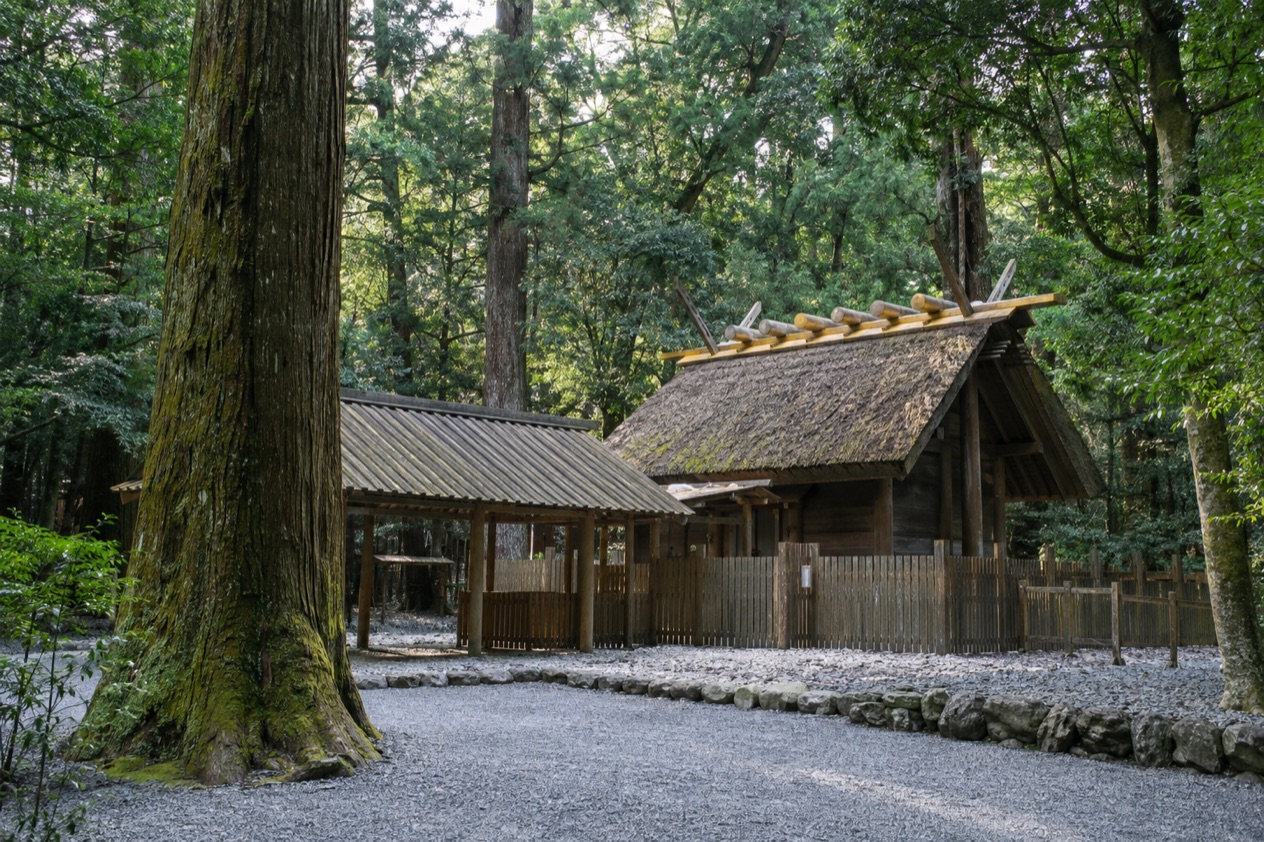
The Inner Shrine is dedicated to the solar goddess Amaterasu Omikami, and Ise Grand Shrine as a whole honors her together with the grain goddess Toyouke-hime. The names matter less than the atmosphere. Buildings are plain wood and thatch, without paint or gold, and the beauty lies in proportion, in the grain of the timber and in the setting.
Ise rewards people who enjoy walking, ritual, architecture without ornament and regional food. It may feel thin to travelers who want nightlife, big shopping streets or a checklist of colorful landmarks. Think of it as a place where you take your time, eat well, and let the grounds do the work.
What is there to do in Ise?
The big reason to come is the shrine, and the second reason is how it is kept alive: through rituals, rebuilding and seasonal events. Add the local table and a summer fireworks night, and you have a full picture of what sets Ise apart from other towns in the region. Its identity is not a castle or a hot spring but a living act of renewal.
Ise Grand Shrine: the Outer and Inner Shrines
Ise Grand Shrine is the reason people arrive, and it is described as the most sacred Shinto shrine in Japan. The Outer Shrine, Geku, honors the goddess of food, clothing and shelter and sits near Ise-shi Station. The Inner Shrine, Naiku, is dedicated to Amaterasu, the sun goddess. Each part is a world of its own, with its own approach, its own gravel paths and its own atmosphere under the trees.
What you do there is mostly walk, observe and take part in small gestures: a bow at the gate, a rinse of the hands, a pause before the main sanctuary. The inner sanctuaries are screened by fences, and the pleasure lies in the approach, the trees and the quality of the carpentry visible from outside.
A shrine that is rebuilt every 20 years
What makes Ise unlike nearly any other sacred site is that its shrines are dismantled and rebuilt to exacting specifications every 20 years. The present buildings date from 2013 and are the 62nd iteration, with the next rebuilding scheduled for 2033. The official chronology gives the shrine’s construction as 4 BC, though most historians date it several hundred years later, with 690 AD widely considered the date when it was first built in its current form.
For a visitor this idea changes how the place looks. The wood is fresh and pale rather than weathered, and the shrine feels at once ancient and new. Standing before it, you are looking at a very old tradition held in a building that is, by design, never old. It is a good conversation topic for the walk between the two shrines.
Ceremonies, tree-pulling and fireworks
Ise has a calendar of events that give a trip a focus. The Kagurasai Ceremony at Naiku is held for three days in early April and again in late September, in spring and autumn versions, and admission is free.
In mid-July the mood turns festive with the Miya River Fireworks Festival, a competition among fireworks producers. The nearest station is JR Yamada Kamiguchi. It adds a summer night out to a trip otherwise built around ritual and reflection.
The local table
A day at the shrines builds an appetite, and the Ise area has dishes to match. Thick, soft wheat noodles in a dark, sweet soy broth are a regional favorite, as is mochi rice cake wrapped around sweet red bean paste, eaten with green tea. Seafood from the nearby coast, including spiny lobster and fish served over rice, turns up on menus around town.
Many eateries gather in the streets leading toward the Inner Shrine, where wooden storefronts and food stalls make a natural pause after the walk. A sit-down meal of local seafood or a plate of sweets with tea is a satisfying way to close the day.
How many days do you need in Ise?
A long weekend gives Ise enough room, and a single full day covers the essentials if you are passing through. The two shrines are the heart of any stay, and because they stand some distance apart, treating each as its own half-day visit keeps the trip unhurried.
With a short stay, begin at the Outer Shrine, close to Ise-shi Station, then continue to the Inner Shrine, dedicated to the sun goddess. Leave time for a bowl of local noodles or a plate of mochi along the way. A second day lets you slow down: return to a section of the grounds that moved you, walk the streets of food and craft stalls, and sit with tea instead of rushing to the next stop.
If your visit lines up with the Kagurasai Ceremony in early April or late September, or with the fireworks night in mid-July, build the stay around it, since each gives an evening or a morning a different feel.
With more time, Ise works well as one stop on a wider trip across Mie Prefecture and the region, and as a counterpart to the big cities of Honshu. Pair it with a visit to Kyoto, Nara or Nagoya for a contrast between a place of living ritual and cities of temples, museums and shopping. The pace of Ise is a welcome change after those, and a night or two here can reset a busy itinerary.
Where to stay in Ise
Choose a base according to which shrine you want to wake up near. The area around Ise-shi Station suits travelers who want to start at the Outer Shrine, since that shrine is very close to the station. It is a practical base for people arriving by rail, with the town’s everyday shops and restaurants around you.
The streets leading toward the Inner Shrine suit visitors who prefer to be among wooden storefronts, sweets shops and noodle counters, and who like the idea of walking to Naiku at the start of the day. Staying here means evenings feel more like a pilgrimage town, with traditional food close at hand.
Near JR Yamada Kamiguchi Station, the nearest stop for the Miya River Fireworks Festival, is a sensible base if you are coming in mid-July for the display. For a more traditional night, a ryokan, a Japanese inn with tatami floors, futon bedding and a set dinner, fits the character of Ise. Wherever you sleep, choose the side of town that matches your plan, because the two shrines are a few miles apart and each has a different feel.
How do you get to Ise and get around?
You reach Ise by rail, and the stations tell you where you are going: Ise-shi Station for the Outer Shrine, and JR Yamada Kamiguchi for the area of the Miya River fireworks. The Outer Shrine is very close to Ise-shi Station, so arriving there puts you in front of the first part of the grand shrine almost at once.
Getting between the two shrines is the main question once you are in town. They stand roughly four miles apart, so you will want to plan the move between the Outer Shrine and the Inner Shrine rather than treating them as one walk. Travelers visit one in the morning and the other later in the day, with a meal in between.
Within each shrine, getting around is on foot. Paths are gravel, the grounds are wooded, and the experience is built around walking at an unhurried pace. Comfortable shoes suit the surface. On the way between sites, the town’s streets of shops and eateries are good places to stop and look around.
Ise sits in central Mie Prefecture on Honshu, which places it within reach of other destinations in the region by train. Planning your arrival around the station nearest the shrine you want to see first keeps the day simple, and you can then follow the rhythm of the shrines from there.
When is the best time to visit Ise?
April and September are the months with the strongest case, because the Kagurasai Ceremony at Naiku is held for three days in early April and again in late September, in its spring and autumn versions. Admission is free. Arriving then gives the grounds an added sense of occasion and lets you see the Inner Shrine in the middle of a seasonal ritual.
July has its own draw. The Miya River Fireworks Festival is held in mid-July and is a competition for fireworks producers, so the evening has a festive, almost sporting energy. The nearest station is JR Yamada Kamiguchi. If you like summer festivals, this is the month to choose, and a shrine visit by day can be followed by fireworks at night.
Because shrine rebuilding happens on a long cycle, with the next one scheduled for 2033, these preparatory rituals are part of what makes Ise unusual. Outside those moments, the shrines are open to visitors throughout the year, and the pleasure of walking under the cedars does not depend on a festival.
Good to know before you go
Yen is the currency in Ise, as everywhere in Japan, and it is worth having some on hand for the small stalls and sweets shops along the approaches to the shrines. Dress for walking on gravel and for outdoor grounds, and expect to take your time: the shrines reward unhurried visits, with a bow at the gate and a rinse of the hands before the sanctuary.
Visitors tend to keep voices low and to leave the inner areas as they found them. Because the grounds are open-air and wooded, the weather shapes the day, so plan the meal stop as a shelter if rain comes.
Sources
- Wikipedia, Ise, Mie (https://en.wikipedia.org/wiki/Ise,_Mie), checked October 11, 2026
- Wikivoyage, Ise (https://en.wikivoyage.org/wiki/Ise), checked October 11, 2026
- Wikipedia, Ise Grand Shrine (https://en.wikipedia.org/wiki/Ise_Grand_Shrine), checked October 11, 2026
To plan your stay
- Best Time to Visit Japan: Cherry Blossoms, Autumn Colors, Weather and Festivals
- Where to Stay in Japan: Ryokan, Temple Stays, Capsule Hotels and the Best Cities to Base In
- Sending Luggage from the Airport in Japan: Hands-Free Travel, Hotel Delivery and Coin Lockers
- Know Before You Go to Japan: Entry, Money, Etiquette and Getting Around