
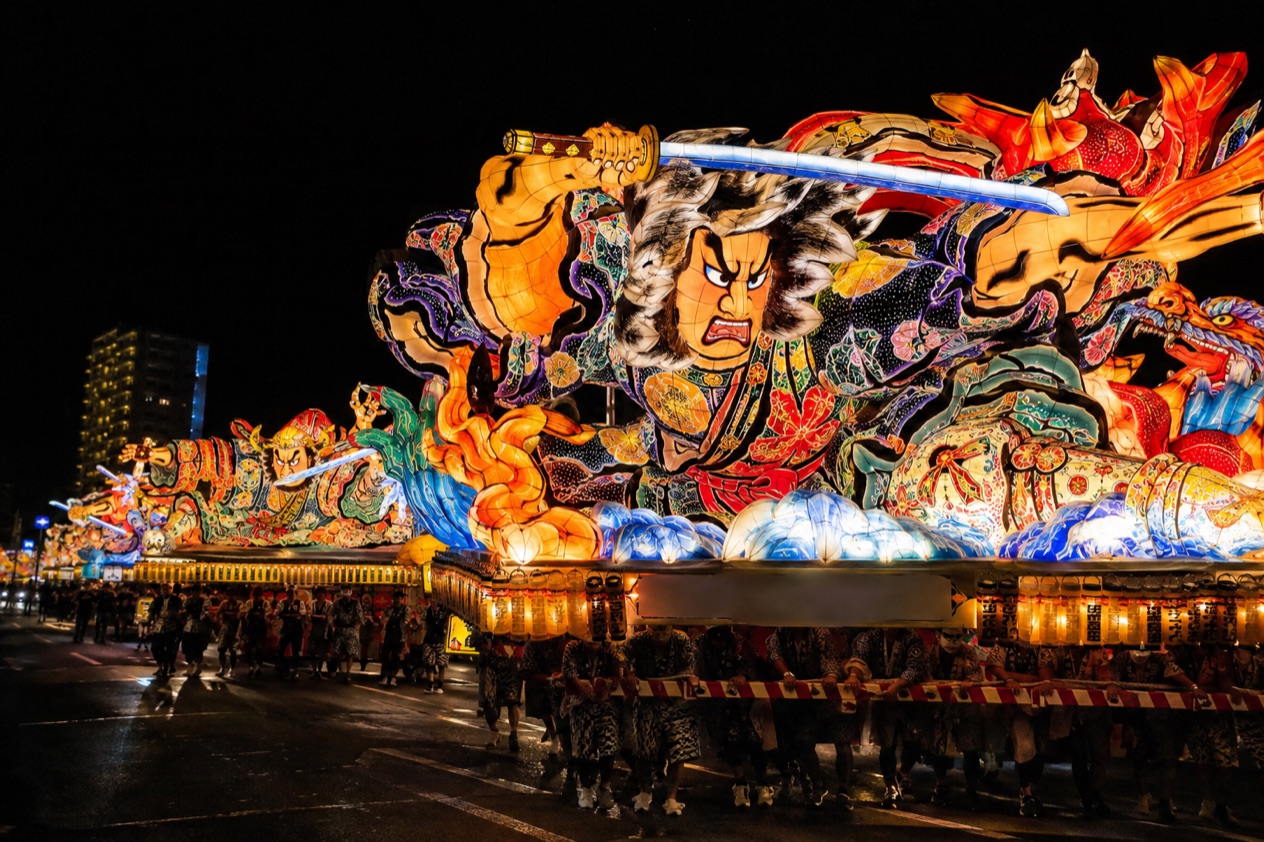
In early August, Aomori fills with drums, flutes and the shouts of dancers in bright costumes who leap around enormous lantern floats lit from within. The rest of the year the city has a different rhythm, set by the harbor on Mutsu Bay and by long winters that shape life here. Aomori suits travelers who like a northern port city with deep roots, big festival energy and a good story about the distant past.
Where is Aomori and what is it like?
Aomori sits at the northernmost end of Honshu, Japan’s main island, on the shore of Mutsu Bay. It is the capital city of Aomori Prefecture, in the Tohoku region, and it is a working harbor city rather than a resort.
The character here comes from the water and the weather. The bay gives the city its ferries, its seafood and its sense of being at an edge, a place where the island of Honshu simply runs out.
Aomori and the area around it are known for having the heaviest snowfall in the world, so winter is not a footnote. It is part of the identity of the place, and it shapes what people eat, wear and celebrate.
The pace is slower than in Tokyo or Osaka, and that is much of the appeal. Travelers who enjoy festivals, archaeology, harbor walks and meals built around fish will find plenty to like.
Those who want a dense grid of famous temples, neon districts or shopping arcades may find the city quiet by comparison. Aomori rewards people who come for a particular reason, above all the summer festival, and then stay long enough to look around.
Visitors treat it as a stop on a longer journey through Tohoku or toward the northern island of Hokkaido. It works well that way, and it also works as a destination on its own for a few unhurried days.
What is there to do in Aomori?
Aomori’s best reasons to visit are a festival that turns the streets into a stage, a prehistoric village site, and the harbor itself. Together they make the city different from its neighbors: it is a place where very old history and very loud celebration sit side by side.
The Nebuta Festival
The Aomori Nebuta Matsuri runs every year from August 2 to 7, and it is the event the whole city plans around. Giant floats, painted with warriors and mythical figures and lit from inside, move through the streets while costumed dancers called haneto jump and chant beside them. Taiko drums and flutes carry the rhythm, and the noise is part of the experience as much as the sight.
The floats look best after dark, when the glow brings out the colors of the paper and the fierce expressions of the figures. It suits travelers who like crowds, music and a sense of taking part, since onlookers are caught up in the atmosphere even when they do not dance. Plan your whole trip around those dates if the festival is the goal.
Sannai-Maruyama and the ancient sites
The Sannai-Maruyama Site is a Special National Historic Site dating to 5500 to 4000 BC. It preserves the remains of a settlement from the Jomon period, a time long before castles, shrines or rice fields shaped the Japanese landscape. Walking across the grounds, you see reconstructed dwellings and storage buildings that give a sense of how people lived by this bay thousands of years ago.
The Komakino Site, also in Aomori, is a National Historic Site and adds to the picture of the area’s deep past. These places suit curious travelers, history lovers and anyone who wants Aomori to feel like more than a festival town. They are open-air sites, so the weather will shape your visit.
The harbor and the fish market area
Seafood is the local pride, and the Aomori Gyosai Center, a fish-focused market spot, is a good way to taste it. It is open from 7:00 to 16:00 and closed on Tuesdays.
| Site | Open | Closed |
|---|---|---|
| Aomori Gyosai Center | 07:00 to 16:00 | Tuesdays |
Go with an appetite and a plan for a seafood meal. The harbor is also where Aomori feels most like itself: a northern port with the bay at its door.
How many days do you need in Aomori?
Two days is enough for the essentials, and three gives you room to enjoy the city at an easy pace.
If you come for the Nebuta Festival, add time. The festival runs for six days, from August 2 to 7, and each evening brings its own parades and gatherings. A visit that includes at least two of those nights lets you see the floats more than once and catch the atmosphere change as the festival builds.
With more time, the Komakino Site adds another layer of the area’s prehistory, and the city works as a base for exploring more of Aomori Prefecture and the wider Tohoku region. Travelers heading north to Hokkaido often pause here, and the stop gives a calm interlude between bigger cities.
Winter visitors should allow a little slack in the plan. Because the area is known for heavy snowfall, a flexible schedule lets you enjoy the snowy scenery without feeling rushed.
Where to stay in Aomori
The most practical area to stay is near Aomori Station, close to the harbor on Mutsu Bay. Staying here puts you near the waterfront and the seafood market, and it keeps you in the part of the city where the festival atmosphere is felt most strongly in August. It suits travelers who want to walk to the water, eat out in the evening and move around without much planning.
Shin-Aomori is the station served by the JR Tohoku Shinkansen, so a base near it suits travelers who are arriving or leaving by bullet train and want to keep transfers to a minimum.
During the Nebuta Festival, from August 2 to 7, demand for rooms rises, so travelers with those dates in mind should think about lodging well before the rest of the trip. Outside the festival, the city has a calmer feel, and the choice of where to sleep depends more on whether you prefer to be by the harbor or by the train. Either way, the city is small enough that the difference is modest.
How do you get to Aomori and get around?
The JR Tohoku Shinkansen runs regular services from Tokyo to Shin-Aomori, which makes the train the main rail link from the capital. From Shin-Aomori you continue into the city of Aomori itself.
A second option is the bus. The Konan bus company runs several daytime and overnight trips between Ueno Station in Tokyo and Aomori Station, which suits travelers who like to sleep on the way.
From the Kansai region, travelers can fly from Itami Airport in Osaka to Aomori Airport. That route connects Osaka and the south of Honshu with the far north without passing through Tokyo.
Once in the city, the center around the station and the waterfront is where visitors spend their time. For the archaeological sites and other places beyond the harbor, you will need to plan how to reach them, and the local tourist information is the place to ask when you arrive.
When is the best time to visit Aomori?
Early August is the high point of the year, because the Nebuta Festival runs from August 2 to 7. The floats, drums and dancers make this the time when Aomori is most itself, and it is the clearest answer for anyone who wants the city’s signature experience.
Winter is the other defining season. Aomori and its surroundings are known for the heaviest snowfall in the world, so a winter visit means a snowy landscape and a very different mood from summer. It suits travelers who enjoy snow scenery and are happy to adjust plans around the weather.
Outside those two periods, the city is quieter, and a visit centered on the Sannai-Maruyama Site, the harbor and the seafood works at an unhurried pace. If crowds and lodging matter to you, the festival week deserves the most forethought, while the rest of the year asks little of the planner.
Good to know before you go
Aomori is a northern city, and the weather can shape a trip, especially in winter, so a flexible plan helps. The fish market is closed on Tuesdays, which is worth remembering when you arrange your meals. Travelers coming for the Nebuta Festival will find the city busy from August 2 to 7, so it pays to settle lodging and transport early for those dates.
Sources
- Japan National Tourism Organization, Aomori (https://www.japan.travel/en/destinations/tohoku/aomori/aomori-city-and-around/), checked October 11, 2026
- Wikipedia, Aomori (city) (https://en.wikipedia.org/wiki/Aomori_(city)), checked October 11, 2026
- Wikivoyage, Aomori (https://en.wikivoyage.org/wiki/Aomori), checked October 11, 2026
- Japan National Tourism Organization, festivals and events (https://www.japan.travel/en/see-and-do/festivals-and-events/), checked October 11, 2026
- Wikipedia, Nebuta (https://en.wikipedia.org/wiki/Nebuta), checked October 11, 2026
To plan your stay
- Best Time to Visit Japan: Cherry Blossoms, Autumn Colors, Weather and Festivals
- Where to Stay in Japan: Ryokan, Temple Stays, Capsule Hotels and the Best Cities to Base In
- Sending Luggage from the Airport in Japan: Hands-Free Travel, Hotel Delivery and Coin Lockers
- Know Before You Go to Japan: Entry, Money, Etiquette and Getting Around