
You step out of Lynden Pindling International Airport into warm, salty air, and the island’s pace is already slower than the one you left. Taxi drivers chat, pastel buildings flash past, and the harbor opens up where the cruise ships tie up beside the old town. Nassau rewards a little preparation: a few entry papers, the way money works, the left-hand traffic and the habits that make a visit run smoothly.
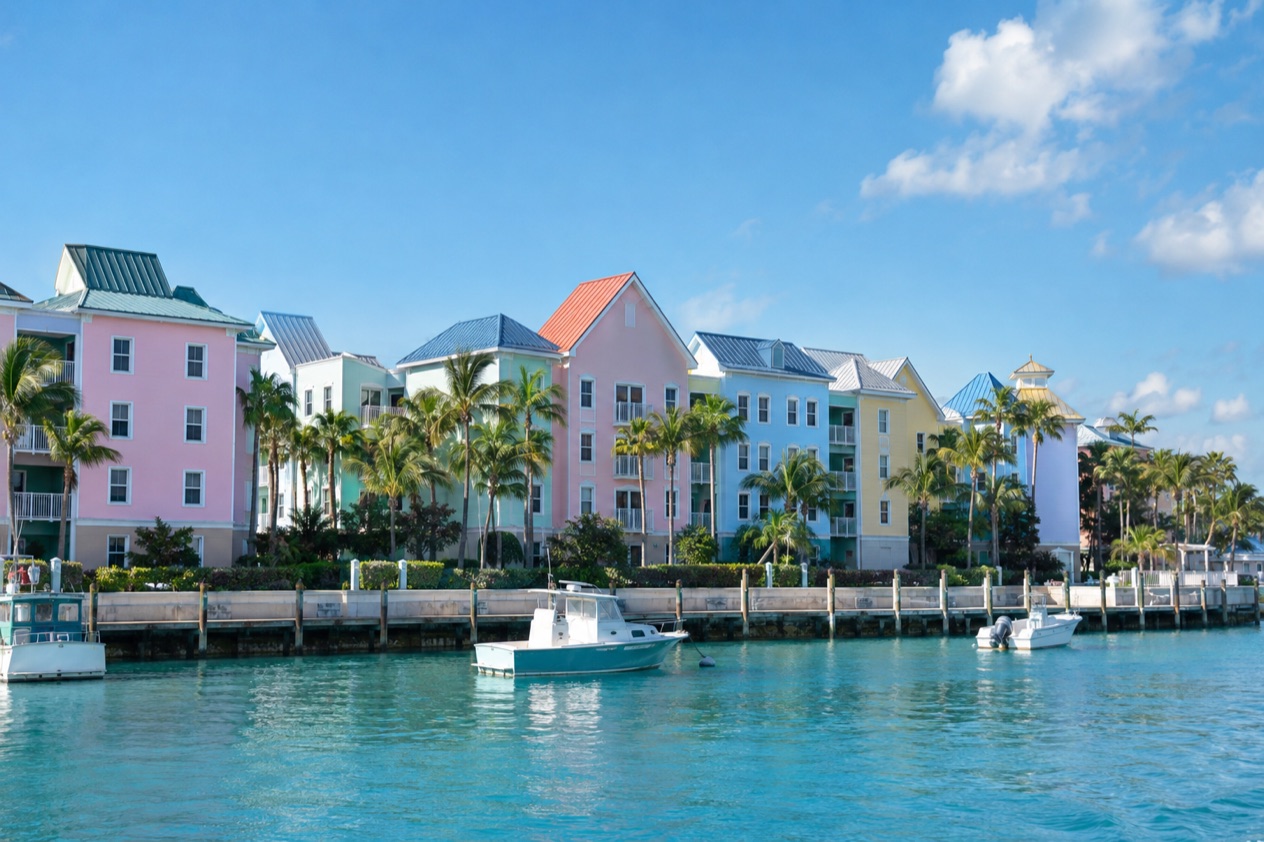
What should you know before visiting Nassau?
Four things matter most: the entry papers (a passport, a return or onward ticket and a completed immigration card), the traffic (it drives on the left and is heavy), the law on marijuana (strict, with no exception for medical use) and the sun, which is stronger than many visitors expect. Everything else is easy to learn on the way.
First-time visitors are often surprised by how much of Nassau is an ordinary working city. The capital sits on New Providence, an island about twenty-one miles long where most of the country’s people live, so the harbor front is busy with commuters, schoolchildren and delivery trucks as well as vacationers. Paradise Island, with its big resort, is a separate island reached by a bridge across Nassau Harbour.
The second surprise is how close you are to home. Miami lies roughly 180 miles to the west-northwest, and the dollar in your wallet is accepted everywhere. Yet the rhythm is distinctly Bahamian. Conch salad is made to order at the roadside, the language is a lilting island English, and people greet each other before they get down to business. Arriving with that in mind sets the tone for the whole stay.
Rain also catches people out. When a storm passes through, roads in Nassau can flood quickly and stay wet for a while after the sky clears. Plan a flexible afternoon rather than a tight schedule, and keep a few indoor ideas ready, such as the markets and shops downtown.
Entry, fees and paperwork
U.S. citizens arriving in Nassau need a passport, since the Bahamas requires one of every person entering. U.S. citizens entering as bona fide visitors do not need a Bahamian visa for a stay of up to eight months. The Bahamas Department of Immigration also asks that the passport be valid for at least six months from arrival and says passport cards are not accepted for travelers arriving by air.
Every traveler must present a completed Bahamas Immigration Disembarkation/Embarkation Card. Every visitor must also hold a return or onward ticket, along with a valid travel document for the next country where one applies, and U.S. citizens are asked to show proof of their planned departure from the Bahamas. Visitors may be asked to show evidence of enough money to support themselves during the stay.
The length of stay written in your passport is set by the immigration officer at the port of entry, so it may differ from the maximum. Anyone who wants to stay longer must ask the Department of Immigration for permission. The old Bahamas Health Visa and the pre-arrival COVID-19 test requirement have both been eliminated, so all visitors can travel throughout the islands regardless of vaccination status.
Visitors in Nassau also meet one tax, the VAT, mostly when shopping. Stores that display the Global Blue Tax-Free Shopping sign let eligible visitors skip it, and the service fee goes with it.
| Fee | Amount | Who pays |
|---|---|---|
| VAT on tax-free purchases | Savings of up to 7% of the purchase price | Shoppers at stores with Global Blue Tax-Free Shopping signage, with a passport or valid ID |
| Minimum tax-free purchase | More than $25 | Shoppers at those stores, with a passport or valid ID |
| Service fee | Not charged on VAT-free purchases | Shoppers who qualify for VAT-free shopping |
Money and cards
The Bahamian dollar is on par with the U.S. dollar, and both are accepted interchangeably on all islands. In Nassau you can pay in the bills you brought and receive Bahamian notes in change without worrying about an exchange rate. The Bahamian notes and coins carry local portraits and symbols, and many visitors keep a few as souvenirs.
If you plan to leave New Providence for the Out Islands, carrying cash is advised, since services there are thinner than in the capital. Many travelers fly out of Nassau for a day or a week, so setting aside some cash before you leave is a good habit.
Shopping downtown and along the harbor brings the tax-free scheme into play. Look for the Global Blue sign in the window, and bring your passport or a valid ID when you go, since the tax-free sale needs one of them. The sign marks the stores where the VAT and the service fee do not apply to qualifying purchases.
Getting around
Driving in the Bahamas is on the left-hand side of the road, and this matters even if you never take the wheel, because pedestrians must look the opposite way from what they are used to. Traffic congestion in Nassau is severe, and drivers frequently show aggressive or careless tendencies. Accidents involving pedestrians on New Providence are common, so crossing streets deserves more care than on a quiet small-town road.
Rain changes the picture. Road flooding occurs frequently in many areas, Nassau and Freeport among them, during and after rainstorms, and ambulance service on New Providence can be delayed by the same congestion. On a wet day, short trips take longer than the map suggests, so build in time for slow roads.
From the airport and across the harbor
Lynden Pindling International Airport is the primary international gateway to the Bahamas and the country’s busiest airport, and it sits on New Providence. That bridge spans Nassau Harbour and links the two islands.
Jitney buses serve the capital, but they stop running around the dinner hour, between six and seven in the evening.
Flying on to the other islands
The Bahamas is an archipelago of sixteen islands popular with visitors, and Nassau is its gateway, though some islands can also be reached by flying straight in. Scheduled and chartered air service from certified domestic and international carriers links the islands. Bahamasair lists a fare from Nassau to North Eleuthera starting at $80.50, and one from Nassau to Fort Lauderdale starting at $172.99.
Each island has its own character, and each trip needs its own plan. Treat the hop as a separate trip with its own pace, its own accommodations and its own list of things to bring from Nassau.
Health and the sun
Medical care is available on New Providence and Grand Bahama, but serious illnesses or injuries might not be treatable locally. Serious health problems that need hospitalization or evacuation to the United States can cost tens of thousands of dollars up front, which is why many travelers think about medical evacuation insurance before they go. The outer islands have only small clinics, and care there is limited.
Ambulance service exists on the major islands, but in Nassau the traffic described above can slow it down. No vaccination is required to enter, and the pre-arrival COVID-19 testing requirement has ended.
The sun is the most common problem on a Nassau vacation. It is intense, and sunscreen is really needed, even on a day that starts out cloudy or when you plan to spend most of your time in town rather than on the sand. Women are advised to bring a hat to block the sun on the beaches, wide-brimmed or otherwise, and men should pack standard swim trunks for the water.
A long day exploring the harbor front, the old streets and the forts means hours with no shade. Mid-afternoon sun tends to tire people out, so a break indoors suits the climate. Plan a long lunch, a museum or a stop at a café, then head out again when the light softens.
Local customs and etiquette
Bahamians value a greeting. Say good morning or good afternoon when you walk into a shop, a restaurant or a taxi, and wait for the answer before you ask your question. A smile and a hello cost nothing and often change the whole exchange, from the clerk at the counter to the vendor at the market stall.
Dress is relaxed. Dining in a restaurant wearing flip-flops and cargo shorts is commonplace, so you will not stand out in beach clothes at lunch. In town and in churches, though, the habit is to cover up: bring a shirt or a light wrap rather than walking through downtown in swimwear. Evening dining is casual almost everywhere.
Markets are part of the experience. At the Straw Market downtown, vendors sell baskets, hats and carved wood, and a friendly, unhurried chat is the usual way to settle a price. Meals follow a loose clock, with lunch the main event and dinner often later in resort areas.
Meeting Nassau through its people
The People-to-People program pairs travelers with volunteer locals who share their love of the islands. In the culinary version, Bahamian ambassadors often invite visitors into their homes for an authentic Bahamian meal. The experience may also include the Fish Fry at Arawak Cay, where island favorites such as conch salad and fried snapper are served.
A culture experience with an ambassador may include a guided tour of Fort Fincastle and a walk up the Queen’s Staircase. Both are among the city’s historic sights, and the fort looks out over the town and the harbor.
| Site | Open |
|---|---|
| Fort Fincastle tours | Daily, 8AM to 3PM |
The law on drugs
Marijuana and all products containing its derivatives, such as CBD and THC, are not legal in the Bahamas, and purchase and use are enforced with strict penalties. A prescription or medical card does not exempt you, since Bahamian law makes no distinction between medical and recreational use.
Possession or use of illegal drugs, including marijuana, cocaine and ecstasy, is a criminal offense and can mean time in prison. Violators are regularly arrested, even for small quantities. Leave anything of the kind at home.
Good to know before you go
The U.S. State Department rates the Bahamas Level 2, “Exercise increased caution”, and says most crime occurs in Nassau on New Providence and in Freeport on Grand Bahama.
The Atlantic hurricane season runs from June 1 to November 30, and the Bahamas Ministry of Tourism and Aviation monitors tropical storms and hurricanes in the Atlantic. Travelers are encouraged to follow the Bahamas.com hurricane page for storm-related updates, which is a sensible habit for any trip that falls within those months.
Keep your passport, your return or onward ticket and your completed immigration card together in one place, ready to hand over when you land. Keep the same passport or ID with you when you shop, since the tax-free counter will ask for it.
Sources
- Bahamas Department of Immigration, Entry requirements (https://www.immigration.gov.bs/entry-requirements/), checked October 10, 2026
- Bahamas Customs and Excise, Conditionally duty-free items (https://www.bahamascustoms.gov.bs/imports-and-exports/conditionally-duty-free-items/), checked October 10, 2026
- U.S. Department of State, The Bahamas Travel Information, Health (https://travel.state.gov/), checked October 10, 2026
- U.S. Department of State, The Bahamas Travel Information, Traveling and transportation (https://travel.state.gov/), checked October 10, 2026
- U.S. Department of State, The Bahamas Travel Information, Local laws and special circumstances (https://travel.state.gov/), checked October 10, 2026
- Bahamas Ministry of Tourism, Investments & Aviation (bahamas.com), Island FAQ (https://www.bahamas.com/plan-your-trip/island-faq), checked October 10, 2026
- Bahamas Ministry of Tourism, Investments & Aviation (bahamas.com), People-to-People program (https://www.bahamas.com/plan-your-trip/people-to-people), checked October 10, 2026
- Bahamas Ministry of Tourism, Investments & Aviation (bahamas.com), travel blog, VAT-free shopping rules (https://www.bahamas.com/blog/taking-advantage-of-value-added-tax-free-shopping-in-the-bahamas), checked October 10, 2026
- Bahamas Ministry of Tourism, Investments & Aviation (bahamas.com), travel blog, dress code and what to wear (https://www.bahamas.com/blog/how-to-dress-during-your-visit-to-the-bahamas), checked October 10, 2026
- Bahamas Ministry of Tourism, Investments & Aviation (bahamas.com), Sustainability (https://www.bahamas.com/plan-your-trip/sustainability), checked October 10, 2026
- Bahamas Department of Immigration, Before your arrival (https://www.immigration.gov.bs/entry-requirements/before-your-arrival/), checked October 10, 2026
- U.S. Department of State, The Bahamas Travel Information, Entry and exit requirements (https://travel.state.gov/), checked October 10, 2026
- Bahamas Ministry of Tourism, Investments & Aviation (bahamas.com), Hurricane and storm information (https://www.bahamas.com/hurricane-storm-information), checked October 10, 2026
- Bahamas Ministry of Tourism, Investments & Aviation (bahamas.com), Nassau and Paradise Island (New Providence) (https://www.bahamas.com/islands/nassau-paradise-island), checked October 10, 2026
- Wikipedia, Nassau, Bahamas (https://en.wikipedia.org/wiki/Nassau,_Bahamas), checked October 10, 2026
- Wikivoyage, Nassau travel guide (https://en.wikivoyage.org/wiki/Nassau), checked October 10, 2026
- Wikipedia, New Providence (https://en.wikipedia.org/wiki/New_Providence), checked October 10, 2026
- Bahamas Ministry of Tourism, Nassau and Paradise Island (https://www.bahamas.com/islands/nassau-paradise-island), checked October 10, 2026
- Bahamas Ministry of Tourism, Island hopping (https://www.bahamas.com/getting-here/island-hopping), checked October 10, 2026
- Bahamasair, home (https://www.bahamasair.com/), checked October 10, 2026
- U.S. Department of State, The Bahamas Travel Advisory, Level 2 (https://travel.state.gov/), checked October 10, 2026
- NOAA National Hurricane Center, Climatology (https://www.nhc.noaa.gov/climo/), checked October 10, 2026
To plan your stay
- Best Time to Visit Nassau: Weather by Month, Hurricane Season, Beaches and Junkanoo
- Things to Do in Nassau: Forts, the Fish Fry, Beaches and Blue Lagoon Island
- Where to Stay in Nassau: Cable Beach, Paradise Island, Downtown and How to Choose
- Nassau from the United States: Flights, Cruises, Airport Transfers and Getting Around