
On a February morning at Arawak Cay, the fry shacks are already hissing and a bowl of stew crawfish arrives in a dark, peppery gravy while the harbor air is still cool on your arms. Nassau in this month feels like a long, easy exhale after the holiday rush: bright sun, mild afternoons, evenings you can spend outside in a light layer. It suits travelers who want to eat, wander old stone streets and pick a beach day or two, without the heat that comes later.
The Bahamas is an archipelago, and everything below belongs to Nassau, the city on the island of New Providence, plus the bridge across to Paradise Island.
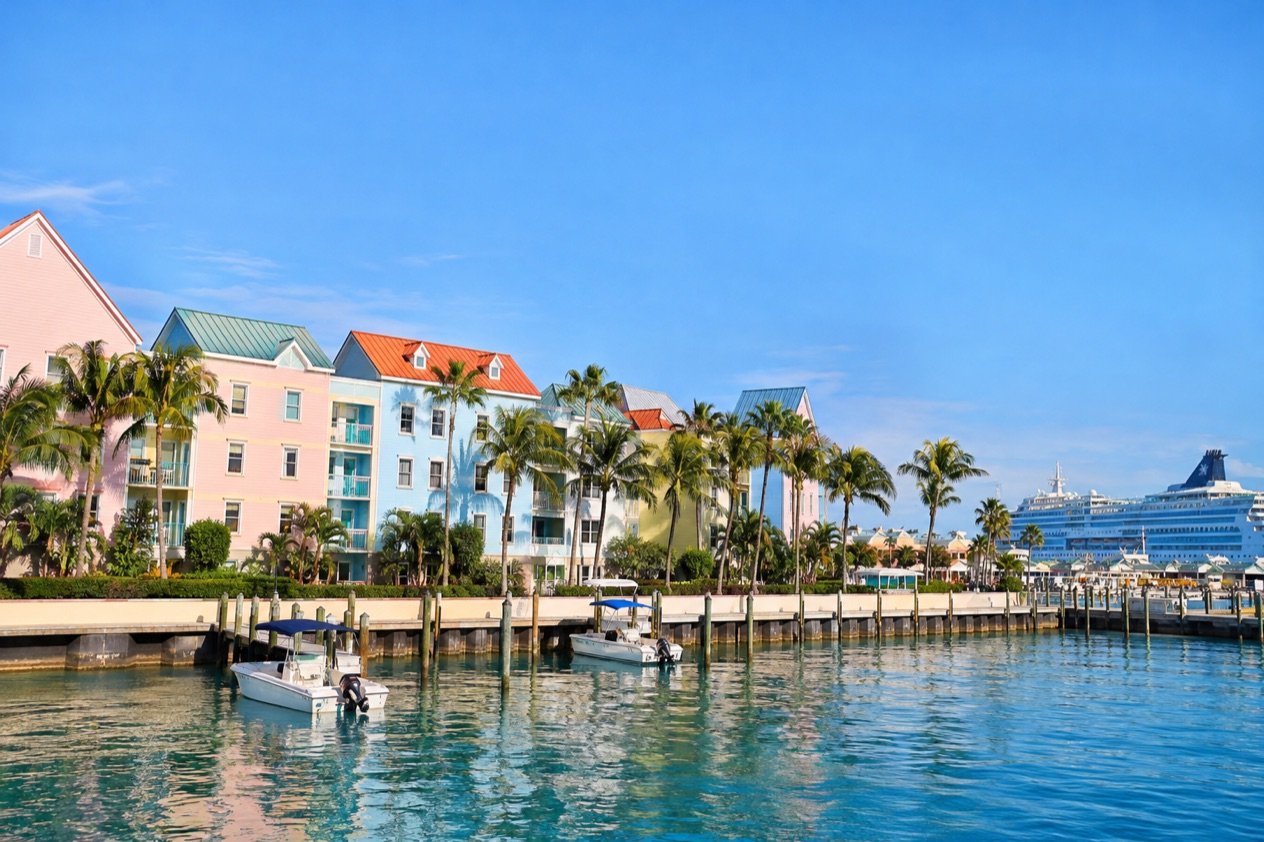
What is the weather like in Nassau in February?
February is pleasantly warm by day and cool after dark, with sunshine on most days and rain that arrives in brief passing showers. February sits between its neighbors with the same easy warmth.
| Month | Average high (°F) | Average low (°F) | Rain days | Sea (°F) |
|---|---|---|---|---|
| January | 79.4 | 65.1 | 4.3 | 77.0 |
| February | 80.0 | 65.0 | 4.3 | 76.0 |
| March | 81.3 | 66.0 | 4.5 | 77.5 |
Mornings start fresh enough that a thin sweater feels right on the porch of a guesthouse, and by late morning you are in short sleeves. Afternoons are warm without being heavy, which is exactly what you want for walking Bay Street, climbing the old fort ramparts or sitting out a long lunch. The light is clear and golden, and the days are noticeably longer than they were at New Year.
When rain comes, it is usually a short shower that blows over the harbor and leaves the pavement steaming. It rarely cancels a day, though a gray, breezy spell after a passing front can make the beach less inviting for a while. Evenings call for a light jacket or wrap on a terrace, especially near the water, where the breeze picks up.
February sits outside the official Atlantic hurricane season, which runs from June 1 to November 30. The sea is the part of the weather that decides how you spend a beach day, and it gets its own treatment right below.
Can you swim in Nassau in February?
The sea is on the cool side of pleasant, so most people go in for a refreshing dip rather than a long soak, and a warm afternoon makes the water feel better than the table suggests.
Junkanoo Beach sits just minutes from downtown, which makes it the natural stop between a morning of sightseeing and lunch. Cable Beach, along the western shore, gives you a longer stretch of sand for a book and a towel. Water conditions shift with the wind, so a breezy day after a front can feel quite different from the day before, and each beach has its own character.
If you plan to snorkel, a thin rash guard or shorty wetsuit is a sensible thing to throw in the bag, since you may feel the chill after twenty minutes in the water. Children tend to be happiest at the water’s edge with a bucket and shovel, and the sun is strong even on a mild day, so sunscreen belongs in the beach bag. Look at the water in front of you and ask at your hotel desk before wading in.
What to do in Nassau in February
The month belongs to the table first. Crawfish season in the Bahamas closes at the end of March, so February menus are full of the spiny lobster that locals simply call crawfish. Restaurants may print either word, and anything else is named by its variety, so ordering is straightforward. The cooler air also makes the walking side of Nassau a pleasure: old streets, forts, a staircase carved into rock and a pastel colonial skyline.
Crawfish at Arawak Cay
For seafood by the water, Nassau heads to Arawak Cay, while Gone Fishing serves the stew lobster, generous pieces of crawfish cooked down in a thick brown gravy. It is served even on the breakfast menu, an unusual way to start a vacation day, and a good one when the morning air is still cool enough to sit outdoors.
For something lighter, look for crawfish salad, a bright mix of onion, sweet pepper and lime juice with diced lobster, sometimes piled on greens and sometimes pressed into a sandwich. Pair it with a cold Bahamian beer or a fruit juice and you have a lunch built for a warm, dry afternoon. Eat with the water in view and let the afternoon stretch.
Fort Charlotte
Fort Charlotte sits on a hill west of downtown, looking over the mouth of Nassau Harbour, and it is the largest of the three forts that survive in the city. It is really three forts in a row: Fort Charlotte at the east end, Fort Stanley in the middle and Fort D’Arcy at the western edge.
You cross a drawbridge, peer into tunnels and rock-cut casemates, and look down into the dry moat that circles the walls. Late morning in February is a comfortable time here, because the stone does not hold heat the way it does in summer, and the harbor views carry far in the clear air. It suits older children who like cannons and corridors.
Bay Street, the Queen’s Staircase and Government House
Bay Street is the downtown spine, a strip of shops, restaurants and evening bars that is also where cruise passengers stream in on ship days. Walk it early for quiet and later for the buzz. Slightly uphill stands the Queen’s Staircase, known too as the 66 Steps, a limestone stairway that enslaved laborers cut by hand so soldiers could reach the fort above quickly.
Government House, a pink and white colonial mansion on Duke Street, crowns Mount Fitzwilliam as the home of the Governor General. You can admire it from the street and photograph its candy-colored walls in the low morning light. Together they give a half day of history at a stroll, with plenty of shade and benches along the way for a break.
On Saturdays, the Doongalik Farmers Market is still in season, since it winds down in mid-May, and it serves food and drinks that include vegan choices. Seasonal Sunshine, held at the Doongalik Art Gallery on Saturdays, carries on even after the market closes for the year. Paradise Island, reached by the bridge across the harbor, adds a change of scenery for a late-day wander.
A two-day itinerary for Nassau in February
Day 1 is for old Nassau. Begin on Bay Street before the shops fully open, when the air is cool and the cruise crowds have not arrived, then climb toward the Queen’s Staircase while the limestone is still shaded.
Spend late morning at Fort Charlotte, where the hill breeze keeps the ramparts pleasant. Daylight lasts a little over eleven hours, so plan to be finished with sightseeing by the time the sun starts to drop.
Have lunch at Arawak Cay with a bowl of stew crawfish or a crawfish salad, then shift to the water at Junkanoo Beach for a short dip and a rest on the sand. Come evening, return to Bay Street for dinner at a harborside restaurant and a stroll among the lit shopfronts.
Day 2 widens the view. Start with a slow breakfast, then head up Mount Fitzwilliam to see Government House in the soft light of the morning. If it is a Saturday, add the Doongalik Farmers Market for fresh food and local produce before the day warms up.
Later in the day, head over the bridge to Paradise Island, where you can wander beside the harbor and sip something while taking in the scenery, then treat yourself to a drawn-out sunset at Cable Beach on the west side. If a shower rolls in, step inside a downtown gallery, browse the shops along Bay Street or linger over a long lunch until the sky clears.
Is Nassau busy in February?
It is moderately lively, with the weekends and holiday weeks the busiest and midweek days calmer. The dry, sunny weather brings travelers from colder places, and downtown fills on cruise-ship days, when Bay Street, the straw market area and the beaches near the port get crowded.
Outside those peaks, Nassau is spacious. Away from the port, forts, residential streets and quieter beaches feel relaxed, and a restaurant table at lunch rarely needs planning. In the evening, popular harborfront spots can fill, so a reservation is a good habit for a dinner you care about. For rooms, early booking makes sense around holiday weeks and long weekends, while a plain midweek stay can be arranged closer to the date.
If you want Fort Charlotte or the staircase with fewer people, choose early morning or late afternoon, when cruise groups are usually elsewhere. The harbor-view cafés fill around lunch, so an earlier or later sitting gives you a calmer meal.
What to pack for Nassau in February
Pack for warm sun, cool evenings and the occasional shower, with a bag light enough for stairs and ramparts.
- A light sweater or jacket, because mornings and evenings feel cool by the water.
- Shorts, sundresses and breathable shirts for the warm afternoons.
- Comfortable walking shoes for the fort, Bay Street and the staircase.
- Swimsuit and a quick-dry towel for a dip at Junkanoo Beach or Cable Beach.
- Sunscreen and a hat, since the sun is strong even on mild days.
- A compact rain layer for a passing shower.
Good to know before you go
The U.S. State Department rates the Bahamas Level 2, “Exercise increased caution”, and says most crime occurs in Nassau on New Providence and in Freeport on Grand Bahama.
February falls outside the official Atlantic hurricane season, so the weather is mostly a question of what to wear. Downtown Nassau is a cruise port and a shopping street, and police are visible in tourist areas. For entry, U.S. citizens visiting for a stay under eight months need no Bahamian visa.
The Bahamas Department of Immigration asks for a passport valid at least six months when you arrive by air, does not accept passport cards, and expects a return or onward ticket. Visitors may be asked to show enough funds to support themselves during their stay.
Nassau in February vs January and March
Moving a month earlier gives you slightly cooler air and a touch more rain, with the holiday atmosphere still fading from the streets. January days are shorter, so evenings come sooner. Crawfish season is open in both months, and the farmers market is running, so the food side of the trip changes little.
A month later, the days stretch longer and the air warms a little more, which suits beach-focused travelers who want a somewhat warmer sea. Crawfish season ends on March 31, so late March is the last chance for the local lobster on menus. Spring weekends can also bring a livelier crowd to Bay Street and the beaches.
Choose February if you like the balance: sightseeing weather that is gentle, a sea you can still enjoy for a short swim, and a full crawfish menu. Shift earlier for a quieter, more wintry feel, or later if warm water matters more than anything else.
Is February a good time to visit Nassau?
Yes, especially for travelers who want sunshine, history and good food without heavy heat. It rewards people who enjoy walking, eating and spending a few unhurried hours on a beach rather than living in the water.
It is a less natural choice for anyone whose vacation depends on warm, bathtub-like swimming, since the sea asks for a little courage. Travelers who dislike crowds on cruise days should plan the downtown sights for early or late hours.
On arrival, drop your bags and head straight to Arawak Cay for a plate of crawfish with the harbor in view. Then take the slow walk up to the Queen’s Staircase while the day is still golden. February in Nassau is the month when the local spiny lobster is at its seasonal peak, served stewed, in salads and in sandwiches, and the weather is gentle enough to enjoy every bite outdoors.
Sources
- NOAA NCEI, GHCN-Daily station BF000078073 (Nassau Airport), normals 1991-2020 computed from the daily record (https://www.ncei.noaa.gov/access/services/data/v1?dataset=daily-summaries&stations=BF000078073), checked October 10, 2026
- Open-Meteo Marine API, average 2015-2024, checked October 10, 2026
- sunrise-sunset.org, sunrise and sunset calculated for the 15th of the month, checked October 10, 2026
- Bahamas Ministry of Tourism, crawfish season (https://www.bahamas.com/blog/its-crawfish-season), checked October 10, 2026
- Wikipedia, New Providence (https://en.wikipedia.org/wiki/New_Providence), checked October 10, 2026
- Bahamas Ministry of Tourism, Nassau and Paradise Island (https://www.bahamas.com/islands/nassau-paradise-island), checked October 10, 2026
- Bahamas Ministry of Tourism, Investments & Aviation (bahamas.com), travel blog, what to do in Nassau (https://www.bahamas.com/blog/top-10-things-to-do-in-nassau), checked October 10, 2026
- Bahamas Ministry of Tourism, Investments & Aviation (bahamas.com), travel blog, safety downtown Nassau (https://www.bahamas.com/blog/downtown-nassau-safe-for-tourists), checked October 10, 2026
- Bahamas Ministry of Tourism, Investments & Aviation (bahamas.com), travel blog, Nassau forts (https://www.bahamas.com/blog/historic-forts-of-nassau), checked October 10, 2026
- Bahamas Ministry of Tourism, Investments & Aviation (bahamas.com), travel blog, farmers markets (https://www.bahamas.com/blog/four-farmers-markets-in-nassau-you-should-check-out), checked October 10, 2026
- Wikipedia, Geography of the Bahamas (https://en.wikipedia.org/wiki/Geography_of_the_Bahamas), checked October 10, 2026
- Bahamas Ministry of Tourism, Investments & Aviation (bahamas.com), Island FAQ (https://www.bahamas.com/plan-your-trip/island-faq), checked October 10, 2026
- U.S. Department of State, The Bahamas Travel Information, Safety and security (https://travel.state.gov/), checked October 10, 2026
- Bahamas Department of Immigration, Entry requirements (https://www.immigration.gov.bs/entry-requirements/), checked October 10, 2026
- Bahamas Department of Immigration, Before your arrival (https://www.immigration.gov.bs/entry-requirements/before-your-arrival/), checked October 10, 2026
- U.S. Department of State, The Bahamas Travel Advisory, Level 2 (https://travel.state.gov/), checked October 10, 2026
- NOAA National Hurricane Center, Climatology (https://www.nhc.noaa.gov/climo/), checked October 10, 2026
To plan your stay
- Things to Do in Nassau: Forts, the Fish Fry, Beaches and Blue Lagoon Island
- Where to Stay in Nassau: Cable Beach, Paradise Island, Downtown and How to Choose
- Nassau from the United States: Flights, Cruises, Airport Transfers and Getting Around
- Know Before You Go to Nassau: Entry Rules, Money, Getting Around and Local Customs