
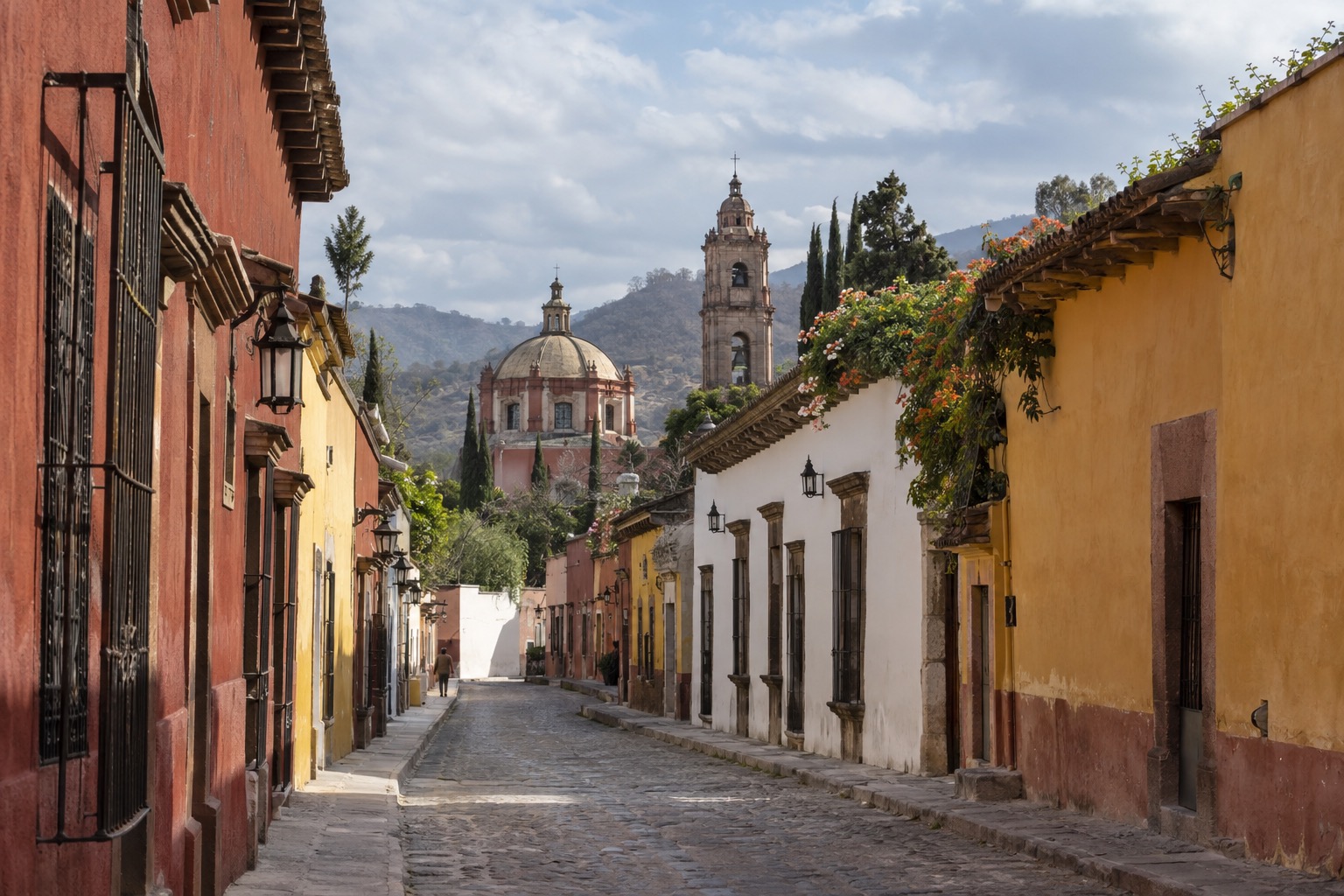
In winter, the evenings in San Jose del Cabo smell of grilled fish and mesquite smoke drifting from the courtyards around Plaza Mijares, and the gallery doors stay open late. Summer turns the town into a slow, sweltering place where the sea feels like warm bathwater and afternoon storms roll in from the Pacific. Between those two moods sits a desert-meets-ocean town on the southern tip of Baja California, with a calm historic center and a wetland at its edge.
When is the best time to visit San Jose del Cabo?
The best months are November through May for most travelers, with the sweet spot running from late fall to early spring, when days are sunny and dry and the heat is easy to live with. Summer suits people who want the sea at its warmest and don’t mind sweating.
For the beach and the water, late October and November offer a warm ocean right after summer, with the air finally easing. By May the sea is warming again and the days are hot but almost never rainy. Winter swims are cooler and call for some nerve, though the sun on the sand is lovely. Snorkeling and diving at Cabo Pulmo are most pleasant when the water is warm, from summer into fall.
For sightseeing and wandering, winter is the most comfortable. You can spend a whole day in the historic center, browsing galleries, sitting in the shade of the mission church and walking the Estero’s bird trails without wilting. The Thursday evening Art Walk around Plaza Mijares runs during the high season, which makes those months the liveliest for evenings out.
Families do well in the quieter weeks of fall and early winter, and in May. March is the loud month: spring break fills the beaches and resort pools with college crowds and music, so families wanting calm are better off a few weeks earlier or later. Travelers watching the budget and wanting empty beaches should look at late spring and early summer, before the heat peaks.
San Jose del Cabo weather by month
Almost every month is sunny, and the real contrasts are in the heat and in the late-summer rains.
| Month | Average high (°F) | Average low (°F) | Rain (in) | Rain days | Sea (°F) |
|---|---|---|---|---|---|
| January | 81.7 | 52.9 | 0.19 | 0.8 | 73.6 |
| February | 82.9 | 53.2 | 0.22 | 0.7 | 71.6 |
| March | 85.3 | 55.0 | 0.04 | 0.1 | 72.2 |
| April | 87.1 | 57.7 | 0.00 | 0.0 | 74.1 |
| May | 90.9 | 62.2 | 0.00 | 0.1 | 78.0 |
| June | 93.6 | 68.0 | 0.07 | 0.3 | 82.3 |
| July | 95.7 | 73.2 | 0.51 | 1.2 | 85.6 |
| August | 95.7 | 73.9 | 3.35 | 3.6 | 87.8 |
| September | 94.3 | 72.7 | 6.61 | 4.5 | 87.7 |
| October | 92.8 | 68.0 | 1.07 | 1.6 | 86.6 |
| November | 88.9 | 61.5 | 1.67 | 1.0 | 81.1 |
| December | 82.6 | 55.8 | 0.28 | 0.5 | 77.3 |
Winter brings warm afternoons and cool nights, so a light layer is welcome after dark. Spring climbs steadily toward real heat, with hardly a drop of rain. Summer is hot and sticky, with the rain concentrated in August and September, when it comes as heavy afternoon or evening storms rather than gray days. Rain in winter is rare and brief, usually a passing shower. Autumn cools slowly, and by November the evenings feel comfortable again.
When is San Jose del Cabo cheapest and least crowded?
The quietest stretch runs from late spring through early summer and again in the early fall, when the town belongs mostly to residents and a few loyal visitors. Rooms are easier to find, restaurants have free tables and the beaches have long empty stretches.
The busy weeks follow the American calendar. Thanksgiving week, Christmas and New Year, and the winter weeks that follow fill hotels, and spring break in March brings the biggest, noisiest crowds. Easter week, which moves from year to year, pulls in Mexican families as well. Mexican school vacation, from about early July to late August, fills beaches and hotels with domestic travelers even though it is the hottest time of year.
September is the real lull, when many restaurants and small hotels slow down or take a break, and peak-season rates fade. It also brings the heaviest weather of the year, which is the trade-off for the empty beaches.
Which months should you avoid in San Jose del Cabo?
Avoid August and September if rain and storms would spoil your trip, and be cautious in the whole stretch of official hurricane season, which runs from May 15 to November 30.
Those two months are the wettest, and the heat is heavy, with warm nights that barely cool. Tropical storms in the eastern Pacific can bring heavy rain, rough seas and occasional disruptions, and September is the month most often affected. October is still within the season but usually calmer. Outside the official hurricane season, from December to early May, a tropical storm is unlikely.
Sargassum is a concern on many Caribbean beaches, mostly from spring into summer, and it is worth knowing about for any beach trip, though the Pacific side of Los Cabos is far less associated with it. Winter brings the opposite kind of disruption: occasional cold fronts that send breezes and cooler nights, nothing dramatic but enough that a jacket makes sense in the evening.
The U.S. State Department rates Baja California Sur Level 2, exercise increased caution, with no specific restrictions on travel for U.S. government employees in the state.
When can you swim in San Jose del Cabo?
You can swim most of the year, though the sea ranges from refreshingly cool in late winter to bathwater warm by late summer.
From February to April the water is at its coolest, bracing for many but fine for a quick dip after a hot walk. By late spring it warms quickly, and from June through October it is genuinely warm, often more than comfortable for long swims. November and December ease back toward a cooler sea, still pleasant in the afternoon sun.
The Pacific side here has real surf, and many beaches near town have strong currents and undertow. Waves can be big at any time of year, especially after a distant storm, so check the beach flags before going in. Calmer swimming is found in the sheltered coves farther along the coast and at Cabo Pulmo, where the sea is the main attraction.
Festivals and events in San Jose del Cabo through the year
Winter holidays and Carnival
Christmas and New Year transform the historic center. Lights go up around the plaza, families gather after dinner, and restaurants fill with visitors from across the border. Posadas, the processions that lead up to Christmas, appear in December in many neighborhoods, with piñatas and warm drinks.
Carnival arrives in the weeks before Lent, usually in February or early March, with parades, costumes and music in the Baja towns. Los Cabos has its own version, livelier in the bigger resort area, and the town center joins in with a festive atmosphere. It suits travelers who like street energy and don’t mind crowds.
The Thursday Art Walk during the high season is a gentler tradition. Galleries open their doors in the evening around Plaza Mijares, and you wander with a drink in hand from one to the next. Go early for the quietest browsing.
Easter week and Día de Muertos
Holy Week falls in March or April depending on the year. Mexican families head to the beaches, and the town is lively with local visitors while quieter religious observances take place around the church. It is a good moment to see how residents spend their vacation.
Día de Muertos, from October 31 to November 2, brings marigold altars, sugar skulls and pan de muerto to shop windows, homes and the plaza. The mood is warm and affectionate rather than somber. Visit the plaza and the market in the days before to see the altars being built, and treat any cemetery vigil as a family occasion for residents.
Nature seasons: whales, turtles and birds
Winter is whale season along the Baja coast, usually from about December through March, when gray and humpback whales pass through these waters. Boat trips depart from the Los Cabos area, and the sight of a whale breaching offshore is the signature wildlife moment of the year.
Sea turtles nest on the area’s beaches in the warmer months, usually from summer into fall, and local conservation groups often organize releases of hatchlings in the evening. These are quiet, moving events that suit families and anyone who likes wildlife, though dates shift from year to year.
Birdwatching at the Estero de San Jose del Cabo, a protected wetland at the edge of town, is best in the cooler months, when migratory species fill the reeds and the shallow water. The reserve has recorded 217 species, and a morning walk with binoculars is one of the most peaceful things to do in town.
Sources
- Servicio Meteorologico Nacional (CONAGUA), normales climatologicas 1991-2020, estacion 03056 (San Jose Del Cabo, Los Cabos), checked September 29, 2026
- Open-Meteo Marine API, average 2015-2024, checked September 8, 2026
- sunrise-sunset.org, sunrise and sunset on the 15th of the month, checked September 8, 2026
- H. XV Ayuntamiento de Los Cabos / IMPLAN Los Cabos, "REE Estero de San Jose del Cabo", implanloscabos.mx, checked September 29, 2026
- Aeropuertos GAP, press release "Los Cabos Airport Sees Record Growth, Expands Capacity", aeropuertosgap.com.mx, checked (official group relays) September 29, 2026
- CONANP, Cabo Pulmo National Park, descubreanp.conanp.gob.mx, read on (indexed excerpt; the site refuses any direct connection from this network) September 29, 2026
- Ley de Hacienda del Estado de Baja California Sur, art. 13 (mirror Secretaria de la Contraloria y Transparencia Gubernamental de BCS, contraloria.bcs.gob.mx); 2026 rate confirmed by El Contribuyente, ISH 2026 table, elcontribuyente.mx, read on September 29, 2026
- U.S. Department of State, Mexico Travel Advisory (reissued May 29, 2026), section "Risks in specific areas" / State of Baja California Sur, travel.state.gov, read live via browser on 29 September 2026
- NOAA National Hurricane Center, official Eastern Pacific season (nhc.noaa.gov), checked October 5, 2026