
In early October, the afternoon sky over the bay of La Paz turns copper just as the first fishing pangas slip back toward the beach, and the Malecón starts to fill with people who waited out the summer indoors. The heat is still serious, but the worst of it has broken, and the water is as warm as it gets all year. This is a month for swimming with the big marine animals of the Sea of Cortez and for a waterfront town finding its pace again.
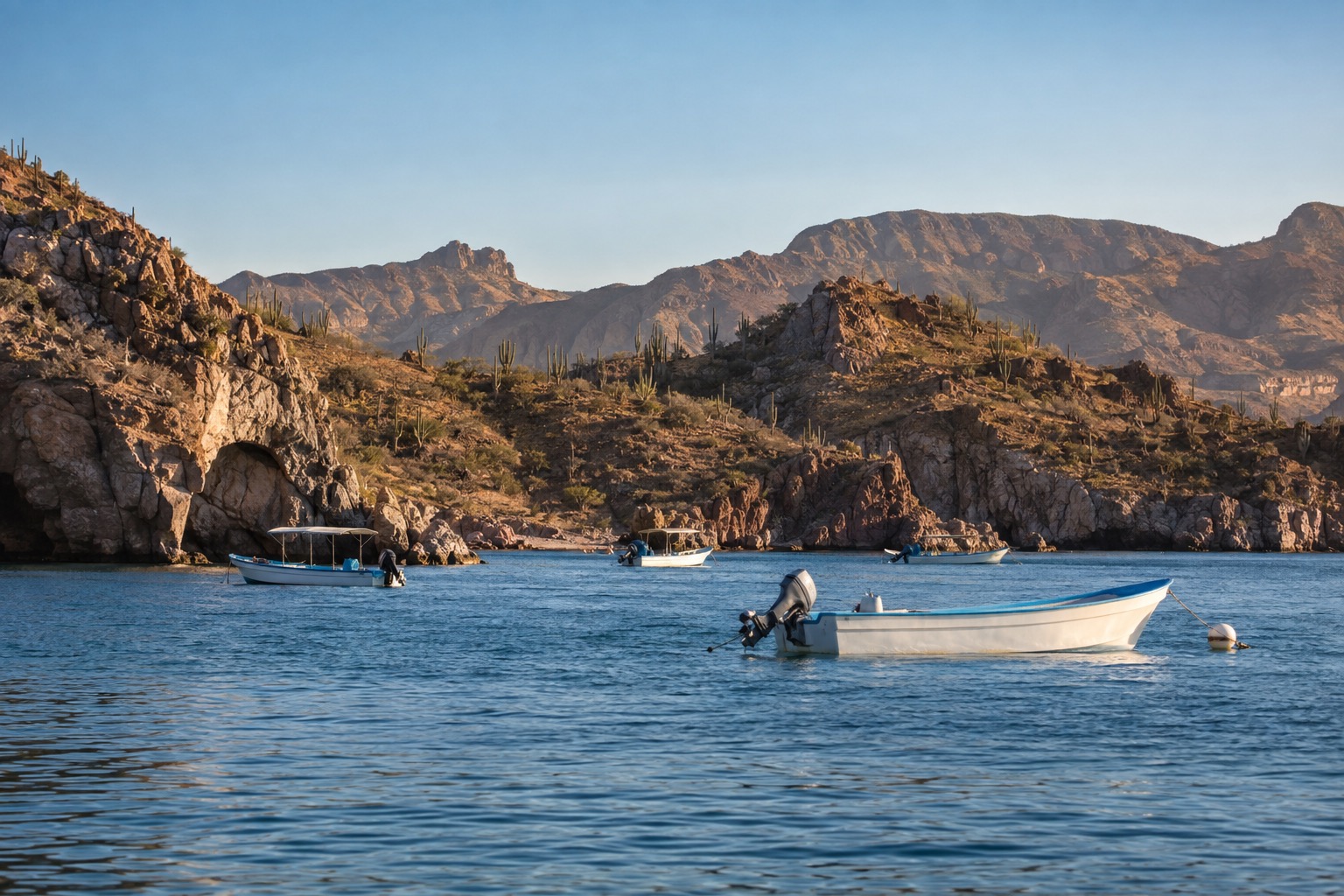
What is the weather like in La Paz in October?
October is still hot and mostly dry in La Paz, a clear step down from the sticky, stormy weeks of September.
| Month | Average high (°F) | Average low (°F) | Rain (in) | Rain days | Sea (°F) | Daylight on the 15th |
|---|---|---|---|---|---|---|
| September | 96.6 | 76.5 | 3.20 | 6.3 | 87.1 | 12 hours 19 minutes |
| October | 93.2 | 70.2 | 0.68 | 1.8 | 85.6 | 11 hours 38 minutes |
| November | 85.6 | 63.0 | 0.24 | 1.2 | 79.8 | 11 hours 0 minutes |
Afternoons are for shade, a cold drink and the water, while the hours around sunrise and after sunset are when walking feels pleasant. Nights finally cool off enough that you can sleep without the air conditioning cranked to the maximum. Rain is rare, and a shower, if it comes, tends to be a short leftover from the summer storms.
The sea stays bathwater warm, so snorkeling needs no wetsuit for most people. Days are noticeably shorter than in summer, and darkness settles in by early evening.
What to do in La Paz in October
Swimming with whale sharks
Whale sharks gather in the bay of La Paz in the fall, feeding on plankton near the sandbar and the waters off the city’s northern shore. October falls right in the start of that season, and it is the main reason many travelers choose this month. These are gentle filter feeders, spotted as dark shapes with pale dots gliding just below the surface.
Trips leave by boat from the waterfront and the marinas, and you spend the morning on calm water, when the sea is flattest and the light is good for spotting. Expect to slip into the water in small groups with a guide, keeping a respectful distance.
The warm sea makes the hours in the water easy, and the whole outing suits confident swimmers and curious kids alike. Bring a hat and reef-safe sunscreen for the boat.
Island days and sea lions
With the water this warm, a day on the islands of the Espíritu Santo area is a different kind of outing from the cool months. For many, the sea lion colony at Los Islotes stands out as the best part, while red volcanic cliffs, clear shallows and powder-white coves make long snorkel stops tempting. Pups are active and curious, and swimmers often find them circling playfully.
In the morning, boats head out and come back in the afternoon, with fresh ceviche or grilled fish for lunch on a beach. The sun is strong, so a long-sleeved rash guard helps. Seas can be a bit lively when a late storm is passing far offshore, so the calmest mornings are the best bet.
The waterfront after dark and the table
As evenings soften, the Malecón becomes the town’s living room again. Families claim the benches, musicians set up near the sculptures, and the stalls sell paletas and mango with chile. Sunset is the moment to be on the seawall, with the bay turning pink and silver.
Food leans toward the sea: fish tacos, aguachile, chocolate clams (almejas chocolatas) and cold local beer. Taco stands around town stay busy late, and the fresh seafood spots near the market are the places to try a cocktail of shrimp and octopus. Few foreign visitors fill the dining rooms in this shoulder month, so you can often get a table without a wait.
Early November brings Día de Muertos, so toward the end of October you may start to see marigolds, sugar skulls and small altars appearing in shop windows and plazas. It is a gentle preview of one of Mexico’s most beloved traditions.
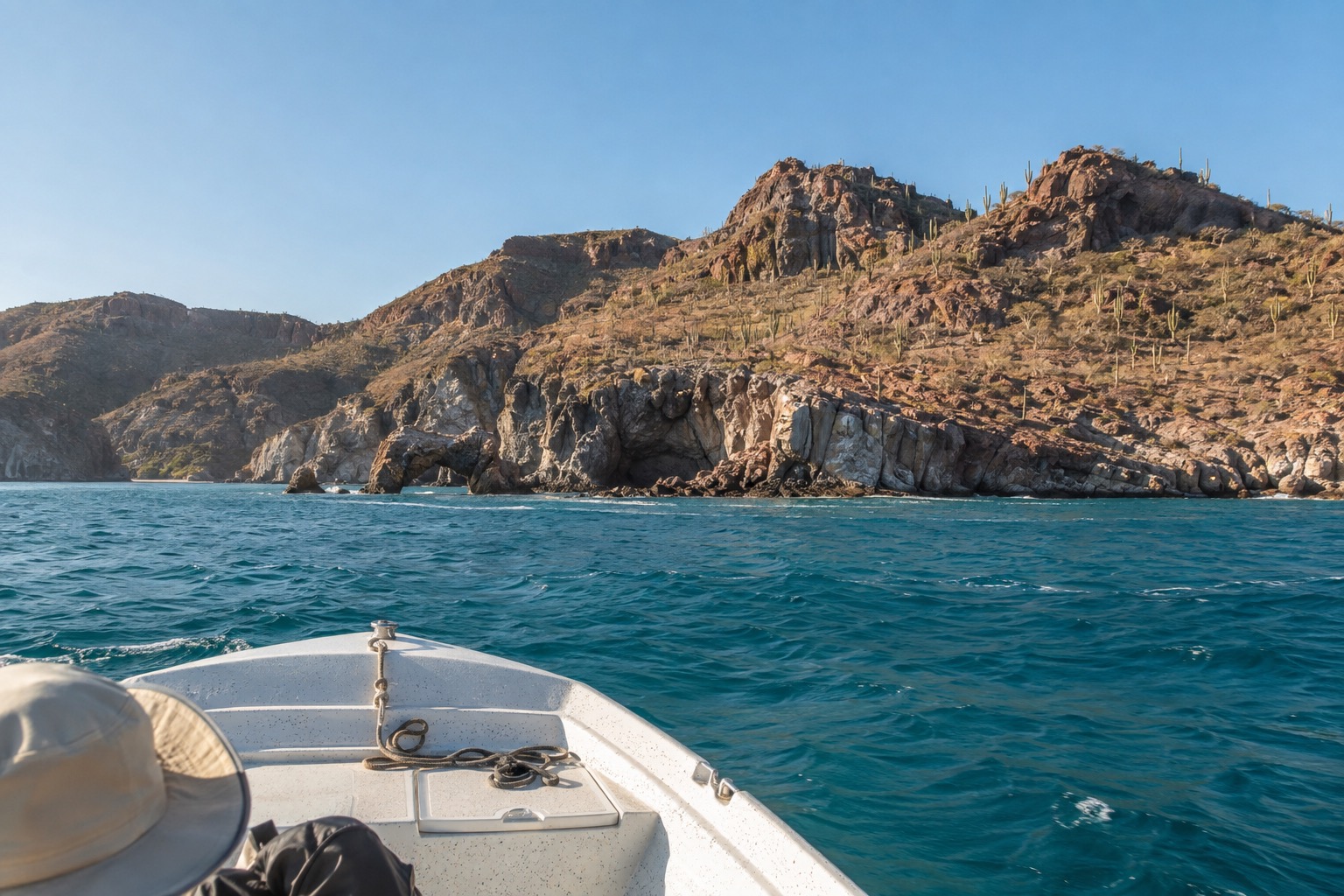
Is La Paz busy in October?
No, October is one of the calmer months in La Paz, which is a big part of its charm. The summer rush of Mexican families has ended, and the winter crowd of snowbirds and U.S. vacationers has not yet arrived.
Whale shark trips and island boats still run daily and can fill on weekends, so the popular outings are the part to line up early. Restaurants along the waterfront are relaxed, and rooms are generally easy to find. Toward the end of the month, the first signs of the holiday season begin to appear.
What to pack for La Paz in October
Think light, sun-ready and made for the water.
- Lightweight, breathable clothing for hot afternoons
- A wide-brimmed hat and sunglasses
- Sunscreen that is safe for reefs and a rash guard with long sleeves for days on the boat
- A swimsuit and your own snorkel mask if you like a good fit
- Sandals for the Malecón and light shoes for evenings
Good to know before you go
October still sits inside the Pacific hurricane season, and a tropical system far offshore can stir up the sea or cancel a boat day, so keep your schedule a little flexible. Most business runs as normal, since there are few holiday closures in the month.
| Fee | Amount | Who pays |
|---|---|---|
| Lodging tax (Baja California Sur) | 4% | Guests, added to the room rate |
Is October a good time to visit La Paz?
Yes, October suits travelers who want warm water, wildlife and an unhurried town, and who can handle afternoon heat.
Compared with September, it is drier and a little less oppressive, with the summer storms mostly behind it. November is cooler and more comfortable on land, but the sea has already lost some of its warmth, and the crowds begin to return.
October sits in between: the swimming is at its easiest and the town still feels like its own. What stays with you is the combination of a whale shark sliding under the boat in the morning and the Malecón at dusk, when the whole town seems to exhale.
Sources
- Servicio Meteorologico Nacional (CONAGUA), normales climatologicas 1991-2020, estacion 03074 (La Paz (Dge), La Paz), checked September 29, 2026
- Open-Meteo Marine API, average 2015-2024, checked September 8, 2026
- sunrise-sunset.org, sunrise and sunset on the 15th of the month, checked September 8, 2026
- Ley de Hacienda del Estado de Baja California Sur, art. 13 (mirror Secretaria de la Contraloria y Transparencia Gubernamental de BCS, contraloria.bcs.gob.mx); 2026 rate confirmed by El Contribuyente, ISH 2026 table, elcontribuyente.mx, read on September 29, 2026
- U.S. Department of State, Mexico Travel Advisory (reissued May 29, 2026), section "Risks in specific areas" / State of Baja California Sur, travel.state.gov, read live via browser on 29 September 2026
To plan your stay
- Things to Do in La Paz: Whale Sharks, Espíritu Santo, the Malecón and Fish Tacos
- Where to Stay in La Paz: El Centro, the Malecón, Marina Costa Baja and La Ventana
- Best Time to Visit La Paz: Weather by Month, Whale Sharks, Crowds and Festivals
- La Paz in September: Independence Day, Hot Seas and Late-Summer Storms