
HONOLULU · FEBRUARY · 21.3° N
Honolulu’s February normals read 80.5°F by day, 67.1°F at night, and 1.94 inches of rain spread across about three days that record anything at all. That is the leeward south shore, measured at the airport gauge, and it is the version of Oahu most travelers book a winter flight for.
What the month takes back is daylight. The sun clears the horizon at 7:00 a.m. on the 15th and is gone by 6:30 p.m., so a two-night weekend here runs on 11 hours 30 minutes of light, not the long evenings of a summer vacation. For the full twelve-month picture, see our month-by-month verdict for Honolulu.
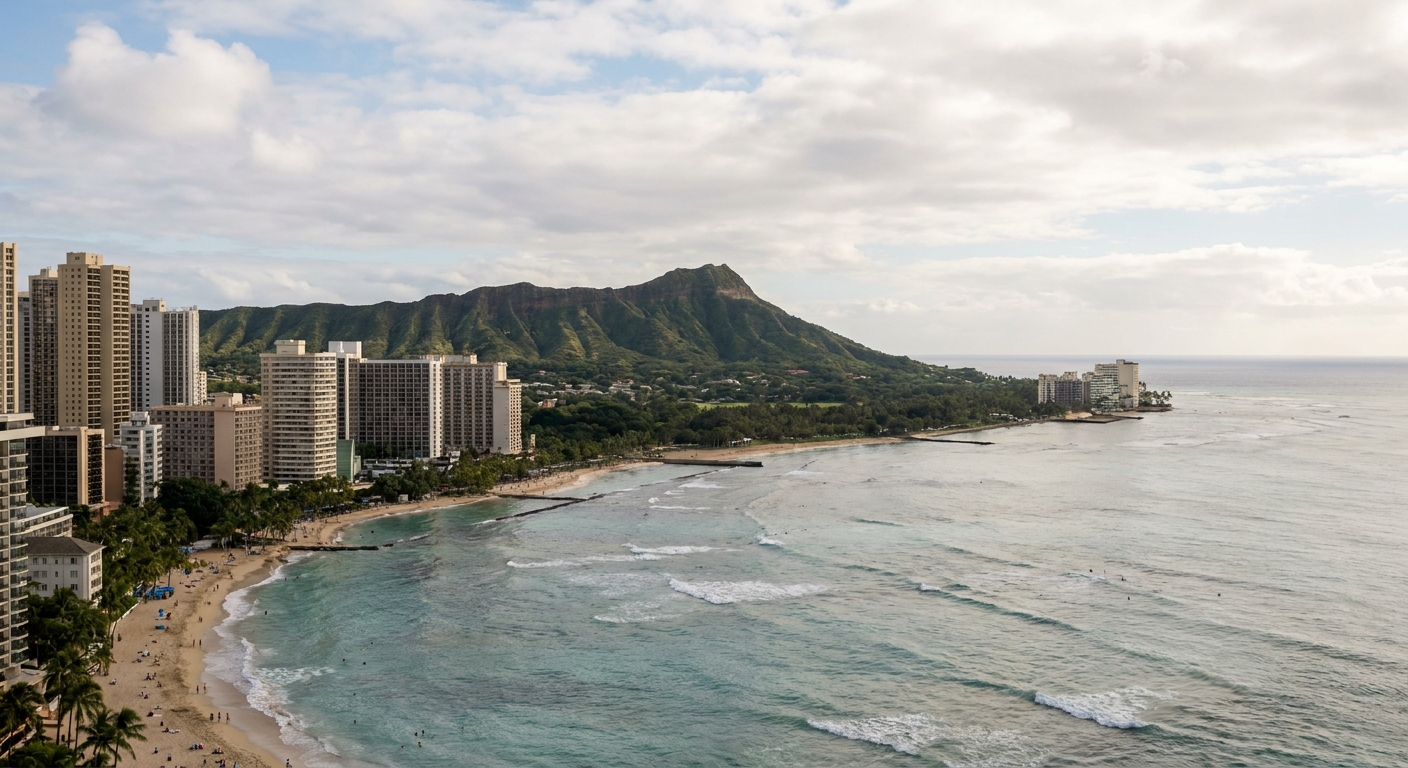
FEBRUARY AT A GLANCE · HONOLULU
February hands you an 80.5°F afternoon, 76.1°F water and only three days of measurable rain, and takes back the evening: the sun is down by 6:30 p.m.
NOAA 1991–2020 NORMALS · AIRPORT STATION · SEA READ AS DAILY MAXIMA
Go for: swimmable water at 76.1°F, warm afternoons, and a month in which measurable rain interrupts three days out of 28 on the south shore.
Think twice before: booking on price alone. No monthly room rate, occupancy series or lodging tax figure was read, and none is guessed at below.
Air and rain: NOAA NCEI · Sea: Open-Meteo Marine · Daylight: sunrise-sunset.org · full sources at the end
On this page
- Honolulu weather in February80.5°F days, 1.94 inches of rain, 3.0 wet days
- Ocean temperature for swimming76.1°F, and what that means in the water
- How far ahead to book a February tripCrowds, the all-in room total and lead time
- What to do in Waikiki in FebruaryDiamond Head, Hanauma Bay, Pearl Harbor
- A two-day itineraryBuilt around a 7:00 a.m. sunrise and a 6:30 p.m. sunset
- February, January or March?How the three months compare, figure by figure
- Is February a good time to go?Who it suits, and which month to shift to
Every figure here comes from the NOAA NCEI 1991–2020 monthly normals for station USW00022521, the gauge at Honolulu International Airport on the leeward south shore. The windward side of Oahu and the mountains behind the city take several times that rain, and this instrument never sees it. Sea temperature comes from somewhere else entirely: the Open-Meteo Marine series, averaged over 2015 to 2024.
Honolulu weather in February: average highs, lows and rain days
| Measure | February figure | Where it comes from |
|---|---|---|
| Average high | 80.5°F | NOAA NCEI normals, 1991–2020, airport station |
| Average low | 67.1°F | NOAA NCEI normals, 1991–2020, airport station |
| Precipitation | 1.94 in | NOAA NCEI normals, 1991–2020, airport station |
| Days with 0.10 in or more | 3.0 | NOAA NCEI normals, 1991–2020, airport station |
| Days with 1 in or more | 0.3 | NOAA NCEI normals, 1991–2020, airport station |
| Sea surface | 76.1°F (mean of daily maxima) | Open-Meteo Marine, 2015–2024 |
| Daylight on Feb 15 | 11h 30m | sunrise-sunset.org |
These are station numbers, not a grid model, and the difference matters: a reanalysis cell can miss a coastal minimum by several degrees. NOAA NCEI publishes 80.5°F for the average February high in Honolulu and 67.1°F for the average low, over the 1991 to 2020 period, with 1.94 inches of precipitation for the month. The thermometer is at the airport, three miles west of Waikiki and on the dry side of the island.
Three days in an average February record at least a tenth of an inch, which puts measurable rain on roughly one day in nine and leaves the other twenty-five usable. Only 0.3 of a day reaches a full inch, so a genuine soaking lands about one February in three. Spread evenly, 1.94 inches over 28 days is close to half an inch a week, and it arrives in showers rather than in fronts that sit all afternoon.
Between the 80.5°F high and the 67.1°F low sits 13.4 degrees, and that spread is a single light layer, nothing more. Pack for the walk back from dinner rather than for cold: a long-sleeve top, a thin rain shell instead of an umbrella, one swimsuit you can wear twice a day, and shoes you would happily climb Diamond Head in at 8 a.m.
February 15 delivers 11 hours 30 minutes of daylight, sunrise at 7:00 a.m., sunset at 6:30 p.m. local time. Plan the day around that shape: the early start costs nothing in comfort, and a two-day itinerary holds about 23 hours of light in total. Dinner in Waikiki happens after dark, not in the long golden evening a July trip would give you.
Can you swim in Honolulu in February? Sea temperature and what it feels like
The sea surface off Honolulu averages 76.1°F in February, from the Open-Meteo Marine model over 2015 to 2024. Read the number with its definition attached: it is the mean of daily maxima, so it sits a shade above a full 24-hour average, and above what you meet stepping in at seven in the morning.
Against an 80.5°F air high, water in the mid-70s reads cool for the first ten seconds and comfortable after that. A swimsuit is enough for a swim off Waikiki. An hour of snorkeling is a different calculation: a rash guard or a thin shorty keeps a long float from ending in shivers, and children come out well before adults do.
No wind or wave figures were read. The station file behind these normals covers temperature and precipitation, and the marine series supplies surface temperature and nothing else, so any statement here about February surf would be invented. Check the National Weather Service marine forecast for Oahu and the lifeguard flags on the beach you have picked, on the morning you plan to swim.
How busy is Honolulu in February? Crowds, prices and how far ahead to book
February sits inside the winter window that sends mainland travelers to Hawaii, and that is as far as the data goes: no monthly room rate, occupancy series or airfare index was read, so nothing here ranks February against the other eleven months on cost. What is measured is the weather risk you are buying, and it is small: 3.0 wet days out of 28.
Book the room and the flight in one sitting, and early. Eight to twelve weeks out (est.) is the lead time we would give a February trip to a beach city in winter demand, and the rental car deserves the same treatment at the same moment, since Oahu car supply is the line that tightens first in our experience rather than in any series we can cite.
No lodging tax rate was read, and inventing one would be worse than saying so. Ask for the all-in nightly total, taxes and any resort or parking fee included, before you compare two hotels: the headline rate and the amount that lands on the card are rarely the same figure, and the gap is what decides which quote actually wins.
Paying more for location changes this month, in a way paying more for the lobby does not. With the sun down at 6:30 p.m., a room you can walk to the sand from converts the end of every afternoon into beach time, while a mile inland converts it into traffic. Spend on the address, then keep the rental car for the two or three days you leave Waikiki.
Things to do in Honolulu in February: Waikiki, Diamond Head and Hanauma Bay
February records measurable rain on fewer days than either neighbor: 3.0 days at a tenth of an inch or more, against 3.3 in January and 3.1 in March. January’s monthly total is slightly lower at 1.84 inches, so this is not a claim that February is the driest month, only that rain interrupts fewer of its days. On a fixed-date booking, a boat trip or a hike with a permit, that thin margin is the whole argument.
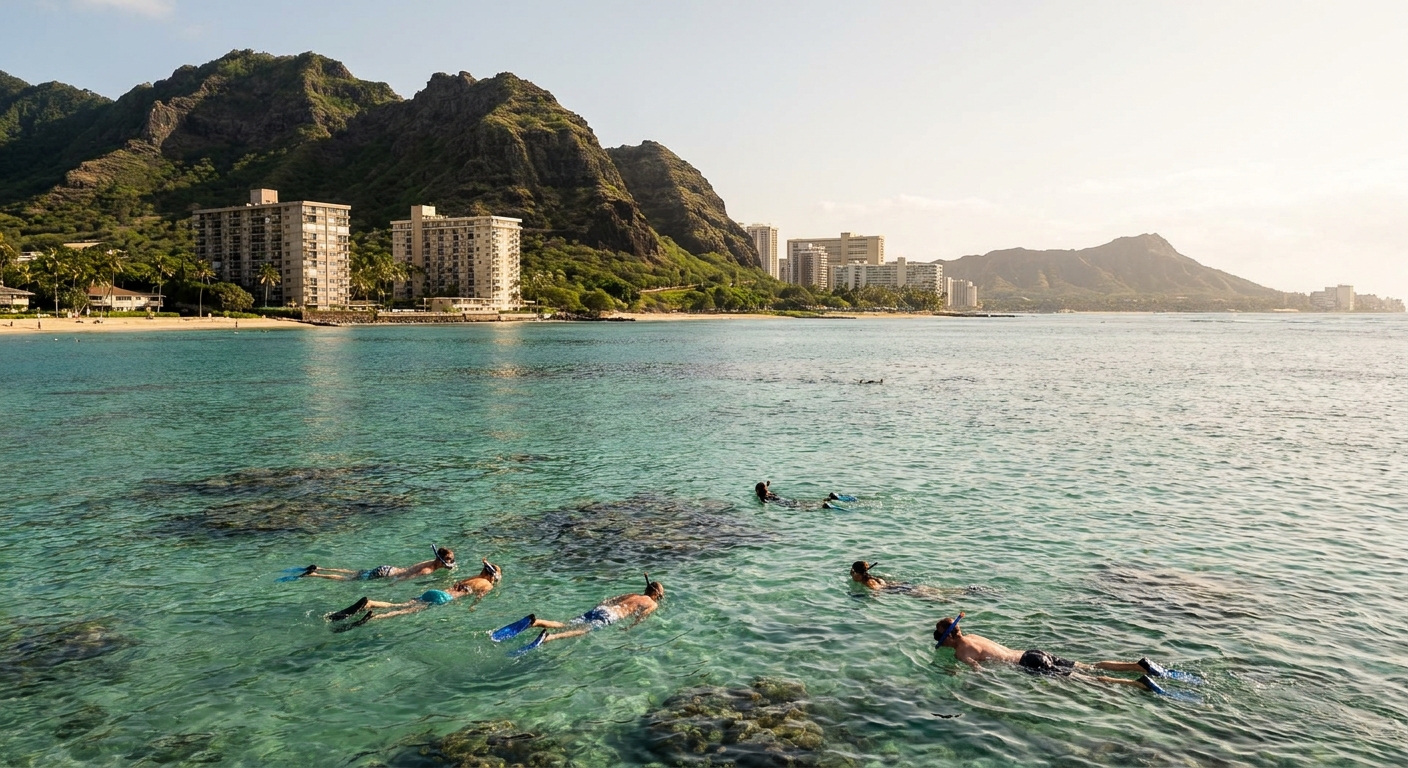
Waikiki Beach is the base most visitors sleep near, Diamond Head State Monument the climb worth finishing before 10 a.m., Hanauma Bay Nature Preserve the snorkeling, Pearl Harbor the half-day inland, and Mānoa Falls the green hour up the valley behind the city. No admission price, opening hour or reservation rule for any of them was read, so check each operator directly before you build a day around it.
The water barely moves across these three months, at Hanauma Bay as off Waikiki: 77.3°F in January, 76.1°F in February, 76.0°F in March, on the marine series. The air and the rain do the moving, and so does the terrain. Mānoa and the valleys behind Honolulu take several times the airport’s 1.94 inches, which makes a trail day a wetter proposition than any beach figure suggests, in February as in any month.
No ticket price was read, so nothing here gets called free on our word. What costs nothing on a February evening is the 6:30 p.m. sunset and the shoreline walk that leads up to it, with usable light for roughly twenty minutes after the sun goes (est.). That lands early enough to shower, change and eat at a normal hour.
Honolulu in February: a two-day itinerary
Day one starts at the 7:00 a.m. sunrise, on the sand, with a first swim while the beach is still half empty. Diamond Head between 8 and 10, before the 80.5°F part of the afternoon arrives. Lunch indoors, an hour in a museum, then back to the water at four, when the light softens and the sun still has two and a half hours to run. Dinner at 7 p.m. sits one half hour after sunset.
Day two goes east to Hanauma Bay early or inland to Pearl Harbor, with the driving done in the cool part of the morning and the swimming finished by noon. If you draw one of February’s three wet days, invert the order and give the afternoon to the Bishop Museum or the Honolulu Museum of Art. The month’s entire rainfall is 1.94 inches, so waiting out a shower usually beats rebuilding the day around it.
Honolulu in February vs January and March
| Measure | January | February | March |
|---|---|---|---|
| Average high | 80.5°F | 80.5°F | 81.2°F |
| Average low | 66.8°F | 67.1°F | 68.1°F |
| Precipitation | 1.84 in | 1.94 in | 2.36 in |
| Days with 0.10 in or more | 3.3 | 3.0 | 3.1 |
| Sea surface (daily maxima) | 77.3°F | 76.1°F | 76.0°F |
January and February share the same average high of 80.5°F and part ways at night by three-tenths of a degree, 66.8°F against 67.1°F. March adds warmth at both ends, 81.2°F and 68.1°F, and pays for it in rain: 2.36 inches to February’s 1.94. The water runs the other way, on the marine series, with January warmest at 77.3°F, February at 76.1°F and March at 76.0°F.
Move four weeks earlier and you gain 1.2 degrees of sea temperature and a drier month on the total, 1.84 inches, while accepting 3.3 wet days instead of 3.0. Move four weeks later and March gives a warmer afternoon and a warmer night, at the cost of 0.42 inch more rain and water a tenth of a degree cooler. Neither swap is big enough to rebook a flight over.
Is February a good time to visit Honolulu?
Yes for the traveler who wants a warm, mostly dry beach week with 76.1°F water and no interest in long evenings. No for anyone whose plan needs daylight past 6:30 p.m., no for a budget that requires a rate comparison this page cannot supply, and no for the hiker who assumes the mountain behind the hotel behaves like the airport gauge three miles away.
If the sea is the point, January is the month to prefer of the three, 77.3°F against February’s 76.1°F on the same marine series. If the afternoon air is the point, March runs 81.2°F, and its 2.36 inches still fall on only 3.1 days. (If the destination itself is still open, our month-by-month picks cover that choice.)
What February holds over both neighbors is one figure: 3.0 days with measurable rain, the fewest of the three, on a month that still delivers an 80.5°F afternoon.
The last word
Book February for the water and the low count of wet days, not for the evening. Air at 80.5°F over sea at 76.1°F is a gap of 4.4 degrees, small enough that getting out is no punishment, and the day still closes at 6:30 p.m. whatever the room cost. Swim in the morning, climb before ten, eat after dark. And treat all of it as the airport’s view of Oahu: station USW00022521 sits on the leeward side, and the valley trail behind your hotel gets a February that gauge never records.
Sources & data for this guide
- February normals (80.5°F / 67.1°F, 1.94 in, 3.0 days at 0.10 in, 0.3 day at 1 in) · NOAA NCEI monthly normals 1991–2020, station USW00022521, Honolulu International Airport · checked Sep 15, 2026
- January and March normals used in the comparison table · same NOAA NCEI station and period, not estimates · checked Sep 15, 2026
- Sea surface 76.1°F (and 77.3°F / 76.0°F for the neighbors) · Open-Meteo Marine API, 2015–2024 mean of daily maxima, a different source and period from the air normals · checked Sep 15, 2026
- Daylight, sunrise 7:00 a.m. and sunset 6:30 p.m. on Feb 15 · sunrise-sunset.org, converted from UTC to local time · checked Sep 15, 2026
- Editorial admission: no room rate, occupancy, airfare, lodging tax, wind or swell data was read for this page, and no admission price or opening hour for the sites named above · check operators when you book.