
HONOLULU · SEPTEMBER · 21.3° N
September in Honolulu reads 88.4°F by day and 74.8°F before dawn, with 0.88 inches of rain across the whole month. The sea off the south shore averages 80.5°F. Nothing in that set asks for a jacket, and the swimming question answers itself before you finish reading the row. The two variables worth knowing are where that thermometer stands and how fast the daylight is shortening.
September’s trade is straightforward: warmer water than August (80.5°F against 79.6), a third of October’s rain (0.88 inches against 1.51), and 12 hours 17 minutes of daylight by the 15th, with sunset at 6:35 p.m. The twelve-month view sits in Honolulu month by month. Everything here is dated to these four weeks.
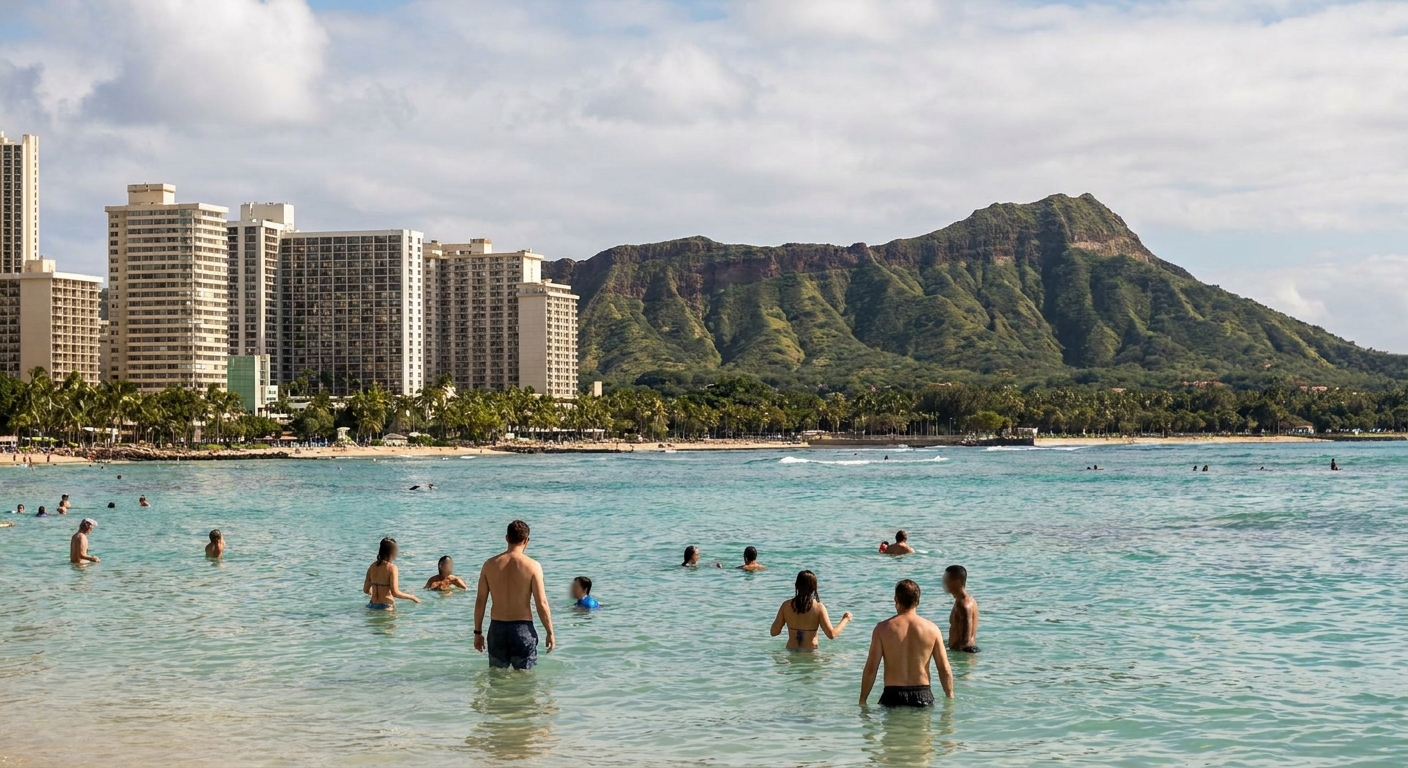
THE MONTH AT A GLANCE · HONOLULU
Of August, September and October, September is the only one that puts 80-degree water and under an inch of rain in the same month: 80.5°F in the sea, 0.88 inches on land, 88.4°F in the afternoon.
NOAA 1991–2020 NORMALS · AIRPORT GAUGE, LEEWARD SHORE · SEA = MEAN OF DAILY MAXIMA, 2015–2024
Go for: water you can stay in until you get bored, two wet days in thirty, and sunrise swims at 6:17 a.m. before the afternoon reaches 88.4°F.
Think twice before: reading 0.88 inches as the whole island. That figure is measured on the leeward south shore, and the windward coast and the mountains behind the city take several times as much.
Air: NOAA NCEI · Sea: Open-Meteo Marine API · Light: sunrise-sunset.org · full sources at the end
On this page
- Average high, low and rain days in September88.4°F, 74.8°F and 2.2 wet days
- Sea temperature for swimming80.5°F, measured as daily maxima
- Crowds, booking and the lodging taxWhere September sits in the year, and the tax line we could not price
- Things to do in Honolulu in SeptemberWaikiki, Ala Moana, Diamond Head, Hanauma Bay, Pearl Harbor
- A two-day plan around a 6:35 p.m. sunsetDay one and day two, hour by hour
- September vs August and OctoberHow the three months compare, in one table
- Is September a good time to visit Honolulu?The verdict, and the month to take instead
Every figure below comes from two places, and they are not the same kind of measurement. The air normals are NOAA’s, recorded at one thermometer at Honolulu’s airport, on the leeward south shore. The sea reading is a marine model series, averaged as daily maxima over ten years. Neither describes the windward coast or the mountains behind town, where the rain multiplies.
Honolulu weather in September: average highs, lows and rain days
| Measure | September | Where it comes from |
|---|---|---|
| Average high | 88.4°F | NOAA NCEI normals, 1991–2020 |
| Average low | 74.8°F | NOAA NCEI normals, 1991–2020 |
| Precipitation | 0.88 in | NOAA NCEI normals, 1991–2020 |
| Days with 0.10 in or more | 2.2 | NOAA NCEI normals, 1991–2020 |
| Days with 1 in or more | 0.2 | NOAA NCEI normals, 1991–2020 |
| Daylight, Sep 15 | 12 h 17 min | sunrise-sunset.org |
| Sea surface | 80.5°F (mean of daily maxima) | Open-Meteo Marine API, 2015–2024 |
The normals above are NOAA’s, from the National Centers for Environmental Information, 1991 to 2020, station USW00022521 at Honolulu International Airport: a high of 88.4°F, a low of 74.8°F and 0.88 inches of rain for the month. That gauge sits a few miles west of Waikiki on the dry flank of Oahu. A reanalysis grid cell would give you a slightly different island; this is a real thermometer, in a known spot, and the spot matters more than the decimal.
Rain worth calling rain falls on 2.2 days in an average September, taking 0.10 inch as the bar. Across thirty days that is roughly one day in fourteen, so planning around September rain means planning around two afternoons, not a season. The rest of the 0.88 inches arrives in the short passing showers that never get a day to themselves in the record.
The gap between the average high and the average low is 13.6 degrees, and the cool end of it lands before sunrise. Nothing in that range calls for a warm layer outdoors. A packing list built on these numbers runs to shorts, a hat, more sun protection than you think you need, and one light long sleeve for air-conditioned rooms and the flight home. At 0.88 inches for the month, a folding umbrella does more work than a rain shell.
On September 15 the sun is up for 12 hours 17 minutes, rising at 6:17 a.m. and setting at 6:35 p.m. local time. Hawaii stays on UTC minus 10 all year, so no clock change interrupts the month and the evening light drains slowly rather than in one jump. Sunrise swims and a return to the sand around 4 p.m. bracket the hottest hours instead of fighting them.
Can you swim in Honolulu in September? Sea temperature and what it feels like
The sea off Honolulu averages 80.5°F in September, from the Open-Meteo Marine API over 2015 to 2024. Read the figure for what it is: a mean of daily maxima, so it runs a shade warmer than a 24-hour average would, and the water you step into at 6:30 a.m. is the coolest water of the day. The same series gives August 79.6°F and October 80.7°F, which makes September’s number a rising one rather than a peak.
At that temperature there is no wetsuit question and no entry shock, and the limit on a swim is boredom rather than cold. What 80.5°F does not do is cool you off quickly. With afternoon air at 88.4°F, the sea sits only about eight degrees below it, so an hour in the water leaves you warm and the sun does the rest.
Our sources carry no wind or swell figures for Honolulu in September, and we are not going to sketch a seasonal surf pattern we have not measured. South-shore conditions change day to day. The call belongs to the beach flags posted by Ocean Safety and to the National Weather Service marine forecast on the morning you swim, not to a monthly average.
How busy is Honolulu in September? Crowds, prices and the demand peak
September falls between the mainland summer break and the winter season, which is a fact of the calendar rather than of the invoice. We could not read an occupancy series or a monthly rate table for Honolulu, so no month gets called the cheapest here and none gets called the peak in dollars. The weather half of the cycle is measured: 0.88 inches of rain in September against 1.51 in October, with the average high easing from 88.4°F to 86.9°F over those four weeks.
Without rate data the useful lever is flexibility rather than lead time. Book refundable and let the dates slide a day or two: a September trip has 2.2 wet days to dodge, not a wet season to schedule around. Flights land at Daniel K. Inouye International, the same site as the thermometer behind every normal above, and four or five nights is enough to bank three swimmable mornings. That last figure is our editorial call, not a measurement.
A lodging tax line shows up on Hawaii hotel bills, under the transient accommodations tax plus a county surcharge. Neither rate appears in our sources, and we will not quote a percentage we have not read. Check the Hawaii Department of Taxation, and treat any quoted room rate as pre-tax until you have.
The one upgrade that changes September rather than decorating it is the walk to the water. With sunrise at 6:17 a.m. and afternoons at 88.4°F, a room you can leave barefoot puts both cool blocks of the day within reach without a car, a parking hunt or a bus wait. The same money spent on a larger room three streets back adds nothing this month uses.
Things to do in Honolulu in September
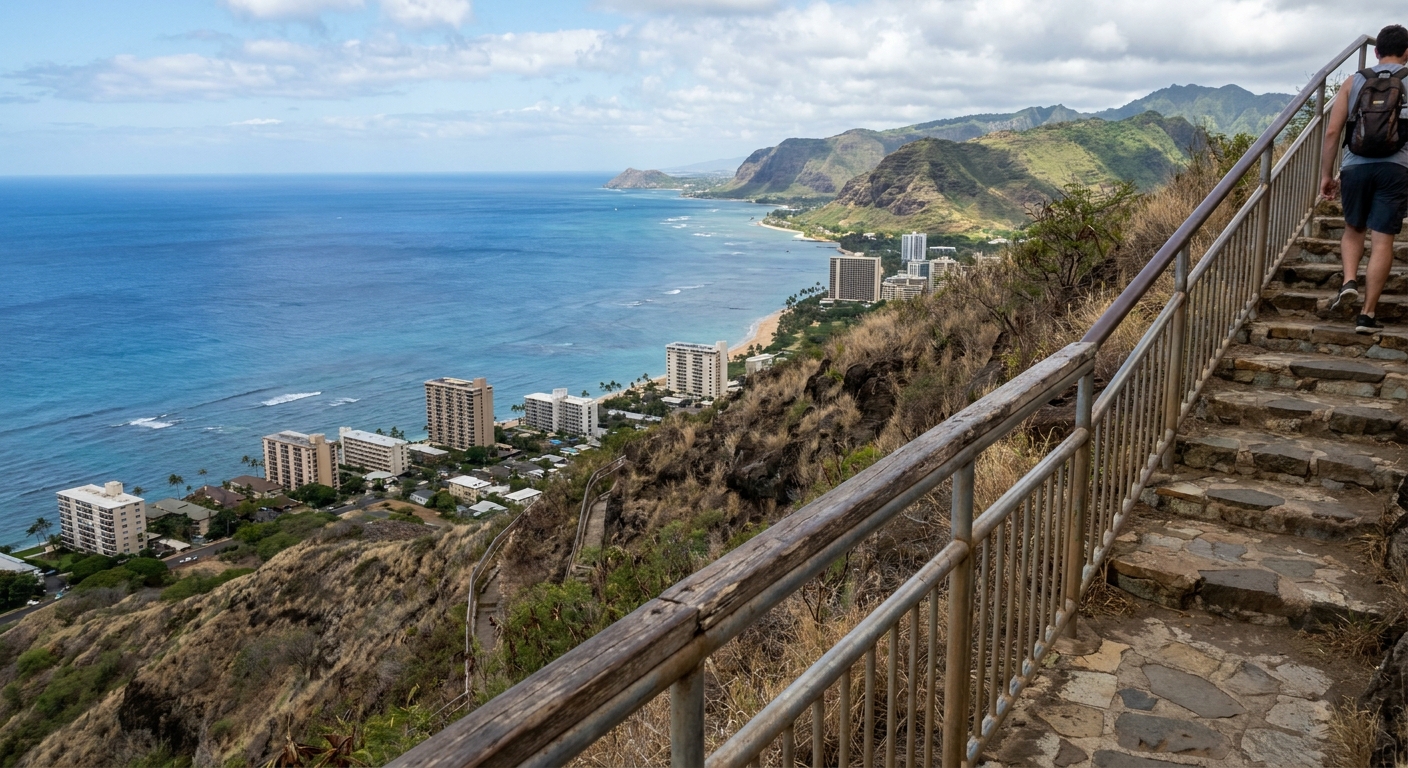
September pairs 80.5°F water with 0.88 inches of rain, and neither neighbor manages both. October’s sea is 0.2 degrees warmer, but its rain is nearly double. August is drier by a whisker at 0.84 inches, with water at 79.6°F. For a trip built around being in the sea rather than looking at it, September is the one of the three that delivers on both counts.
The shortlist is short and mostly walkable: Waikiki Beach, Kaimana Beach at the Kapiolani Park end, Ala Moana Beach Park, the Diamond Head trail, Hanauma Bay for snorkeling, and the Pearl Harbor memorials for a half day of history. Admission prices, reservation windows and closing days for Diamond Head, Hanauma Bay and Pearl Harbor sit outside our sources, so none are quoted here: check each operator before you build a morning around one.
Across August, September and October the sea moves 1.1 degrees, from 79.6 to 80.7°F. The air moves 1.9 degrees on the daily high and the rain total climbs by 80 percent over the same stretch. Time the climb, not the swim: Diamond Head in September is done against an 88.4°F afternoon, the same steps in October against 86.9°F, and the water under both is within half a degree of itself.
No admission price appears in our sources for September, and nothing is free this month that is not free in March. The shoreline is the part that never charges: Waikiki, Kaimana and Ala Moana are public beaches, and the 80.5°F reading applies to the water in front of all three.
Honolulu in September: a two-day itinerary
Day one starts at 6:17 a.m., when the sun comes up and the overnight low of 74.8°F is still holding. Swim first, eat after. Take Diamond Head between 7 and 9, while the air is still climbing toward its 88.4°F afternoon. Give the middle of the day to something indoors, Pearl Harbor or a museum, then come back to the water around 4 p.m. and stay through the 6:35 p.m. sunset.
Day two can flip the order: water in the morning, Ala Moana or Kaimana in the long late afternoon. If the sky turns, remember where these numbers were taken. The airport gauge reads the leeward side, and the windward coast and the mountains behind town catch several times its rain, so moving toward the south shore on a gray September day usually moves you out from under it. At 2.2 wet days a month, you will not need the maneuver often.
Honolulu in September vs August and October
| Measure | August | September | October |
|---|---|---|---|
| Average high | 88.8°F | 88.4°F | 86.9°F |
| Average low | 75.6°F | 74.8°F | 73.9°F |
| Precipitation | 0.84 in | 0.88 in | 1.51 in |
| Days with 0.10 in or more | 1.2 | 2.2 | 2.6 |
| Sea surface (daily maxima) | 79.6°F | 80.5°F | 80.7°F |
The daily high moves 1.9 degrees across the three months: 88.8°F in August, 88.4 in September, 86.9 in October. Rain is where they separate, from 0.84 inches and 1.2 wet days in August to 1.51 inches and 2.6 wet days in October. The sea runs the other way, warming through the sequence from 79.6 to 80.5 to 80.7°F, all three from the marine series rather than the airport thermometer.
Shift four weeks earlier and you gain the driest calendar of the three, roughly one wet day in twenty-six, and lose almost a degree of sea temperature to August’s 79.6°F. Shift four weeks later and October gives the coolest afternoons at 86.9°F and the warmest water at 80.7°F, charged for in rain: 1.51 inches, and a wet day about one in twelve. The rest of the year is laid out in the month-by-month verdict.
Is September a good time to visit Honolulu?
For a trip that lives in the water, yes without hedging: 80.5°F sea, 2.2 wet days in thirty, and a high of 88.4°F on land. For anyone who struggles in heat, it is a no. With a 74.8°F floor and an 88.4°F ceiling there is no cool outdoor hour between roughly 10 a.m. and 4 p.m., and neither of the two months on either side changes that by more than two degrees.
If the answer is no, take October. It holds the coolest afternoons of the three at 86.9°F and the warmest water at 80.7°F, and the bill comes as 1.51 inches of rain over 2.6 wet days instead of 0.88 over 2.2. That trade favors hikers over swimmers. August earns a look only when dryness outranks everything: 1.2 wet days is the best number in the table, and 79.6°F is the coolest water in it.
Of these three months, only September puts 80-degree water and under an inch of rain in the same four weeks.
The last word
The September decision is a small one: take the bed you can walk to the sand from, set the alarm for 6:17 a.m., and let the plan follow the light rather than the other way around. One figure from the NOAA record has been held back for the end. A day bringing an inch of rain or more shows up 0.2 times in an average September, which is one soaking day every five years. Keep the museum or Pearl Harbor in reserve for the year it lands on you.
Sources & data for this guide
- September normals: high 88.4°F, low 74.8°F, 0.88 in, 2.2 days at 0.10 in or more, 0.2 days at 1 in or more · NOAA NCEI monthly normals 1991–2020, station USW00022521, Honolulu International Airport · checked Sep 15, 2026
- August and October normals (88.8/75.6/0.84 in and 86.9/73.9/1.51 in) · same NOAA NCEI 1991–2020 series and station · checked Sep 15, 2026
- Sea surface 79.6 / 80.5 / 80.7°F, mean of daily maxima 2015–2024 · Open-Meteo Marine API · checked Sep 15, 2026
- Daylight 12 h 17 min, sunrise 6:17 a.m., sunset 6:35 p.m. on September 15 · sunrise-sunset.org, converted from UTC to Hawaii time (UTC minus 10) · checked Sep 15, 2026
- Scope caveat: the station reads the leeward south shore and does not measure the windward coast or the mountains · NOAA NCEI station metadata · checked Sep 15, 2026
- No occupancy series, monthly room rate or lodging tax rate was read for this page: the crowd and tax paragraphs carry a reserve instead of a number.
- Admission prices, reservation systems and closing days for Diamond Head, Hanauma Bay and Pearl Harbor are outside these sources · check each operator when you book.